 Kwisi: O dinosaure efe?
 Ntwa ya didinosaure
 Peiso ya didinosaure
 Dipapadi tse nyane tsa didinosaure
 Albamo ya ditikara
 Manane a TOP a didinosaure
 Nkgethele!
Narindasaurus
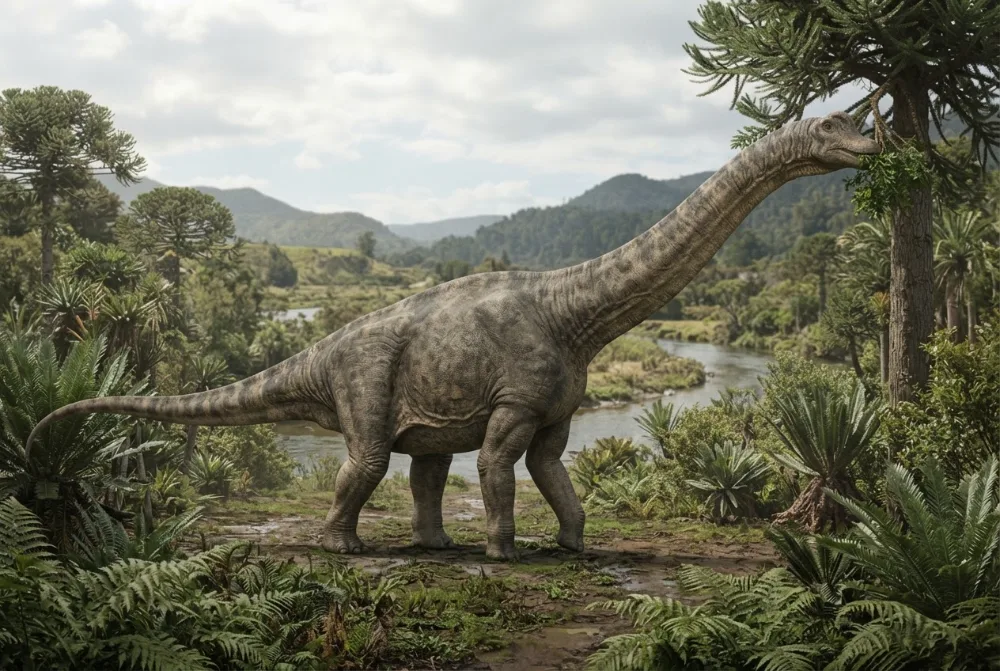
Narindasaurus was a long-necked plant-eater that lived on the island of Madagascar about 168 million years ago. It had heart-shaped teeth that helped it munch on leaves. This dinosaur is known from just one partial skeleton, but it tells us a lot about how sauropods evolved.14
E phetse neng?
E ne e le kgolo hakae?
E ne e le telele hakae?
E ne e phahame hakae?
E ne e le boima hakae?
 telele jwaloka dikoloi tse 22 tse pakilweng ka mola🍌telele jwaloka dibanana tse 560 di behilwe ka mola
 boima jwaloka ditlou tse 1.5🍉boima jwaloka mahapu a 1600🦒phahame jwaloka dithuhlo tse 18 di emeng e nngwe hodima e nngwe🎒boima jwaloka ditlelase tse feletseng tse 10 tsa bana ba sekolo🐻❄️boima jwaloka dibere tse tshweu tse 18🏢e phahame hoo e ka nyarelang ka fensetere mokatong wa 34🏃e ne e ka matha dimitara tse 100 ka metsotswana e 22 (motho ya lebelo ka ho fetisisa o hloka 9,6)
Narindasaurus e ne e le kgolo hakae ha e bapiswa le WENA?
Ke dipalo feela ho browser ya hao. Ha ho letho le bolokwang kapa le romelwang kae kapa kae.
E ne e le lebelo hakae?


Dintlha tse monate
Narindasaurus was a turiasaur, a group of sauropods that lived mainly in Europe and Africa during the Jurassic.1
Its teeth are heart-shaped, which is a special feature of turiasaurs and helped scientists identify it.1
The only known fossil includes parts of the tail, leg bones, and a tooth, found in Madagascar between 1896 and 1905.1
Narindasaurus lived during the Bathonian stage of the Middle Jurassic, about 168 to 165 million years ago.2
Its tail bones have a unique asymmetrical pit that is not seen in other dinosaurs.1
The dinosaur was named in 2020, but the fossils were first described in 1907 as belonging to a different species.1
Dipotso tse botswang haholo ka Narindasaurus
?How big was Narindasaurus?
Scientists are not sure exactly how big it was, because only a partial skeleton has been found. Estimates suggest it was a medium sized sauropod, but more fossils are needed for a precise length.4
?What did Narindasaurus eat?
Narindasaurus was a plant-eater, or herbivore. Its heart-shaped teeth helped it munch on leaves.14
?When did Narindasaurus live?
Narindasaurus lived during the Middle Jurassic, about 168 to 165 million years ago.14
?Where was Narindasaurus found?
The only known fossil of Narindasaurus was found in the Isalo III Formation of Madagascar, near Narinda Bay.1
Mosenyi wa ditshomo
Tshomo: Narindasaurus is a type of Brachiosaurus.
Nnete: Narindasaurus is a turiasaur, a different group of sauropods, not closely related to Brachiosaurus.1
Bakeng sa ditsebi tsa didinosaure
- Lebitso la saense
- Narindasaurus
- E rehilwe ke
- Royo-Torres et al. 20214
- Sehlopha
- Melala e melelele
- Lelapa / leloko
- Turiasauria4
- Tlhophiso
- Sauropodomorpha > Sauropoda4
- Dilemo tsa mafika
- dilemo tse dimilione tse 168 ho isa ho 165 (Bathonian)4
- Dibopeho tsa mafika
- Isalo III4
- Dinaha
- Madagaskara4
- Direkoto tsa difosili
- 1 ho The Paleobiology Database4
- Ho sibollwa
- The fossils were collected in Madagascar between 1896 and 1905 for the Muséum d'Histoire Naturelle in Paris. Armand Thevenin first described them in 1907, but the dinosaur was not named Narindasaurus thevenini until 2020 by Rafael Royo-Torres and colleagues.1
- E sa ntse e phehwa kgang
- Scientists are still unsure exactly how big Narindasaurus grew, because only a partial skeleton has been found.2
Moo dintlha di tswang teng
- Narindasaurus (en.wikipedia.org)
- PBDB Taxon (paleobiodb.org)
- Narindasaurus thevenini | Dinosaur Database by DinoAnimals.com (dinoanimals.com)
- Narindasaurus in The Paleobiology Database (CC BY 4.0): dilemo, dibaka, dibopeho tsa mafika, tlhophiso.
Ntlha e nngwe le e nngwe leqepheng lena e na le nomoro e supang mohlodi wa yona. Haeba re fositse ho hong, re kopa tshwarelo, re balatedi ba didinosaure, ha re koranta ya saense. Re bolelle ho [email protected] mme re tla e lokisa.
 Rex o lapile! Dino Wiki ke projeke ya ntate bakeng sa mora wa hae ya ratang didinosaure, ke mahala, ha ho dipapatso, ha ho disebedi. Batho ba baholo ba ka fepa Rex seneke ho thusa hore e dule e le inthaneteng.Fepa Rex
 Brachiosaurus
 Diplodocus
 Brontosaurus
 Argentinosaurus
 Camarasaurus
 Morosaurus
 Ichthyosaurus
 Khudiakovia
 Ophthalmosaurus
 Pterodactylus
 Peloneustes
 Rhamphocephalus