 Kwisi: O dinosaure efe?
 Ntwa ya didinosaure
 Peiso ya didinosaure
 Dipapadi tse nyane tsa didinosaure
 Albamo ya ditikara
 Manane a TOP a didinosaure
 Nkgethele!
Oxalaia
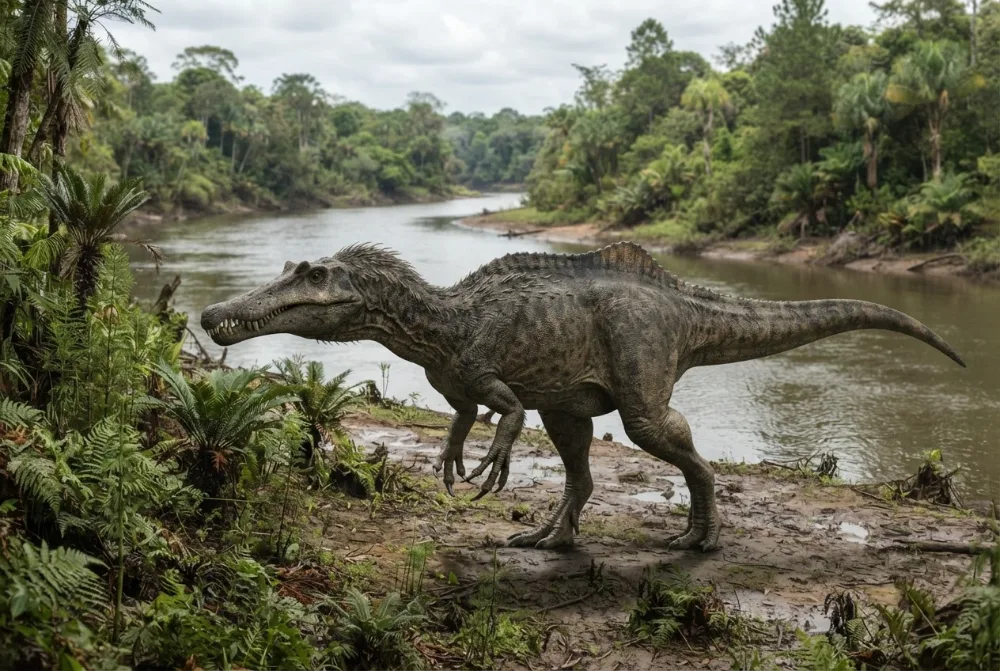
Oxalaia was a huge, meat-eating dinosaur with a long snout like a crocodile. It lived in what is now Brazil and was one of the biggest predators of its time.1
E phetse neng?
E ne e le kgolo hakae?
E ne e le telele hakae?
E ne e phahame hakae?
kakanyo
E ne e le boima hakae?
 telele jwaloka dikoloi tse 3 tse pakilweng ka mola🍌telele jwaloka dibanana tse 78 di behilwe ka mola
 e batla e le boima jwaloka tlou🍉boima jwaloka mahapu a 1400🎒boima jwaloka ditlelase tse feletseng tse 9 tsa bana ba sekolo🐻❄️boima jwaloka dibere tse tshweu tse 16🏢e phahame hoo e ka nyarelang ka fensetere mokatong wa 2🏃e ne e ka matha dimitara tse 100 ka metsotswana e 20 (motho ya lebelo ka ho fetisisa o hloka 9,6)
Oxalaia e ne e le kgolo hakae ha e bapiswa le WENA?
Ke dipalo feela ho browser ya hao. Ha ho letho le bolokwang kapa le romelwang kae kapa kae.
E ne e le lebelo hakae?


Dintlha tse monate
Oxalaia is the largest meat-eating dinosaur ever found in Brazil.1
Its teeth had no serrations, unlike many other spinosaurids such as Suchomimus.1
Oxalaia had one functional tooth followed by two replacement teeth, a feature not seen in other theropod dinosaurs.1
The front part of its snout was very expanded and rounded, different from Spinosaurus.1
Oxalaia lived about 100 to 94 million years ago during the Late Cretaceous period.3
Its fossils were found on Cajual Island, a place where descendants of escaped slaves (quilombolas) live.1
Dipotso tse botswang haholo ka Oxalaia
?How big was Oxalaia?
Oxalaia was about 12 to 14 metres long and weighed 5 to 7 tonnes. That makes it the largest meat eating dinosaur found in Brazil.12
?What did Oxalaia eat?
Oxalaia was a spinosaurid, so it mostly ate fish, like a crocodile. It may also have eaten small dinosaurs and pterosaurs.2
?When did Oxalaia live?
Oxalaia lived during the Late Cretaceous period, about 100.5 to 93.9 million years ago.2
?Where was Oxalaia found?
Oxalaia's fossils were found on Cajual Island in Maranhão, northeastern Brazil, in the Alcântara Formation.2
?Is Oxalaia a dinosaur?
Yes, Oxalaia is a dinosaur. It is a spinosaurid theropod, which means it was a meat-eating dinosaur.2
?Did Oxalaia have feathers?
Nobody knows for sure. No feathers have been found with Oxalaia fossils, and spinosaurids are not known to have feathers, but some related dinosaurs may have had them.2
?Was Oxalaia bigger than T. rex?
Oxalaia was about 12 to 14 metres long, similar in length to T. rex, but T. rex was heavier, weighing about 8 tonnes compared to Oxalaia's 5 to 7 tonnes.12
?Could Oxalaia swim?
It is possible. Spinosaurids like Oxalaia had long snouts and conical teeth like fish-eaters, and some scientists think they could swim, but there is no direct evidence for Oxalaia.2
Bakeng sa ditsebi tsa didinosaure
- Lebitso la saense
- Oxalaia
- E rehilwe ke
- Kellner et al. 20113
- Sehlopha
- Dispinosaure
- Lelapa / leloko
- Spinosauridae3
- Tlhophiso
- Theropoda > Spinosauridae3
- Dilemo tsa mafika
- dilemo tse dimilione tse 100 ho isa ho 94 (Cenomanian)3
- Dibopeho tsa mafika
- Alcântara3
- Dinaha
- Brazil3
- Direkoto tsa difosili
- 1 ho The Paleobiology Database3
- Ho sibollwa
- Oxalaia was named in 2011 by Alexander Kellner and his team based on a snout and a jaw fragment found at Laje do Coringa in Brazil.31
- E sa ntse e phehwa kgang
- Scientists are not sure if Oxalaia is a separate species or the same as Spinosaurus, because only a few bones have been found.1
Moo dintlha di tswang teng
- A new dinosaur (Theropoda, Spinosauridae) from the Cretaceous (Cenomanian) Alcântara Formation, Cajual Island, Brazil (scielo.br)
- Oxalaia (en.wikipedia.org)
- Oxalaia in The Paleobiology Database (CC BY 4.0): dilemo, dibaka, dibopeho tsa mafika, tlhophiso.
Ntlha e nngwe le e nngwe leqepheng lena e na le nomoro e supang mohlodi wa yona. Haeba re fositse ho hong, re kopa tshwarelo, re balatedi ba didinosaure, ha re koranta ya saense. Re bolelle ho [email protected] mme re tla e lokisa.
 Rex o lapile! Dino Wiki ke projeke ya ntate bakeng sa mora wa hae ya ratang didinosaure, ke mahala, ha ho dipapatso, ha ho disebedi. Batho ba baholo ba ka fepa Rex seneke ho thusa hore e dule e le inthaneteng.Fepa Rex
 Spinosaurus
 Baryonyx
 Suchomimus
 Angaturama
 Camarillasaurus
 Ceratosuchops
 Tyrannosaurus
 Triceratops
 Velociraptor
 Ankylosaurus
 Parasaurolophus
 Pteranodon