 Kwisi: O dinosaure efe?
 Ntwa ya didinosaure
 Peiso ya didinosaure
 Dipapadi tse nyane tsa didinosaure
 Albamo ya ditikara
 Manane a TOP a didinosaure
 Nkgethele!
Samrukia
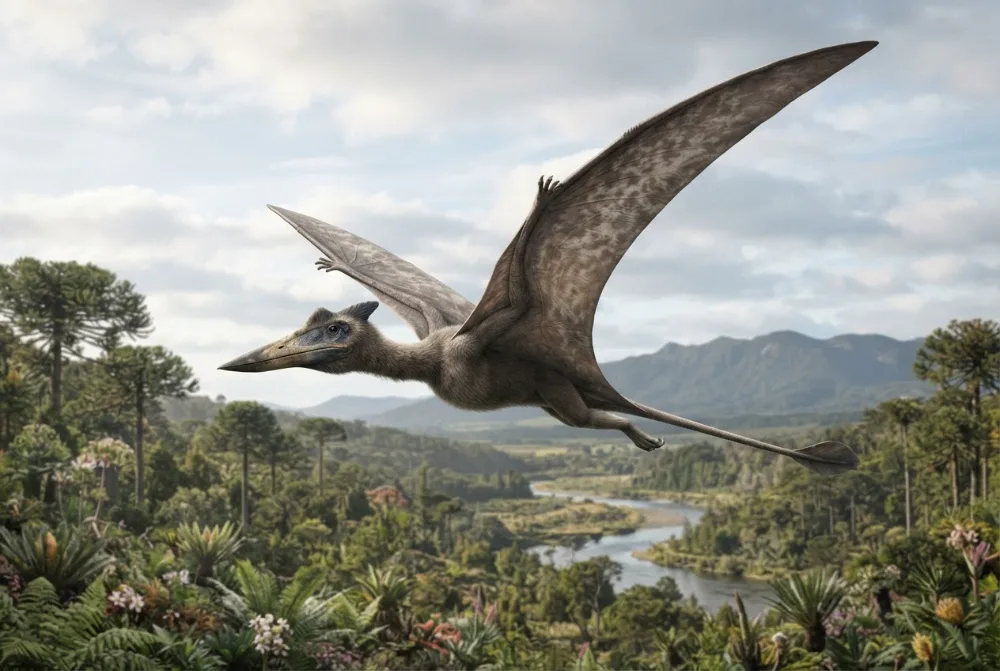
Samrukia was a huge flying reptile that lived in what is now Kazakhstan. It had a very long jaw, and scientists first thought it was a giant bird. Now they think it was a pterosaur, a flying reptile that lived at the same time as dinosaurs.1
E phetse neng?
E ne e le kgolo hakae?
Mapheo a yona a ne a pharaletse hakae?
E ne e phahame hakae?
E ne e le boima hakae?

 mapheo a pharaletse jwaloka dibaesekele tse 2 ka mola
 boima jwaloka dikatse tsa lapeng tse 12🍉boima jwaloka mahapu a 10🧸boima jwaloka bana ba kereshe ba 2.5🎒boima jwaloka bana ba sekolo ba 1.5⚽e ne e ka fofa ho tshela lebala lohle la bolo ya maoto ka metsotswana e 6
Samrukia e ne e le kgolo hakae ha e bapiswa le WENA?
Ke dipalo feela ho browser ya hao. Ha ho letho le bolokwang kapa le romelwang kae kapa kae.
E ne e le lebelo hakae?


Dintlha tse monate
Samrukia is known only from a single lower jaw bone, which is more than 275 millimetres long.2
When first discovered, scientists thought Samrukia was a giant bird, but later studies showed it was a pterosaur.1
Samrukia lived about 84 million years ago, during the Late Cretaceous period.1
If Samrukia could fly, its wingspan might have been about 4 metres (13 feet). If it was flightless, it might have been 2 to 3 metres (6.6 to 9.8 feet) tall.1
The jaw of Samrukia has no teeth, so it probably had a beak.2
Samrukia is named after Samruk, a magical bird from Kazakh mythology.1
Dipotso tse botswang haholo ka Samrukia
?Was Samrukia a dinosaur?
No, Samrukia was a pterosaur, a flying reptile that lived at the same time as dinosaurs. It is not a dinosaur.1
?How big was Samrukia?
If it could fly, its wingspan might have been about 4 metres (13 feet). If it was flightless, it might have been 2 to 3 metres (6.6 to 9.8 feet) tall.1
?What did Samrukia eat?
Samrukia had no teeth in its lower jaw, so it probably had a beak. Scientists think it may have eaten fish or other small animals, but no one knows for sure.1
Mosenyi wa ditshomo
Tshomo: Samrukia was a giant bird.
Nnete: Scientists now agree that Samrukia was a pterosaur, not a bird. The jaw bone has features that are only found in pterosaurs.1
Bakeng sa ditsebi tsa didinosaure
- Lebitso la saense
- Samrukia
- E rehilwe ke
- Naish et al. 20124
- Sehlopha
- Dihahabi tse fofang
- Lelapa / leloko
- Pterosauria4
- Tlhophiso
- Pterosauria4
- Dilemo tsa mafika
- dilemo tse dimilione tse 86 ho isa ho 72 (Santonian / Campanian)4
- Dibopeho tsa mafika
- Bostobe4
- Dinaha
- Kazakhstan4
- Direkoto tsa difosili
- 1 ho The Paleobiology Database4
- Ho sibollwa
- Samrukia was named in 2012 by Darren Naish and his team. The only fossil, a lower jaw, was found in the Bostobynskaya Formation in Kazakhstan.14
- E sa ntse e phehwa kgang
- Scientists are not sure if Samrukia could fly or if it was flightless, because only its jaw has been found.1
Moo dintlha di tswang teng
- Samrukia (en.wikipedia.org)
- untitled (darrennaish.wordpress.com)
- Giant 'phoenix' bird rises again | Fossils | The Guardian (theguardian.com)
- Samrukia in The Paleobiology Database (CC BY 4.0): dilemo, dibaka, dibopeho tsa mafika, tlhophiso.
Ntlha e nngwe le e nngwe leqepheng lena e na le nomoro e supang mohlodi wa yona. Haeba re fositse ho hong, re kopa tshwarelo, re balatedi ba didinosaure, ha re koranta ya saense. Re bolelle ho [email protected] mme re tla e lokisa.
 Rex o lapile! Dino Wiki ke projeke ya ntate bakeng sa mora wa hae ya ratang didinosaure, ke mahala, ha ho dipapatso, ha ho disebedi. Batho ba baholo ba ka fepa Rex seneke ho thusa hore e dule e le inthaneteng.Fepa Rex
 Pteranodon
 Quetzalcoatlus
 Dorygnathus
 Rhamphorhynchus
 Anhanguera
 Pterodactylus
 Tyrannosaurus
 Triceratops
 Velociraptor
 Spinosaurus
 Ankylosaurus
 Parasaurolophus