 Kwisi: O dinosaure efe?
 Ntwa ya didinosaure
 Peiso ya didinosaure
 Dipapadi tse nyane tsa didinosaure
 Albamo ya ditikara
 Manane a TOP a didinosaure
 Nkgethele!
Taniwhasaurus
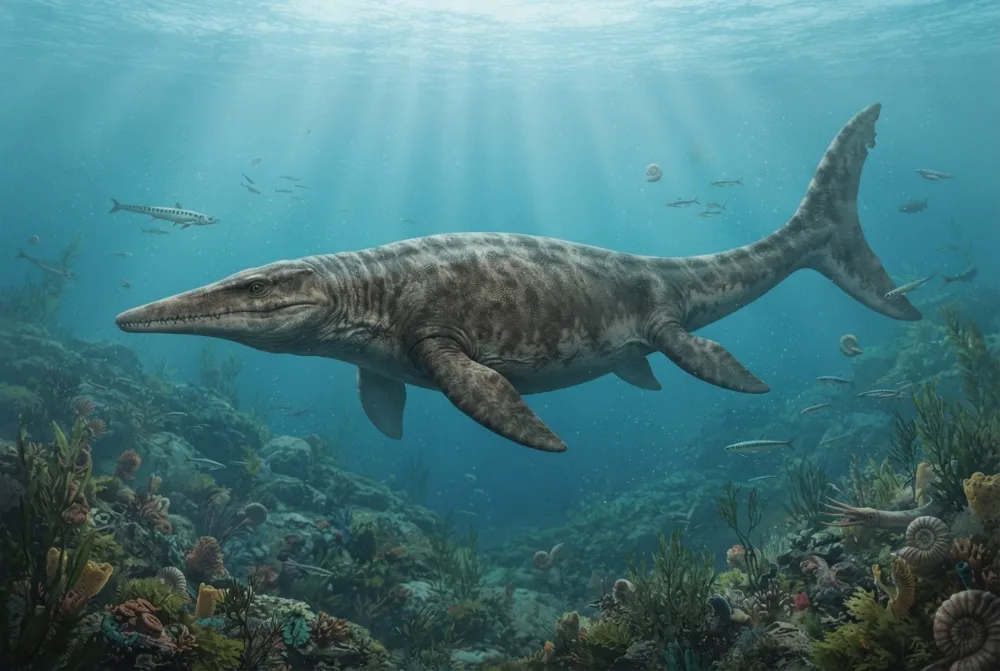
Taniwhasaurus was a fierce marine lizard that swam in the oceans during the time of dinosaurs. It had a long, toothless snout like a spear and used it to hunt fish and other sea creatures. This mosasaur lived near New Zealand, Antarctica, Japan, and South Africa.12
E phetse neng?
E ne e le kgolo hakae?
E ne e le telele hakae?
 telele jwaloka dintja tse 7 ho tloha nkong ho isa mohatleng🍌telele jwaloka dibanana tse 37 di behilwe ka mola🏊e ne e ka sesa bolelele ba letamo le leholo la ho sesa (50 m) ka metsotswana e 4.9
Taniwhasaurus e ne e le kgolo hakae ha e bapiswa le WENA?
Ke dipalo feela ho browser ya hao. Ha ho letho le bolokwang kapa le romelwang kae kapa kae.
E ne e le lebelo hakae?


Dintlha tse monate
Taniwhasaurus belongs to a group called tylosaurines, which had a long, toothless tip on their upper jaw like a bony spear.1
The first fossils of Taniwhasaurus were found in the 1860s at Haumuri Bluff in New Zealand, and named by James Hector in 1874.1
One species, Taniwhasaurus antarcticus, was originally named Lakumasaurus after a sea spirit from the mythology of the Yahgan people of South America.1
A nearly complete skull of Taniwhasaurus antarcticus was discovered on James Ross Island in Antarctica in 2000, measuring 72 centimeters (28 inches) long.1
Taniwhasaurus lived between about 86 and 66 million years ago, during the Late Cretaceous period.2
The species Taniwhasaurus oweni was named in honor of the famous paleontologist Richard Owen, who first described marine reptiles from New Zealand.1
Taniwhasaurus fossils have been found in marine rocks that were once part of ancient seabeds, alongside ammonites, sharks, and other mosasaurs.1
Dipotso tse botswang haholo ka Taniwhasaurus
?How big was Taniwhasaurus?
It was a medium-sized mosasaur, reaching about 6.7 metres (22 feet) long.1
?Could Taniwhasaurus swim?
Yes. Its powerful paddles and flexible spine helped it swim, and its tail gave the main push forward.1
?What did Taniwhasaurus eat?
It hunted fish and other sea creatures. It may have used an electro-sensitive snout to find prey.1
?Is Taniwhasaurus a dinosaur?
No, it is a mosasaur, which is a group of extinct marine lizards that lived alongside dinosaurs.1
?When did Taniwhasaurus go extinct?
It lived during the Late Cretaceous period and died out about 66 million years ago.1
Mosenyi wa ditshomo
Tshomo: Some people think Taniwhasaurus was a dinosaur.
Nnete: Taniwhasaurus was a mosasaur, a type of marine lizard, not a dinosaur. Mosasaurs are reptiles that lived in the sea and are more closely related to modern snakes and monitor lizards.1
Bakeng sa ditsebi tsa didinosaure
- Lebitso la saense
- Taniwhasaurus
- E rehilwe ke
- Hector 18743
- Sehlopha
- Dimosasaure
- Lelapa / leloko
- Mosasauridae3
- Tlhophiso
- Mosasauroidea3
- Dilemo tsa mafika
- dilemo tse dimilione tse 86 ho isa ho 66 (Coniacian / Maastrichtian)3
- Dibopeho tsa mafika
- Conway, Snow Hill Island, Conway Siltstone3
- Dinaha
- New Zealand, Antaraktika, Japane, Afrika Borwa3
- Direkoto tsa difosili
- 11 ho The Paleobiology Database3
- Ho sibollwa
- The first fossils of Taniwhasaurus were found in the 1860s at Haumuri Bluff, New Zealand. Scottish naturalist James Hector named the genus in 1874, calling it Taniwhasaurus oweni after the Māori taniwha and honoring Richard Owen.1
- E sa ntse e phehwa kgang
- Scientists are not sure if the species Taniwhasaurus mikasaensis from Japan is really a separate species, because its fossils are very incomplete.1
Moo dintlha di tswang teng
- Taniwhasaurus (en.wikipedia.org)
- PBDB Taxon (paleobiodb.org)
- Taniwhasaurus in The Paleobiology Database (CC BY 4.0): dilemo, dibaka, dibopeho tsa mafika, tlhophiso.
Ntlha e nngwe le e nngwe leqepheng lena e na le nomoro e supang mohlodi wa yona. Haeba re fositse ho hong, re kopa tshwarelo, re balatedi ba didinosaure, ha re koranta ya saense. Re bolelle ho [email protected] mme re tla e lokisa.
 Rex o lapile! Dino Wiki ke projeke ya ntate bakeng sa mora wa hae ya ratang didinosaure, ke mahala, ha ho dipapatso, ha ho disebedi. Batho ba baholo ba ka fepa Rex seneke ho thusa hore e dule e le inthaneteng.Fepa Rex
 Mosasaurus
 Prognathodon
 Tylosaurus
 Platecarpus
 Clidastes
 Globidens
 Tyrannosaurus
 Triceratops
 Velociraptor
 Spinosaurus
 Ankylosaurus
 Parasaurolophus