 Kwisi: O dinosaure efe?
 Ntwa ya didinosaure
 Peiso ya didinosaure
 Dipapadi tse nyane tsa didinosaure
 Albamo ya ditikara
 Manane a TOP a didinosaure
 Nkgethele!
Titanoboa
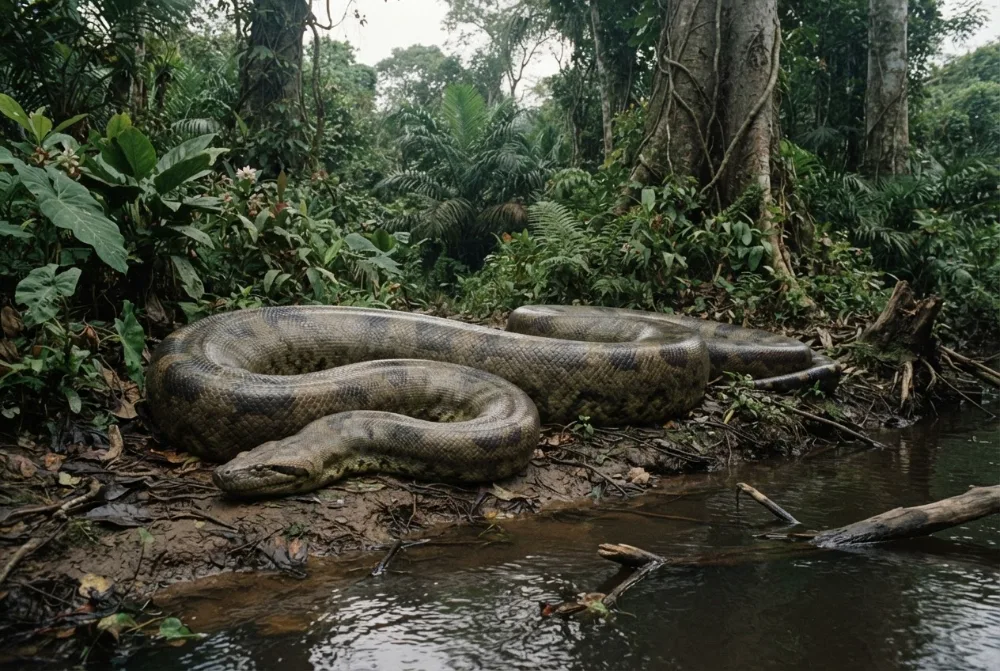
Titanoboa was the biggest snake that ever lived. It was longer than a school bus and heavier than a car. This giant snake lived in hot, swampy rainforests in what is now Colombia.12
E phetse neng?
E ne e le kgolo hakae?
E ne e le telele hakae?
E ne e le boima hakae?
 telele jwaloka dikoloi tse 3 tse pakilweng ka mola🍌telele jwaloka dibanana tse 79 di behilwe ka mola
 boima jwaloka dintja tse 91🍉boima jwaloka mahapu a 360🧸boima jwaloka bana ba kereshe ba 96🎒boima jwaloka bana ba sekolo ba 57🐻❄️boima jwaloka dibere tse tshweu tse 4🏊e ne e ka sesa bolelele ba letamo le leholo la ho sesa (50 m) ka metsotswana e 12
Titanoboa e ne e le kgolo hakae ha e bapiswa le WENA?
Ke dipalo feela ho browser ya hao. Ha ho letho le bolokwang kapa le romelwang kae kapa kae.
E ne e le lebelo hakae?


Dintlha tse monate
Titanoboa was so big that it needed a very warm climate to survive. Scientists think the temperature had to be at least 30 to 34 °C (86 to 93 °F) all year round.2
The first Titanoboa fossils were found in 2002 by students from the University of Florida and the Smithsonian Tropical Research Institute. At first, scientists thought the bones belonged to crocodiles.1
Titanoboa lived right after the dinosaurs went extinct, about 58 to 60 million years ago. It was one of the biggest reptiles on Earth at that time.12
Scientists found bones from at least 30 different Titanoboa individuals in the same coal mine. This shows that many of these giant snakes lived together in the same area.1
Titanoboa had a skull and teeth that were good for eating fish. Its mouth was shaped like the mouths of modern fish-eating snakes.1
Dipotso tse botswang haholo ka Titanoboa
?How big was Titanoboa?
Titanoboa was about 12.8 to 14.3 meters long and weighed around 730 to 1,135 kilograms. That is longer than a school bus and heavier than a car.13
?What did Titanoboa eat?
Titanoboa was an apex predator that likely ate fish, turtles, and crocodiles. Its skull and teeth were good for eating fish, similar to modern fish-eating snakes.14
?When did Titanoboa live?
Titanoboa lived about 58 to 60 million years ago, right after the dinosaurs went extinct. That was during the Paleocene epoch.13
?Where was Titanoboa found?
Titanoboa fossils were found in the Cerrejon coal mine in Colombia. This area was a hot, swampy rainforest when Titanoboa was alive.13
?Is Titanoboa a dinosaur?
No, Titanoboa is not a dinosaur. It is a giant snake from the boid family, which includes boas and anacondas. It lived after the dinosaurs went extinct.1
?Could Titanoboa swim?
Yes, scientists think Titanoboa was semi-aquatic, like modern anacondas. It lived in rivers and swamps and likely hunted in the water.14
?How did Titanoboa become extinct?
Nobody knows for sure why Titanoboa died out. It likely went extinct due to climate change as the Earth cooled and its warm rainforest home shrank.3
?What would happen if Titanoboa was alive today?
If Titanoboa were alive today, it would need a very warm climate, at least 30 to 34 degrees Celsius all year. It would be the biggest snake on Earth and could eat large prey like crocodiles.13
?How fast could Titanoboa move?
Scientists do not know exactly how fast Titanoboa could move. As a large, heavy snake, it was probably slow on land but faster in water, like modern anacondas.1
?Was Titanoboa bigger than a T. rex?
Titanoboa was longer than a T. rex, but not as heavy. T. rex was about 12 meters long and weighed up to 8,000 kilograms, while Titanoboa weighed only about 1,135 kilograms.1
Mosenyi wa ditshomo
Tshomo: Some people think Titanoboa was a dinosaur.
Nnete: Titanoboa was not a dinosaur. It was a giant snake, a reptile that lived after the dinosaurs were gone.1
Bakeng sa ditsebi tsa didinosaure
- Lebitso la saense
- Titanoboa
- E rehilwe ke
- Head et al. 20095
- Sehlopha
- Dibopuwa tse tummeng tsa mehleng ya kgale
- Lelapa / leloko
- Boidae5
- Tlhophiso
- Reptilia > Squamata > Boidae5
- Dilemo tsa mafika
- dilemo tse dimilione tse 62 ho isa ho 56 (Selandian / Thanetian)5
- Dibopeho tsa mafika
- Cerrejón5
- Dinaha
- Kolombia5
- Direkoto tsa difosili
- 1 ho The Paleobiology Database5
- Ho sibollwa
- Titanoboa was discovered in 2002 by students from the University of Florida and the Smithsonian Tropical Research Institute in a coal mine in Colombia. It was named and described in 2009 by a team led by Jason J. Head.15
- E sa ntse e phehwa kgang
- Scientists are not sure exactly how big Titanoboa could grow. Some estimates say it might have reached 14.3 meters (47 feet) long, but others think it was closer to 12.8 meters (42 feet).12
Moo dintlha di tswang teng
- Titanoboa (en.wikipedia.org)
- Giant boid snake from the Palaeocene neotropics reveals hotter past equatorial temperatures (stri-apps.si.edu)
- si.edu (si.edu)
- Titanoboa – thirteen metres, one tonne, largest snake ever. | National Geographic (nationalgeographic.com)
- Titanoboa in The Paleobiology Database (CC BY 4.0): dilemo, dibaka, dibopeho tsa mafika, tlhophiso.
Ntlha e nngwe le e nngwe leqepheng lena e na le nomoro e supang mohlodi wa yona. Haeba re fositse ho hong, re kopa tshwarelo, re balatedi ba didinosaure, ha re koranta ya saense. Re bolelle ho [email protected] mme re tla e lokisa.
 Rex o lapile! Dino Wiki ke projeke ya ntate bakeng sa mora wa hae ya ratang didinosaure, ke mahala, ha ho dipapatso, ha ho disebedi. Batho ba baholo ba ka fepa Rex seneke ho thusa hore e dule e le inthaneteng.Fepa Rex
Tse ding tsa sehlopha se le seng: Dibopuwa tse tummeng tsa mehleng ya kgale
 MegalodonDibopuwa tse tummeng tsa mehleng ya kgale
 Sabre-toothed catDibopuwa tse tummeng tsa mehleng ya kgale
 DimetrodonDibopuwa tse tummeng tsa mehleng ya kgale
 Woolly mammothDibopuwa tse tummeng tsa mehleng ya kgale
 ArthropleuraDibopuwa tse tummeng tsa mehleng ya kgale
 HelicoprionDibopuwa tse tummeng tsa mehleng ya kgale