 O dino efe? Kwisi
 Ntwa ya didino
 Peiso ya didino
 Metshamekwana ya didino
 Alebamo ya disetikara
 Manane a TOP a didino
 Ngakgamatsa!
E tshetse leng?

E ne e le kgolo go le kae?
E ne e le telele go le kae?
E ne e le kwa godimo go le kae?
kakanyo
E ne e le bokete go le kae?
 telele jaaka dikatse tsa mo gae di le 4 go tswa kwa nkong go ya kwa mogatleng🍌telele jaaka dibanana di le 11 di latelana🍉bokete jaaka magapu a le 6🏃e ne e ka taboga dimetara di le 100 mo metsotswaneng e le 9 (motho yo o bonako go gaisa o tlhoka 9,6)
Aristosuchus e ne e le kgolo go le kae fa e bapisiwa le WENA?
Ke dipalo fela mo sebatling sa gago. Ga go sepe se se bolokwang kgotsa se se romelwang gope.
E ne e le bonako go le kae?


Dintlha tse di monate
Aristosuchus was first thought to be a crocodile, but scientists later realized it was a dinosaur.1
The only known fossil of Aristosuchus is a set of bones from the hips and tail, found by a reverend named William D. Fox.1
Its name means 'best crocodile' in Greek, even though it was not a crocodile at all.1
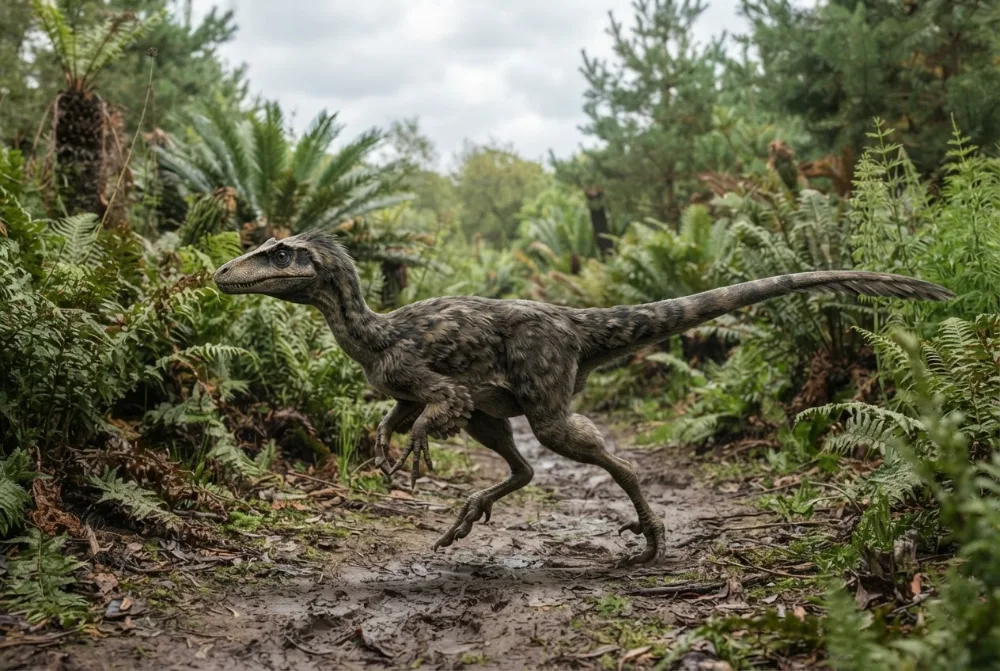
Aristosuchus was about the size of a large dog, around 2 metres (6.6 feet) long.1
It lived on the Isle of Wight, which at the time was a warm, swampy place full of dinosaurs.1
Scientists are not sure exactly how much Aristosuchus weighed; estimates range from 7 to 30 kilograms (15 to 66 pounds).1
Dipotso tse di botswang thata ka ga Aristosuchus
?How big was Aristosuchus?
About 2 metres (6.6 feet) long. Its weight is uncertain: estimates range from 7 to 30 kilograms (15 to 66 pounds).1
?What did Aristosuchus eat?
It was a meat-eater (carnivore) that hunted small animals in its environment.13
?Why is it called Aristosuchus?
Its name means 'best crocodile' in Greek, because scientists first thought it was a crocodile. Later they learned it was a dinosaur.1
?Where did Aristosuchus live?
It lived on the Isle of Wight in England, which was a warm, swampy floodplain with rivers and lakes during the Early Cretaceous.1
Mothubi wa ditlhamane
Tlhamane: Aristosuchus was a crocodile.
Boammaaruri: Aristosuchus was actually a small theropod dinosaur, not a crocodile. Early scientists mistook it for a crocodile because of its name and some bone features.1
Ya baitseanape ba didino
- Leina la saense
- Aristosuchus
- Leina le neilwe ke
- Seeley 18874
- Setlhopha
- Didino tse di jang nama
- Lelapa / clade
- Compsognathidae4
- Thulaganyo
- Theropoda > Compsognathidae4
- Bogolo jwa matlapa
- 126 go ya go 120 dimilione tsa dingwaga (Barremian / Aptian)4
- Dinaga
- Bogosi jo bo Kopaneng4
- Direkoto tsa difosili
- 1 mo The Paleobiology Database4
- Go fitlhelwa
- The fossils were discovered by Reverend William D. Fox on the Isle of Wight, England. Richard Owen first named them Poekilopleuron pusillus in 1876, but Harry Govier Seeley gave them the new name Aristosuchus in 1887.1
- Go sa ntse go ganetsanwa
- Scientists still debate whether Aristosuchus is really a distinct species or if its fossils belong to another dinosaur.2
Kwa dintlha di tswang teng
- Aristosuchus (en.wikipedia.org)
- The historical taxonomy of the Lower Cretaceous theropods (Dinosauria) Calamospondylus and Aristosuchus from the Isle of Wight (darrennaish.wordpress.com)
- Aristosuchus, an Isle of Wight tyrannosauroid? - DinoWight (dinowight.org.uk)
- Aristosuchus in The Paleobiology Database (CC BY 4.0): dingwaga, mafelo, dibopego tsa matlapa, thulaganyo.
Ntlha nngwe le nngwe mo tsebeng eno e na le nomoro e e supang motswedi wa yona. Fa re dirile phoso, maitshwarelo, re barati ba didino, ga re lokwalodikgang lwa saense. Re bolelele kwa [email protected] mme re tla e baakanya.
 Rex o tshwerwe ke tlala! Dino Wiki ke porojeke ya rre e a e diretseng morwawe yo o ratang didino, ke mahala, ga e na dipapatso e bile ga e na dilatedi. Batho ba bagolo ba ka fepa Rex senyamo go thusa gore e nne mo inthaneteng.Fepa Rex
 Allosaurus
 Carnotaurus
 Dilophosaurus
 Giganotosaurus
 Compsognathus
 Paronychodon
 Stegosaurus
 Iguanodon
 Archaeopteryx
 Microraptor
 Deinonychus
 Baryonyx