 O dino efe? Kwisi
 Ntwa ya didino
 Peiso ya didino
 Metshamekwana ya didino
 Alebamo ya disetikara
 Manane a TOP a didino
 Ngakgamatsa!
E tshetse leng?

E ne e le kgolo go le kae?
E ne e le telele go le kae?
E ne e le kwa godimo go le kae?
E ne e le bokete go le kae?

 telele jaaka dikoloi di le 4 di emisitswe mo moleng🍌telele jaaka dibanana di le 100 di latelanabokete jaaka dikoloi di le 13🍉bokete jaaka magapu a le 4000🎒bokete jaaka diphaposiborutelo tse di tletseng bana di le 25🐻❄️bokete jaaka dibere tse ditshweu di le 44🏃e ne e ka taboga dimetara di le 100 mo metsotswaneng e le 22 (motho yo o bonako go gaisa o tlhoka 9,6)
Astrophocaudia e ne e le kgolo go le kae fa e bapisiwa le WENA?
Ke dipalo fela mo sebatling sa gago. Ga go sepe se se bolokwang kgotsa se se romelwang gope.
E ne e le bonako go le kae?


Dintlha tse di monate
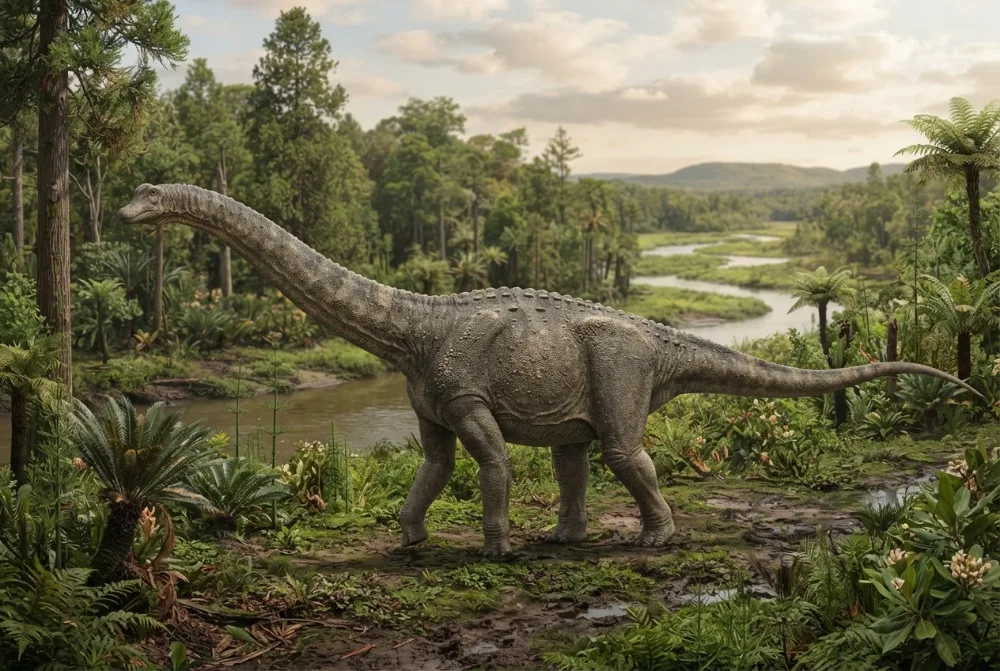
The name Astrophocaudia has a double meaning: 'non-twisting tail' because the tail bones were tightly connected, and 'star tail' because the tail bones look like a three-pointed star from behind.1
Scientists are not sure how big Astrophocaudia was. One study said it was about 10.9 metres (36 feet) long and weighed 2.85 tonnes (6,300 pounds), but another said 18.3 metres (60 feet) long and 20 tonnes (44,000 pounds).1
Most of the bones from one single Astrophocaudia were found together, including 24 tail bones, parts of the neck and back, ribs, a shoulder blade, and a hip bone.1
Astrophocaudia's fossils were first discovered in the 1960s by paleontologist Robert Slaughter, but they were not fully studied until the 2010s.1
The species name slaughteri honors Robert Slaughter, who dug up the bones.1
Dipotso tse di botswang thata ka ga Astrophocaudia
?How big was Astrophocaudia?
Scientists are not sure. One study estimated it at 10.9 metres (36 feet) long and 2.85 tonnes (6,300 pounds), while another estimated 18.3 metres (60 feet) long and 20 tonnes (44,000 pounds).1
?What did Astrophocaudia eat?
It was a herbivore, meaning it ate plants.3
?When did Astrophocaudia live?
It lived during the Early Cretaceous Period, about 112 to 106 million years ago.1
Ya baitseanape ba didino
- Leina la saense
- Astrophocaudia
- Leina le neilwe ke
- D'Emic 20133
- Setlhopha
- Melala-meleele
- Lelapa / clade
- Somphospondyli3
- Thulaganyo
- Sauropodomorpha > Sauropoda > Macronaria3
- Bogolo jwa matlapa
- 113 go ya go 110 dimilione tsa dingwaga (Albian)3
- Dibopego tsa matlapa
- Paluxy3
- Dinaga
- Amerika3
- Direkoto tsa difosili
- 1 mo The Paleobiology Database3
- Go fitlhelwa
- Astrophocaudia was named in 2012 (published 2013) by Michael D. D'Emic based on fossils found in the 1960s by Robert Slaughter in the Paluxy Formation of Texas.13
- Go sa ntse go ganetsanwa
- Scientists are not sure exactly how large Astrophocaudia grew because different estimates give very different sizes.1
Kwa dintlha di tswang teng
- Astrophocaudia (en.wikipedia.org)
- Astrophocaudia (ru.wikipedia.org)
- Astrophocaudia in The Paleobiology Database (CC BY 4.0): dingwaga, mafelo, dibopego tsa matlapa, thulaganyo.
Ntlha nngwe le nngwe mo tsebeng eno e na le nomoro e e supang motswedi wa yona. Fa re dirile phoso, maitshwarelo, re barati ba didino, ga re lokwalodikgang lwa saense. Re bolelele kwa [email protected] mme re tla e baakanya.
 Rex o tshwerwe ke tlala! Dino Wiki ke porojeke ya rre e a e diretseng morwawe yo o ratang didino, ke mahala, ga e na dipapatso e bile ga e na dilatedi. Batho ba bagolo ba ka fepa Rex senyamo go thusa gore e nne mo inthaneteng.Fepa Rex
 Brachiosaurus
 Diplodocus
 Brontosaurus
 Argentinosaurus
 Camarasaurus
 Morosaurus
 Stegosaurus
 Iguanodon
 Archaeopteryx
 Giganotosaurus
 Microraptor
 Deinonychus