 O dino efe? Kwisi
 Ntwa ya didino
 Peiso ya didino
 Metshamekwana ya didino
 Alebamo ya disetikara
 Manane a TOP a didino
 Ngakgamatsa!
Bannykus
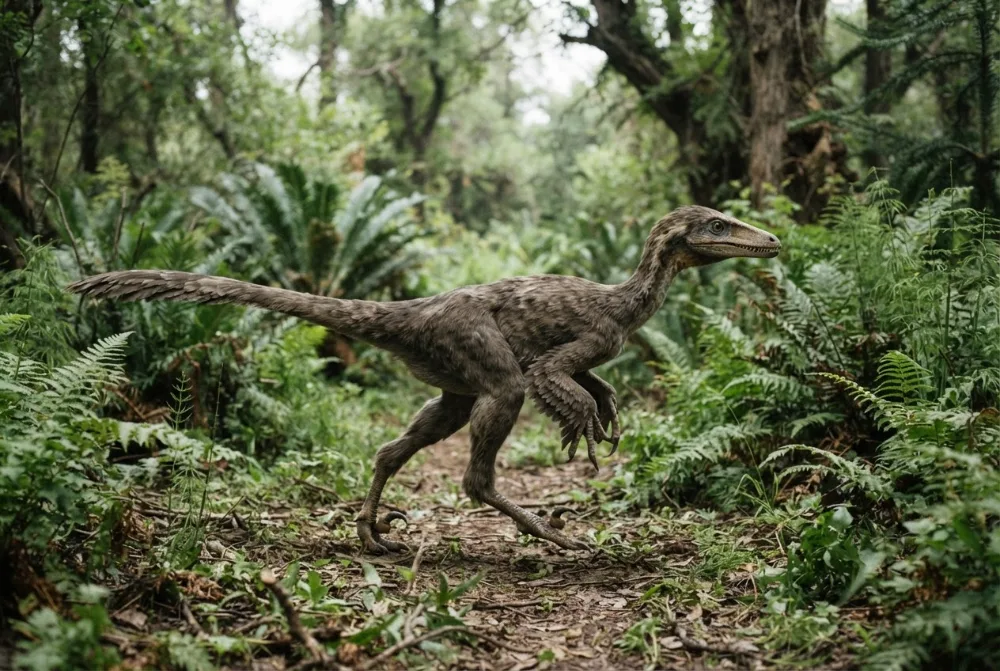
Bannykus was a meat-eating dinosaur about the size of a large dog. It lived during the Early Cretaceous period, around 125 to 113 million years ago, in what is now Inner Mongolia, China. Bannykus is special because its arms are halfway between those of earlier, longer-armed alvarezsaurians and later ones with very short arms.123
E tshetse leng?
E ne e le kgolo go le kae?
E ne e le telele go le kae?
E ne e le kwa godimo go le kae?
kakanyo
E ne e le bokete go le kae?

 telele jaaka dintšwa di le 3 go tswa kwa nkong go ya kwa mogatleng🍌telele jaaka dibanana di le 15 di latelana🍉bokete jaaka magapu a le 6🏃e ne e ka taboga dimetara di le 100 mo metsotswaneng e le 7.8 (motho yo o bonako go gaisa o tlhoka 9,6)
Bannykus e ne e le kgolo go le kae fa e bapisiwa le WENA?
Ke dipalo fela mo sebatling sa gago. Ga go sepe se se bolokwang kgotsa se se romelwang gope.
E ne e le bonako go le kae?


Dintlha tse di monate
Bannykus lived about 125 to 113 million years ago during the Aptian age of the Early Cretaceous.3
Its arm bones are halfway between the longer arms of older alvarezsaurian dinosaurs and the very short, strong arms of later ones like Shuvuuia.12
The only known Bannykus skeleton belonged to an 8-year-old sub-adult that still had some growing to do.1
Its thumb, or digit II, was much larger than its ring finger, or digit IV, but not as extreme as in later alvarezsaurids.1
Bannykus could move its arms in many directions and probably used them for different kinds of digging.2
Scientists found the fossil in 2009, and in 2012 it was displayed in Japan under the nickname 'Wulatesaurus' before getting its official name in 2018.2
Dipotso tse di botswang thata ka ga Bannykus
?What did Bannykus eat?
Bannykus probably ate meat. Scientists found bone fragments in its stomach, which suggests it was a carnivore.2
?How big was Bannykus?
Bannykus was about 2.77 metres (9.1 feet) long and weighed around 24 to 30 kilograms (53 to 66 pounds). That is about the size of a large dog.2
?Could Bannykus dig?
Yes, Bannykus could probably dig. Its arms were good for different kinds of digging motions, but not as specialized as later relatives.2
Ya baitseanape ba didino
- Leina la saense
- Bannykus
- Leina le neilwe ke
- Xu et al. 20184
- Setlhopha
- Didino tse di jang nama
- Lelapa / clade
- Alvarezsauroidea4
- Thulaganyo
- Theropoda4
- Bogolo jwa matlapa
- 121 go ya go 113 dimilione tsa dingwaga (Aptian)4
- Dibopego tsa matlapa
- Bayangobi4
- Dinaga
- Tšhaena4
- Direkoto tsa difosili
- 1 mo The Paleobiology Database4
- Go fitlhelwa
- Bannykus was named in 2018 by Xu Xing and colleagues. The holotype skeleton was found in 2009 at Chaoge, Inner Mongolia, China, and was displayed in Japan in 2012 under the informal name 'Wulatesaurus'.123
Kwa dintlha di tswang teng
- Two Early Cretaceous Fossils Document Transitional Stages in Alvarezsaurian Dinosaur Evolution: Current Biology (cell.com)
- Bannykus (en.wikipedia.org)
- PBDB Taxon (paleobiodb.org)
- Bannykus in The Paleobiology Database (CC BY 4.0): dingwaga, mafelo, dibopego tsa matlapa, thulaganyo.
Ntlha nngwe le nngwe mo tsebeng eno e na le nomoro e e supang motswedi wa yona. Fa re dirile phoso, maitshwarelo, re barati ba didino, ga re lokwalodikgang lwa saense. Re bolelele kwa [email protected] mme re tla e baakanya.
 Rex o tshwerwe ke tlala! Dino Wiki ke porojeke ya rre e a e diretseng morwawe yo o ratang didino, ke mahala, ga e na dipapatso e bile ga e na dilatedi. Batho ba bagolo ba ka fepa Rex senyamo go thusa gore e nne mo inthaneteng.Fepa Rex
 Allosaurus
 Carnotaurus
 Dilophosaurus
 Giganotosaurus
 Compsognathus
 Paronychodon
 Stegosaurus
 Iguanodon
 Archaeopteryx
 Microraptor
 Deinonychus
 Baryonyx