 O dino efe? Kwisi
 Ntwa ya didino
 Peiso ya didino
 Metshamekwana ya didino
 Alebamo ya disetikara
 Manane a TOP a didino
 Ngakgamatsa!
Barilium
Barilium was a big, plant-eating dinosaur that lived in what is now England. It walked on two legs but could also go on all fours to eat low plants. Its name means 'heavy hip' because of its huge hip bones.3
E tshetse leng?
E ne e le kgolo go le kae?
E ne e le telele go le kae?
E ne e le kwa godimo go le kae?
E ne e le bokete go le kae?
 telele jaaka dikoloi di le 2 di emisitswe mo moleng🍌telele jaaka dibanana di le 56 di latelana
 bokete jaaka dintšwa di le 200🍉bokete jaaka magapu a le 800🎒bokete jaaka diphaposiborutelo tse di tletseng bana di le 5🐻❄️bokete jaaka dibere tse ditshweu di le 9🏃e ne e ka taboga dimetara di le 100 mo metsotswaneng e le 14 (motho yo o bonako go gaisa o tlhoka 9,6)
Barilium e ne e le kgolo go le kae fa e bapisiwa le WENA?
Ke dipalo fela mo sebatling sa gago. Ga go sepe se se bolokwang kgotsa se se romelwang gope.
E ne e le bonako go le kae?


Dintlha tse di monate
Barilium was first thought to be a species of Iguanodon, called Iguanodon dawsoni, before scientists gave it its own name in 2010.1
Its fossils come from rocks that are between about 137 and 121 million years old, from the Early Cretaceous period.3
Barilium had a very large and strong hip bone (ilium), which is why it was named 'heavy hip'.1
This dinosaur is known from only a few fossils, including parts of the spine, hips, and legs.3
Some scientists think Barilium might be the same as other dinosaurs named Kukufeldia, Sellacoxa, and Torilion, but others disagree.3
Barilium lived alongside other dinosaurs like Hypselospinus and Mantellisaurus in ancient England.1
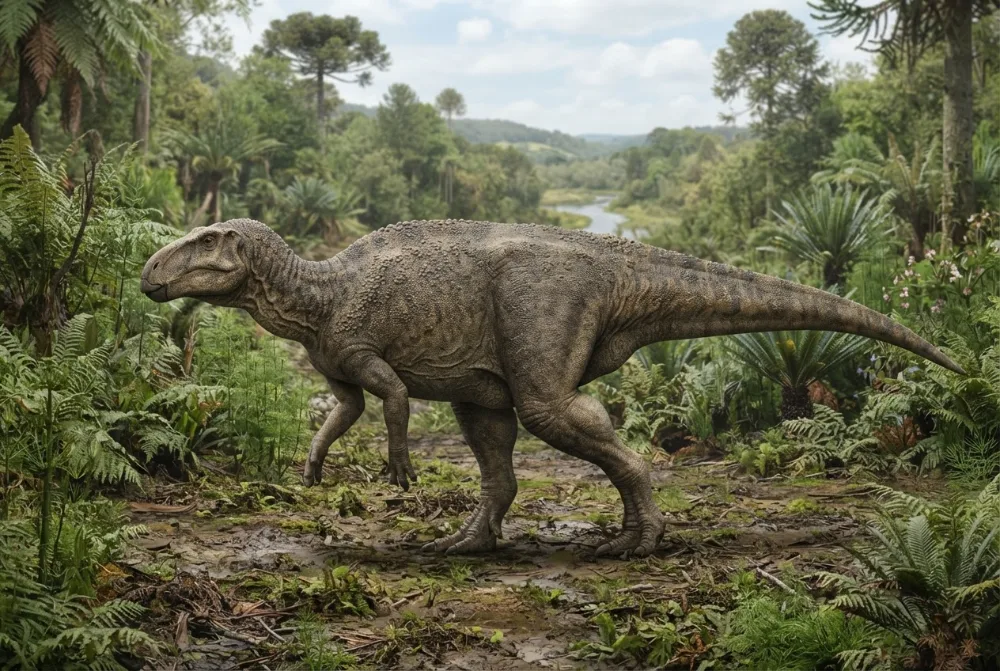
Dipotso tse di botswang thata ka ga Barilium
?How big was Barilium?
About 8 metres (26 feet) long.2
?What did Barilium eat?
It was a plant-eater (herbivore).3
?When did Barilium live?
It lived during the Early Cretaceous period, about 133 million years ago.2
?Where was Barilium found?
Its fossils were found near St Leonards-on-Sea in East Sussex, England.2
Mothubi wa ditlhamane
Tlhamane: Barilium is just a copy of Iguanodon and not a real dinosaur.
Boammaaruri: Barilium is a distinct dinosaur, with unique hip bones that set it apart from Iguanodon and other relatives.1
Ya baitseanape ba didino
- Leina la saense
- Barilium
- Leina le neilwe ke
- Norman 20103
- Setlhopha
- Dija-dimela tse di nang le melomo
- Lelapa / clade
- Iguanodontidae3
- Thulaganyo
- Ornithischia > Ornithopoda > Iguanodontia3
- Bogolo jwa matlapa
- 137 go ya go 121 dimilione tsa dingwaga (Valanginian / Barremian)3
- Dibopego tsa matlapa
- Wadhurst Clay, Weald Clay, Tunbridge Wells Sand3
- Dinaga
- Bogosi jo bo Kopaneng3
- Direkoto tsa difosili
- 5 mo The Paleobiology Database3
- E itsiwe gape e le
- Kukufeldia, Sellacoxa, Torilion (maina a bogologolo jaanong a balwa jaaka phologolo e le nngwe)3
- Go fitlhelwa
- The first fossils of Barilium were found in the 1800s and named Iguanodon dawsoni by Richard Lydekker in 1888. In 2010, David B. Norman gave it the new name Barilium after studying the bones more closely.1
- Go sa ntse go ganetsanwa
- Scientists are not sure if Barilium is exactly the same as other dinosaurs named Kukufeldia, Sellacoxa, and Torilion, or if they are different species.3
Kwa dintlha di tswang teng
- A taxonomy of iguanodontians (Dinosauria: Ornithopoda) from the lower Wealden Group (Cretaceous: Valanginian) of southern England | Zootaxa (biotaxa.org)
- Barilium (en.wikipedia.org)
- Barilium in The Paleobiology Database (CC BY 4.0): dingwaga, mafelo, dibopego tsa matlapa, thulaganyo.
Ntlha nngwe le nngwe mo tsebeng eno e na le nomoro e e supang motswedi wa yona. Fa re dirile phoso, maitshwarelo, re barati ba didino, ga re lokwalodikgang lwa saense. Re bolelele kwa [email protected] mme re tla e baakanya.
 Rex o tshwerwe ke tlala! Dino Wiki ke porojeke ya rre e a e diretseng morwawe yo o ratang didino, ke mahala, ga e na dipapatso e bile ga e na dilatedi. Batho ba bagolo ba ka fepa Rex senyamo go thusa gore e nne mo inthaneteng.Fepa Rex
 Iguanodon
 Tenontosaurus
 Thescelosaurus
 Zalmoxes
 Camptosaurus
 Rhabdodon
 Stegosaurus
 Archaeopteryx
 Giganotosaurus
 Microraptor
 Deinonychus
 Baryonyx