 O dino efe? Kwisi
 Ntwa ya didino
 Peiso ya didino
 Metshamekwana ya didino
 Alebamo ya disetikara
 Manane a TOP a didino
 Ngakgamatsa!
Dysalotosaurus
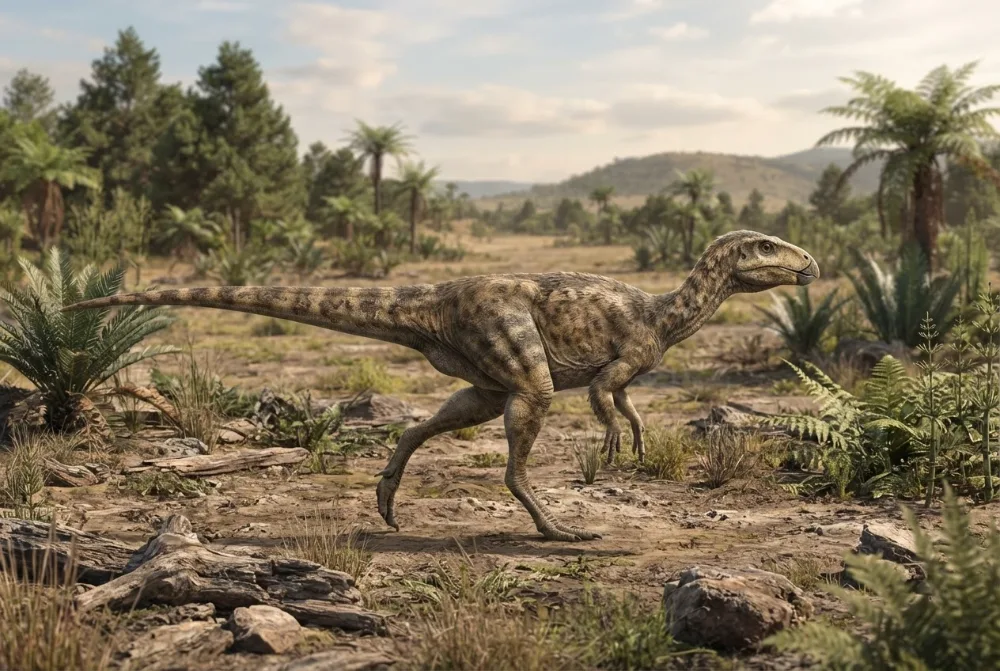
Dysalotosaurus was a small, fast plant-eater that lived in Africa during the Late Jurassic. It ran on two strong legs and had a long tail to help it balance. Thousands of its bones have been found together, suggesting it lived in big herds.1
E tshetse leng?
E ne e le kgolo go le kae?
E ne e le telele go le kae?
E ne e le kwa godimo go le kae?
kakanyo
E ne e le bokete go le kae?
 telele jaaka dintšwa di le 2.5 go tswa kwa nkong go ya kwa mogatleng🍌telele jaaka dibanana di le 14 di latelana🍉bokete jaaka magapu a le 16🧸bokete jaaka bana ba kreše ba le 4🎒bokete jaaka bana ba sekolo ba le 2.5🏃e ne e ka taboga dimetara di le 100 mo metsotswaneng e le 7.8 (motho yo o bonako go gaisa o tlhoka 9,6)
Dysalotosaurus e ne e le kgolo go le kae fa e bapisiwa le WENA?
Ke dipalo fela mo sebatling sa gago. Ga go sepe se se bolokwang kgotsa se se romelwang gope.
E ne e le bonako go le kae?


Dintlha tse di monate
Dysalotosaurus lived about 152 to 149 million years ago, during the Kimmeridgian stage of the Late Jurassic.2
Thousands of Dysalotosaurus bones have been found in Tanzania, and scientists think a whole herd died together in a single event.1
Dysalotosaurus had a life expectancy of about 20 years and lived in mixed-age herds.1
Young Dysalotosaurus had different teeth than adults, suggesting they ate a mix of plants and small animals before becoming full herbivores.1
Dysalotosaurus held its head pointing straight forward when not feeding, based on CT scans of its braincase.1
All known Dysalotosaurus specimens were not yet fully grown when they died.1
Dipotso tse di botswang thata ka ga Dysalotosaurus
?How big was Dysalotosaurus?
Dysalotosaurus was about 2.5 metres (8.2 ft) long and weighed around 80 kilograms (180 lb).1
?What did Dysalotosaurus eat?
It was a plant-eater, but young Dysalotosaurus may have also eaten small animals before becoming full herbivores.1
?Did Dysalotosaurus live in herds?
Yes, thousands of bones found together suggest it lived in big herds, and a whole herd may have died together.1
?How fast could Dysalotosaurus run?
Its long, powerful hind legs suggest it was a fast runner, but no exact speed is known.1
Ya baitseanape ba didino
- Leina la saense
- Dysalotosaurus
- Leina le neilwe ke
- Virchow 19193
- Setlhopha
- Dija-dimela tse di nang le melomo
- Lelapa / clade
- Dryosauridae3
- Thulaganyo
- Ornithischia > Ornithopoda > Iguanodontia3
- Bogolo jwa matlapa
- 152 go ya go 149 dimilione tsa dingwaga (Kimmeridgian)3
- Dibopego tsa matlapa
- Tendaguru3
- Dinaga
- Tanzania3
- Direkoto tsa difosili
- 1 mo The Paleobiology Database3
- Go fitlhelwa
- Dysalotosaurus was named by Hans Virchow in 1919. The fossils were found between 1909 and 1913 in Tanzania, Africa. The species name honors German army officer Paul von Lettow-Vorbeck.1
- Go sa ntse go ganetsanwa
- Scientists still debate whether Dysalotosaurus was a separate genus or the same as Dryosaurus.1
Kwa dintlha di tswang teng
- Dysalotosaurus (en.wikipedia.org)
- PBDB Taxon (paleobiodb.org)
- Dysalotosaurus in The Paleobiology Database (CC BY 4.0): dingwaga, mafelo, dibopego tsa matlapa, thulaganyo.
Ntlha nngwe le nngwe mo tsebeng eno e na le nomoro e e supang motswedi wa yona. Fa re dirile phoso, maitshwarelo, re barati ba didino, ga re lokwalodikgang lwa saense. Re bolelele kwa [email protected] mme re tla e baakanya.
 Rex o tshwerwe ke tlala! Dino Wiki ke porojeke ya rre e a e diretseng morwawe yo o ratang didino, ke mahala, ga e na dipapatso e bile ga e na dilatedi. Batho ba bagolo ba ka fepa Rex senyamo go thusa gore e nne mo inthaneteng.Fepa Rex
 Iguanodon
 Tenontosaurus
 Thescelosaurus
 Zalmoxes
 Camptosaurus
 Rhabdodon
 Brachiosaurus
 Diplodocus
 Allosaurus
 Brontosaurus
 Compsognathus
 Camarasaurus