 O dino efe? Kwisi
 Ntwa ya didino
 Peiso ya didino
 Metshamekwana ya didino
 Alebamo ya disetikara
 Manane a TOP a didino
 Ngakgamatsa!
Fruitadens
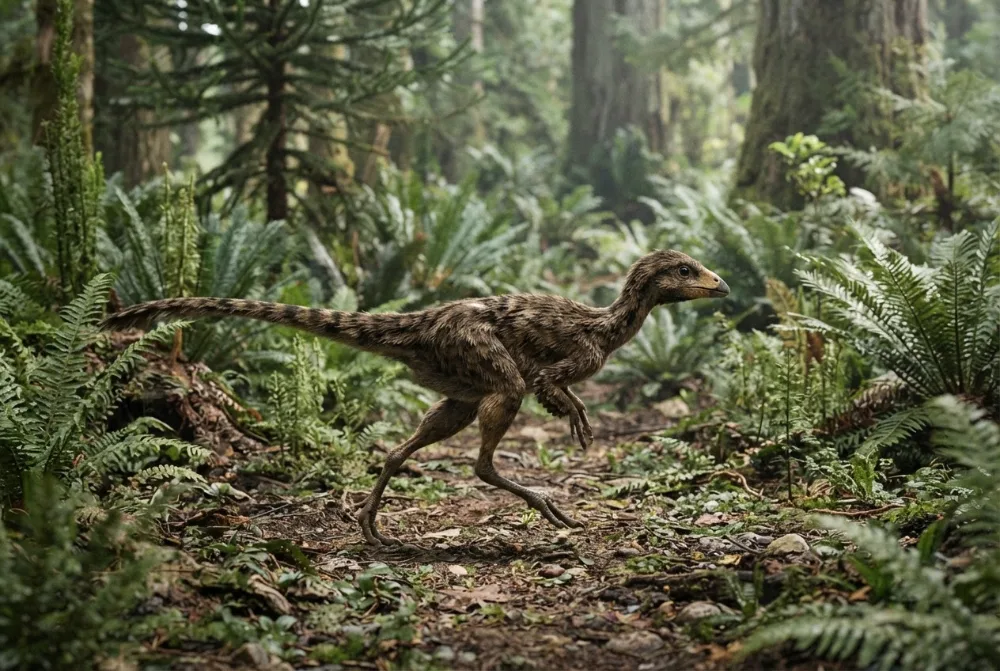
Fruitadens was one of the tiniest plant-eating dinosaurs ever found. It was only as long as a big cat and weighed less than a bag of sugar. This little dinosaur lived in what is now the western United States during the Late Jurassic period.12
E tshetse leng?
E ne e le kgolo go le kae?
E ne e le telele go le kae?
E ne e le kwa godimo go le kae?
kakanyo
E ne e le bokete go le kae?
Fruitadens e ne e le kgolo go le kae fa e bapisiwa le WENA?
Ke dipalo fela mo sebatling sa gago. Ga go sepe se se bolokwang kgotsa se se romelwang gope.
E ne e le bonako go le kae?


Dintlha tse di monate
Fruitadens is the smallest known ornithischian dinosaur, a group that includes many plant-eaters.12
Its lower jaw had an enlarged canine-like tooth, with a gap in the upper jaw for it to fit.1
Unlike many other dinosaurs, Fruitadens had replacement teeth growing in its jaws, like modern mammals.1
The fossils were first found in the 1970s and 1980s by teams from the Natural History Museum of Los Angeles County.1
Fruitadens lived alongside snails, clams, turtles, and early mammals in a floodplain environment.1
Its leg bones were hollow, like those of small meat-eating dinosaurs, which helped keep it light.1
Dipotso tse di botswang thata ka ga Fruitadens
?How big was Fruitadens?
Fruitadens was very small, about 65 to 75 cm long and weighed 0.5 to 0.75 kg. That is about as long as a large house cat and lighter than a bag of sugar.12
?What did Fruitadens eat?
Fruitadens was an omnivore, meaning it ate both plants and small animals. Scientists think it ate select plant material and possibly insects or other invertebrates.13
?When did Fruitadens live?
Fruitadens lived during the Late Jurassic period, about 150 million years ago. Its fossils were found in rocks that are around 150.3 to 150.2 million years old.1
?Where was Fruitadens found?
Fruitadens fossils were found in Colorado, USA, in an area called the Fruita Paleontological Area. The name Fruitadens means 'Fruita teeth' after the town of Fruita.1
?Did Fruitadens have teeth?
Yes, Fruitadens had teeth, including an enlarged canine-like tooth in its lower jaw and a small peg-like tooth in front of it. Unlike many other dinosaurs, it could replace its teeth like modern mammals.1
Ya baitseanape ba didino
- Leina la saense
- Fruitadens
- Leina le neilwe ke
- Butler et al. 20104
- Setlhopha
- Dija-dimela tse di nang le melomo
- Lelapa / clade
- Heterodontosauridae4
- Thulaganyo
- Ornithischia > Heterodontosauridae4
- Bogolo jwa matlapa
- 149 go ya go 143 dimilione tsa dingwaga (Tithonian)4
- Dibopego tsa matlapa
- Morrison4
- Dinaga
- Amerika4
- Direkoto tsa difosili
- 4 mo The Paleobiology Database4
- Go fitlhelwa
- Fruitadens was named in 2010 by Richard Butler and colleagues. The fossils were found in the Fruita Paleontological Area of Colorado, USA, in rocks about 150 million years old.14
- Go sa ntse go ganetsanwa
- Scientists are still debating exactly what Fruitadens ate, though it likely ate both plants and small animals.12
Kwa dintlha di tswang teng
- Fruitadens (en.wikipedia.org)
- Lower limits of ornithischian dinosaur body size inferred from a new Upper Jurassic heterodontosaurid from North America | Proceedings B | The Royal Society (royalsocietypublishing.org)
- Small-Bodied Dinosaur Fruitadens haagarorum from the (journals.plos.org)
- Fruitadens in The Paleobiology Database (CC BY 4.0): dingwaga, mafelo, dibopego tsa matlapa, thulaganyo.
Ntlha nngwe le nngwe mo tsebeng eno e na le nomoro e e supang motswedi wa yona. Fa re dirile phoso, maitshwarelo, re barati ba didino, ga re lokwalodikgang lwa saense. Re bolelele kwa [email protected] mme re tla e baakanya.
 Rex o tshwerwe ke tlala! Dino Wiki ke porojeke ya rre e a e diretseng morwawe yo o ratang didino, ke mahala, ga e na dipapatso e bile ga e na dilatedi. Batho ba bagolo ba ka fepa Rex senyamo go thusa gore e nne mo inthaneteng.Fepa Rex
 Iguanodon
 Tenontosaurus
 Thescelosaurus
 Zalmoxes
 Camptosaurus
 Rhabdodon
 Brachiosaurus
 Diplodocus
 Allosaurus
 Brontosaurus
 Compsognathus
 Camarasaurus