 O dino efe? Kwisi
 Ntwa ya didino
 Peiso ya didino
 Metshamekwana ya didino
 Alebamo ya disetikara
 Manane a TOP a didino
 Ngakgamatsa!
E tshetse leng?

E ne e le kgolo go le kae?
E ne e le telele go le kae?
E ne e le kwa godimo go le kae?
kakanyo
E ne e le bokete go le kae?
 telele jaaka dintšwa di le 4 go tswa kwa nkong go ya kwa mogatleng🍌telele jaaka dibanana di le 23 di latelana🍉bokete jaaka magapu a le 72🧸bokete jaaka bana ba kreše ba le 19🎒bokete jaaka bana ba sekolo ba le 11🏃e ne e ka taboga dimetara di le 100 mo metsotswaneng e le 9 (motho yo o bonako go gaisa o tlhoka 9,6)
Fylax e ne e le kgolo go le kae fa e bapisiwa le WENA?
Ke dipalo fela mo sebatling sa gago. Ga go sepe se se bolokwang kgotsa se se romelwang gope.
E ne e le bonako go le kae?


Dintlha tse di monate
Fylax lived on a chain of islands called the Late Cretaceous European Archipelago, which stretched between the Atlantic and Tethys oceans.2
Its name means 'keeper of the gates of hell' because it lived extremely close to the time of the big extinction that ended the age of dinosaurs.12
Fylax is known from just one nearly complete left jawbone, called a dentary, which was found in the early 1990s.12
Its teeth were tall and narrow, about 2.8 to 3.3 times taller than wide, and had no tiny bumps (denticles) along the edges.2
Fylax was a close relative of hadrosaurids, the duck-billed dinosaurs, but it was not a true hadrosaurid itself.42
Scientists think Fylax's ancestors may have come from Asia and traveled across islands to reach Europe and North America.2
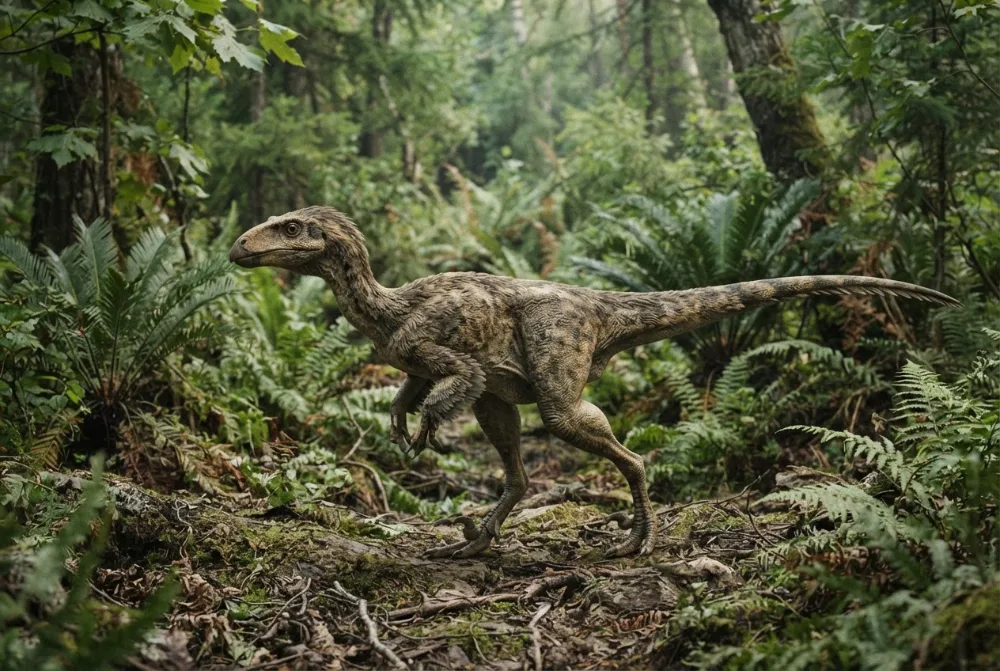
Dipotso tse di botswang thata ka ga Fylax
?How big was Fylax?
Scientists do not know the exact size because only a jawbone has been found. The jawbone is 276 mm long, so it was probably a small dinosaur, maybe 1 to 2 metres long.12
?What did Fylax eat?
Fylax was a plant-eater. Its tall, narrow teeth and flat, steeply angled chewing surface suggest it sliced through tough plants.12
?When did Fylax live?
Fylax lived at the very end of the Cretaceous Period, just before the big extinction that killed the dinosaurs. Its fossils were found in rocks that are about 66 million years old.1
?Is Fylax a dinosaur?
Yes, Fylax is a dinosaur. It is a hadrosauroid ornithopod, a type of duck-billed plant-eating dinosaur.1
Ya baitseanape ba didino
- Leina la saense
- Fylax
- Leina le neilwe ke
- Prieto-Márquez and Carrera Farias 20214
- Setlhopha
- Dija-dimela tse di nang le melomo
- Lelapa / clade
- Hadrosauroidea4
- Thulaganyo
- Ornithischia > Ornithopoda > Iguanodontia4
- Bogolo jwa matlapa
- 72 go ya go 66 dimilione tsa dingwaga (Maastrichtian)4
- Dibopego tsa matlapa
- Figuerola4
- Dinaga
- Sepania4
- Direkoto tsa difosili
- 1 mo The Paleobiology Database4
- Go fitlhelwa
- Fylax was named in 2021 by Albert Prieto-Márquez and Miguel Ángel Carrera Farias based on a jawbone found in the 1990s in northeastern Spain.42
- Go sa ntse go ganetsanwa
- Scientists are not sure exactly where the ancestors of Fylax came from, whether from Asia, Europe, or North America.2
Kwa dintlha di tswang teng
- Fylax (en.wikipedia.org)
- app008212020 (app.pan.pl)
- Fylax thyrakolasus | Dinosaur Database by DinoAnimals.com (dinoanimals.com)
- Fylax in The Paleobiology Database (CC BY 4.0): dingwaga, mafelo, dibopego tsa matlapa, thulaganyo.
Ntlha nngwe le nngwe mo tsebeng eno e na le nomoro e e supang motswedi wa yona. Fa re dirile phoso, maitshwarelo, re barati ba didino, ga re lokwalodikgang lwa saense. Re bolelele kwa [email protected] mme re tla e baakanya.
 Rex o tshwerwe ke tlala! Dino Wiki ke porojeke ya rre e a e diretseng morwawe yo o ratang didino, ke mahala, ga e na dipapatso e bile ga e na dilatedi. Batho ba bagolo ba ka fepa Rex senyamo go thusa gore e nne mo inthaneteng.Fepa Rex
 Iguanodon
 Tenontosaurus
 Thescelosaurus
 Zalmoxes
 Camptosaurus
 Rhabdodon
 Tyrannosaurus
 Triceratops
 Velociraptor
 Spinosaurus
 Ankylosaurus
 Parasaurolophus