 O dino efe? Kwisi
 Ntwa ya didino
 Peiso ya didino
 Metshamekwana ya didino
 Alebamo ya disetikara
 Manane a TOP a didino
 Ngakgamatsa!
Istiorachis
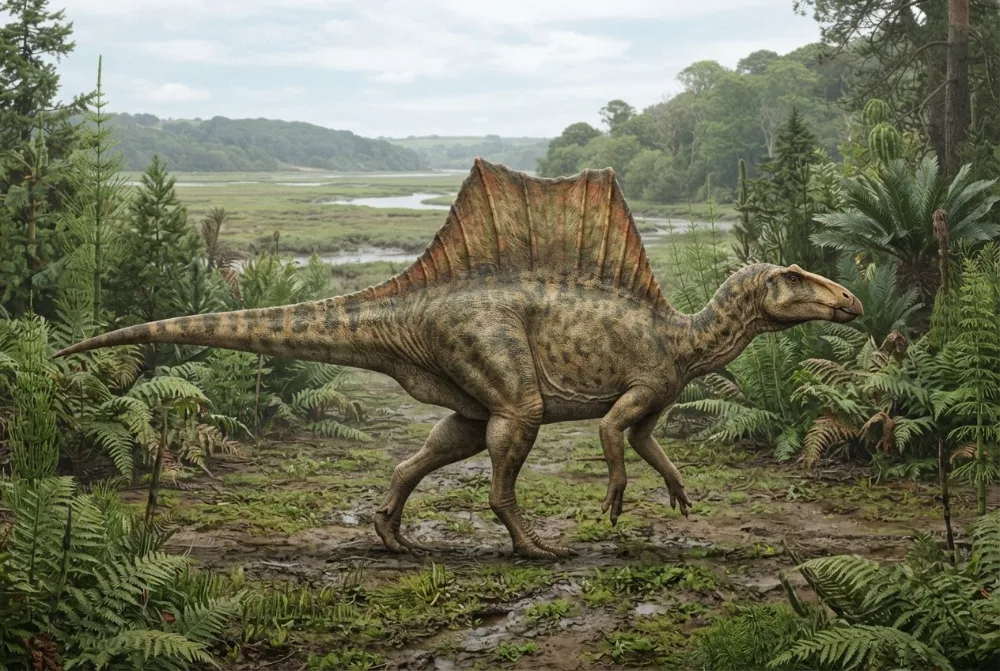
Istiorachis was a plant-eating dinosaur that lived on the Isle of Wight over 120 million years ago. It had a tall sail on its back made of long spines, which might have helped it show off to other dinosaurs. It was about the size of an American bison and weighed as much as a small car.2
E tshetse leng?
E ne e le kgolo go le kae?
E ne e le kwa godimo go le kae?
E ne e le bokete go le kae?

Istiorachis e ne e le kgolo go le kae fa e bapisiwa le WENA?
Ke dipalo fela mo sebatling sa gago. Ga go sepe se se bolokwang kgotsa se se romelwang gope.
E ne e le bonako go le kae?


Dintlha tse di monate
Istiorachis had very long spines on its back and tail bones, making a sail-like structure that was probably used for showing off to mates or scaring predators.1
Its name honors Dame Ellen MacArthur, a famous sailor from the Isle of Wight who sailed solo around the world.1
The only known fossil of Istiorachis was found in a plant debris bed near Grange Chine on the Isle of Wight.1
Some of the skeleton was stolen by poachers before scientists could collect it.1
Istiorachis belonged to a group of dinosaurs called iguanodontians, which were common in the Early Cretaceous.2
The sail of Istiorachis was made of neural spines that were over four times taller than the main part of the backbone.1
Dipotso tse di botswang thata ka ga Istiorachis
?How big was Istiorachis?
It was about the size of an American bison, stood around two metres tall, and weighed about one tonne (1,000 kilograms).2
?What did Istiorachis eat?
It was a plant-eating dinosaur, so it ate plants like ferns, cycads and conifers that grew in its warm, forested environment.3
Ya baitseanape ba didino
- Leina la saense
- Istiorachis
- Leina le neilwe ke
- Lockwood et al. 20254
- Setlhopha
- Dija-dimela tse di nang le melomo
- Lelapa / clade
- Styracosterna4
- Thulaganyo
- Ornithischia > Ornithopoda > Iguanodontia4
- Bogolo jwa matlapa
- 133 go ya go 121 dimilione tsa dingwaga (Hauterivian / Barremian)4
- Dibopego tsa matlapa
- Wessex4
- Dinaga
- Bogosi jo bo Kopaneng4
- Direkoto tsa difosili
- 1 mo The Paleobiology Database4
- Go fitlhelwa
- Istiorachis was named in 2025 by Jeremy Lockwood, David Martill, and Susannah Maidment. The fossil was dug up by Nicholas Chase from the Wessex Formation on the Isle of Wight.1
- Go sa ntse go ganetsanwa
- Scientists are not sure exactly what the sail was used for. It might have helped with walking on four legs, or it might have been for showing off to other dinosaurs.1
Kwa dintlha di tswang teng
- The origins of neural spine elongation in iguanodontian dinosaurs and the osteology of a new sail-back styracosternan (Dinosauria, Ornithischia) from the Lower Cretaceous Wealden Group of England (onlinelibrary.wiley.com)
- New sail-backed dinosaur species unearthed on the Isle of Wight | Natural History Museum (nhm.ac.uk)
- Istiorachis (en.wikipedia.org)
- Istiorachis in The Paleobiology Database (CC BY 4.0): dingwaga, mafelo, dibopego tsa matlapa, thulaganyo.
Ntlha nngwe le nngwe mo tsebeng eno e na le nomoro e e supang motswedi wa yona. Fa re dirile phoso, maitshwarelo, re barati ba didino, ga re lokwalodikgang lwa saense. Re bolelele kwa [email protected] mme re tla e baakanya.
 Rex o tshwerwe ke tlala! Dino Wiki ke porojeke ya rre e a e diretseng morwawe yo o ratang didino, ke mahala, ga e na dipapatso e bile ga e na dilatedi. Batho ba bagolo ba ka fepa Rex senyamo go thusa gore e nne mo inthaneteng.Fepa Rex
 Iguanodon
 Tenontosaurus
 Thescelosaurus
 Zalmoxes
 Camptosaurus
 Rhabdodon
 Stegosaurus
 Archaeopteryx
 Giganotosaurus
 Microraptor
 Deinonychus
 Baryonyx