 O dino efe? Kwisi
 Ntwa ya didino
 Peiso ya didino
 Metshamekwana ya didino
 Alebamo ya disetikara
 Manane a TOP a didino
 Ngakgamatsa!
Macrogryphosaurus
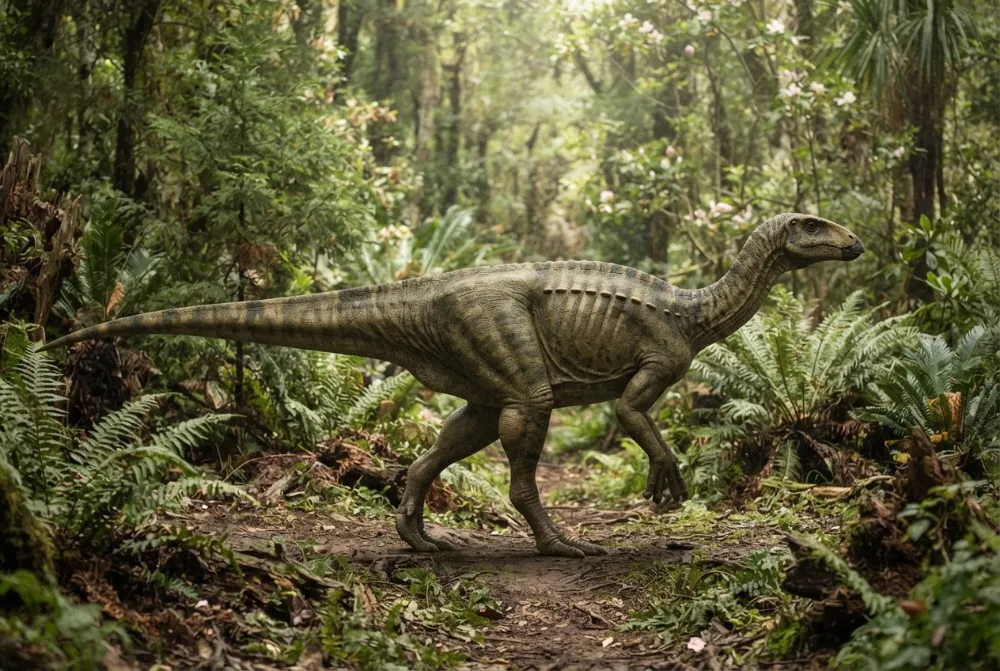
Macrogryphosaurus was a big, gentle plant-eater that wandered the forests of ancient Argentina. It had a long neck and tail, and bony plates along its ribs that might have helped it breathe or stayed stiff. This dinosaur is the largest known member of its group, the elasmarian ornithopods.1
E tshetse leng?
E ne e le kgolo go le kae?
E ne e le telele go le kae?
E ne e le kwa godimo go le kae?
kakanyo
E ne e le bokete go le kae?
 telele jaaka dintšwa di le 6 go tswa kwa nkong go ya kwa mogatleng🍌telele jaaka dibanana di le 33 di latelana🍉bokete jaaka magapu a le 60🧸bokete jaaka bana ba kreše ba le 16🎒bokete jaaka bana ba sekolo ba le 9🏃e ne e ka taboga dimetara di le 100 mo metsotswaneng e le 8.8 (motho yo o bonako go gaisa o tlhoka 9,6)
Macrogryphosaurus e ne e le kgolo go le kae fa e bapisiwa le WENA?
Ke dipalo fela mo sebatling sa gago. Ga go sepe se se bolokwang kgotsa se se romelwang gope.
E ne e le bonako go le kae?


Dintlha tse di monate
Macrogryphosaurus had bony plates along its ribs, called intercostal plates, which made its torso stiff and bird-like.1
It is the largest known elasmarian dinosaur, reaching about 6 metres (20 feet) long.1
Its name means 'big enigmatic lizard', because scientists were puzzled by its features.1
Macrogryphosaurus had a long neck and a tail similar to a coelurosaur, a group of theropod dinosaurs, which is unusual for an ornithopod.1
Fossils of Macrogryphosaurus were discovered by a young boy named Rafael Moyano in 1999 near Lake Mari Menuco in Argentina.1
Only one nearly complete skeleton of Macrogryphosaurus has been found, so scientists are still learning about it.1
Dipotso tse di botswang thata ka ga Macrogryphosaurus
?How big was Macrogryphosaurus?
It was about 6 metres (20 feet) long, though one estimate says 5 metres (16 feet) and 300 kg (660 lb). It is the largest known elasmarian dinosaur.1
?What did Macrogryphosaurus eat?
It was a plant-eater, so it ate plants. The Paleobiology Database lists it as a ground-dwelling herbivore.3
?When did Macrogryphosaurus live?
It lived about 89 million years ago, during the Late Cretaceous Period, in what is now Argentina.1
?Why did Macrogryphosaurus have plates on its ribs?
Scientists are not sure. The plates, called intercostal plates, made its torso stiff and bird-like, but their exact purpose is still a mystery.1
Mothubi wa ditlhamane
Tlhamane: Some people think Macrogryphosaurus was a slow, heavy dinosaur.
Boammaaruri: Actually, it was lightly built and graceful, with a slender body compared to many other big ornithopods.1
Ya baitseanape ba didino
- Leina la saense
- Macrogryphosaurus
- Leina le neilwe ke
- Calvo et al. 20073
- Setlhopha
- Dija-dimela tse di nang le melomo
- Lelapa / clade
- Elasmaria3
- Thulaganyo
- Ornithischia > Ornithopoda > Iguanodontia3
- Bogolo jwa matlapa
- 90 go ya go 86 dimilione tsa dingwaga (Coniacian)3
- Dibopego tsa matlapa
- Sierra Barrosa3
- Dinaga
- Arejentina3
- Direkoto tsa difosili
- 1 mo The Paleobiology Database3
- Go fitlhelwa
- Macrogryphosaurus was discovered in 1999 by a boy named Rafael Moyano near Lake Mari Menuco in Argentina. Scientists Jorge Calvo, Juan Porfiri, and Fernando Novas named it in 2007.1
- Go sa ntse go ganetsanwa
- Scientists are still debating how many species of Macrogryphosaurus existed, and whether some other ornithopod fossils belong to this genus.1
Kwa dintlha di tswang teng
- Macrogryphosaurus (en.wikipedia.org)
- Macrogryphosaurus Calvo et al. 2007 - Encyclopedia of Life (eol.org)
- Macrogryphosaurus in The Paleobiology Database (CC BY 4.0): dingwaga, mafelo, dibopego tsa matlapa, thulaganyo.
Ntlha nngwe le nngwe mo tsebeng eno e na le nomoro e e supang motswedi wa yona. Fa re dirile phoso, maitshwarelo, re barati ba didino, ga re lokwalodikgang lwa saense. Re bolelele kwa [email protected] mme re tla e baakanya.
 Rex o tshwerwe ke tlala! Dino Wiki ke porojeke ya rre e a e diretseng morwawe yo o ratang didino, ke mahala, ga e na dipapatso e bile ga e na dilatedi. Batho ba bagolo ba ka fepa Rex senyamo go thusa gore e nne mo inthaneteng.Fepa Rex
 Iguanodon
 Tenontosaurus
 Thescelosaurus
 Zalmoxes
 Camptosaurus
 Rhabdodon
 Tyrannosaurus
 Triceratops
 Velociraptor
 Spinosaurus
 Ankylosaurus
 Parasaurolophus