 O dino efe? Kwisi
 Ntwa ya didino
 Peiso ya didino
 Metshamekwana ya didino
 Alebamo ya disetikara
 Manane a TOP a didino
 Ngakgamatsa!
Ornithopsis
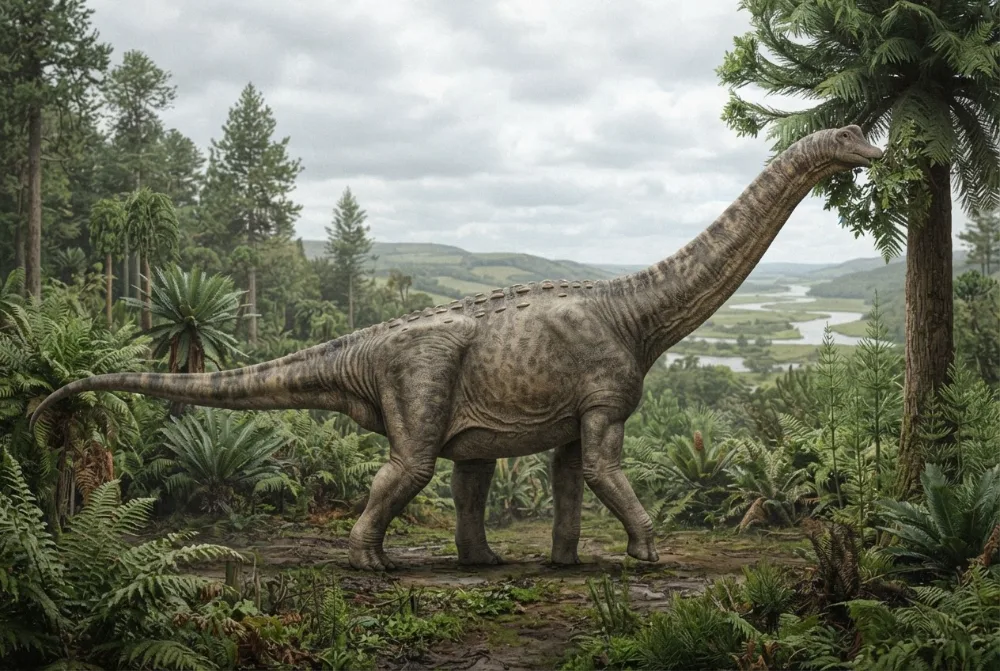
Ornithopsis was a huge, long-necked plant-eater that stomped through England and Germany during the Early Cretaceous. Its name means 'bird-likeness' because its back bones were hollow and filled with air sacs, just like birds have today.1
E tshetse leng?
E ne e le kgolo go le kae?
E ne e le telele go le kae?
E ne e le kwa godimo go le kae?
kakanyo
 telele jaaka dikoloi di le 4 di emisitswe mo moleng🍌telele jaaka dibanana di le 100 di latelana🏃e ne e ka taboga dimetara di le 100 mo metsotswaneng e le 28 (motho yo o bonako go gaisa o tlhoka 9,6)
Ornithopsis e ne e le kgolo go le kae fa e bapisiwa le WENA?
Ke dipalo fela mo sebatling sa gago. Ga go sepe se se bolokwang kgotsa se se romelwang gope.
E ne e le bonako go le kae?


Dintlha tse di monate
Ornithopsis was one of the first dinosaurs whose bones were recognized as having air sacs, like modern birds and pterosaurs.1
The only known species is Ornithopsis hulkei, named after the scientist John Whitaker Hulke.1
Its back bones were very light because they were filled with big cavities called camellae.1
Scientists think Ornithopsis was about 16 to 18 metres long, as long as two school buses.1
A possible German fossil of Ornithopsis came from a slightly smaller individual.1
Ornithopsis belongs to a group of sauropods called Titanosauriformes, which includes some of the biggest land animals ever.1
Dipotso tse di botswang thata ka ga Ornithopsis
?What does the name Ornithopsis mean?
Ornithopsis means 'bird-likeness' in Greek, named for its bird-like hollow bones. The name comes from 'ornis' (bird) and 'opsis' (likeness).12
?How big was Ornithopsis?
Ornithopsis was about 16 to 18 metres long. A possible German fossil came from a slightly smaller individual.13
?What did Ornithopsis eat?
Ornithopsis was a herbivore, eating tough vegetation with its chisel-like teeth. It was a long-necked browser.3
Mothubi wa ditlhamane
Tlhamane: Ornithopsis was a flying animal like a pterosaur.
Boammaaruri: Ornithopsis was a sauropod dinosaur that walked on land. Its name 'bird-likeness' refers to its air-filled bones, not to flying.1
Ya baitseanape ba didino
- Leina la saense
- Ornithopsis
- Leina le neilwe ke
- Seeley 18704
- Setlhopha
- Melala-meleele
- Lelapa / clade
- Titanosauriformes4
- Thulaganyo
- Sauropodomorpha > Sauropoda > Macronaria4
- Bogolo jwa matlapa
- 145 go ya go 120 dimilione tsa dingwaga (Tithonian / Aptian)4
- Dibopego tsa matlapa
- Wessex, Portland Stone4
- Dinaga
- Bogosi jo bo Kopaneng, Jeremane4
- Direkoto tsa difosili
- 6 mo The Paleobiology Database4
- Go fitlhelwa
- Harry Govier Seeley named Ornithopsis in 1870 based on two vertebrae from the Isle of Wight, England. He thought it was a creature between pterosaurs and birds, but later scientists showed it was a sauropod dinosaur.1
- Go sa ntse go ganetsanwa
- Scientists are not sure if the German fossil really belongs to Ornithopsis because it is poorly preserved.1
Kwa dintlha di tswang teng
- Ornithopsis (en.wikipedia.org)
- ORNITHOPSIS - DinoChecker dinosaur archive (dinochecker.com)
- Ornithopsis, an Isle of Wight Brachiosaur - DinoWight (dinowight.org.uk)
- Ornithopsis in The Paleobiology Database (CC BY 4.0): dingwaga, mafelo, dibopego tsa matlapa, thulaganyo.
Ntlha nngwe le nngwe mo tsebeng eno e na le nomoro e e supang motswedi wa yona. Fa re dirile phoso, maitshwarelo, re barati ba didino, ga re lokwalodikgang lwa saense. Re bolelele kwa [email protected] mme re tla e baakanya.
 Rex o tshwerwe ke tlala! Dino Wiki ke porojeke ya rre e a e diretseng morwawe yo o ratang didino, ke mahala, ga e na dipapatso e bile ga e na dilatedi. Batho ba bagolo ba ka fepa Rex senyamo go thusa gore e nne mo inthaneteng.Fepa Rex
 Brachiosaurus
 Diplodocus
 Brontosaurus
 Argentinosaurus
 Camarasaurus
 Morosaurus
 Stegosaurus
 Iguanodon
 Archaeopteryx
 Giganotosaurus
 Microraptor
 Deinonychus