 O dino efe? Kwisi
 Ntwa ya didino
 Peiso ya didino
 Metshamekwana ya didino
 Alebamo ya disetikara
 Manane a TOP a didino
 Ngakgamatsa!
E tshetse leng?

E ne e le kgolo go le kae?
E ne e le telele go le kae?
E ne e le kwa godimo go le kae?
kakanyo
E ne e le bokete go le kae?
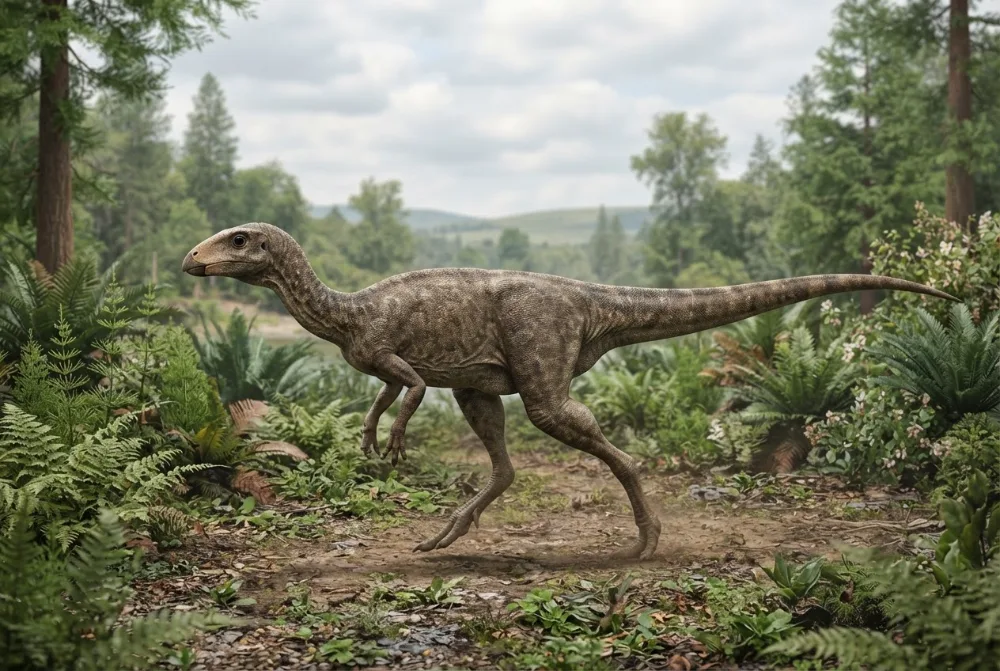
 telele jaaka dintšwa di le 2.5 go tswa kwa nkong go ya kwa mogatleng🍌telele jaaka dibanana di le 14 di latelana
 bokete jaaka dikatse tsa mo gae di le 12🍉bokete jaaka magapu a le 10🧸bokete jaaka bana ba kreše ba le 2.5🎒bokete jaaka bana ba sekolo ba le 1.5🏃e ne e ka taboga dimetara di le 100 mo metsotswaneng e le 8 (motho yo o bonako go gaisa o tlhoka 9,6)
Orodromeus e ne e le kgolo go le kae fa e bapisiwa le WENA?
Ke dipalo fela mo sebatling sa gago. Ga go sepe se se bolokwang kgotsa se se romelwang gope.
E ne e le bonako go le kae?


Dintlha tse di monate
Orodromeus was discovered at a site called Egg Mountain, which was a nesting colony of the much larger dinosaur Maiasaura.1
The first fossils were found by Robert Makela, and the dinosaur was named after him: Orodromeus makelai.1
Some eggs once thought to belong to Orodromeus are now believed to be from a troodontid dinosaur, like Stenonychosaurus.1
Orodromeus embryos had well-developed bones and teeth, suggesting the babies could walk and feed themselves soon after hatching.1
This dinosaur may have dug burrows, like its relative Oryctodromeus, because its bones have been found in places where they would not normally be scattered.1
Orodromeus lived alongside predators like Daspletosaurus and the horned dinosaur Einiosaurus.1
Dipotso tse di botswang thata ka ga Orodromeus
?How big was Orodromeus?
About 2.5 metres (8.2 feet) long. That is roughly the size of a large dog.12
?What did Orodromeus eat?
It was a plant-eater. It used its horny beak and grinding cheek teeth to eat tough plant material, and it probably fed on plants no higher than 1 metre (3.3 feet) off the ground.12
?When did Orodromeus live?
It lived during the Late Cretaceous Period, about 75 million years ago, in what is now Montana, USA.12
?How fast could Orodromeus run?
Nobody knows for sure, but its name means 'mountain runner' and it was built for running on two legs. It was probably very quick.12
?Did Orodromeus dig burrows?
Maybe. Scientists think it may have dug burrows like its relative Oryctodromeus, because its bones are sometimes found packed together in ways that suggest burrowing.1
Ya baitseanape ba didino
- Leina la saense
- Orodromeus
- Leina le neilwe ke
- Horner and Weishampel 19883
- Setlhopha
- Dija-dimela tse di nang le melomo
- Lelapa / clade
- Thescelosauridae3
- Thulaganyo
- Ornithischia3
- Bogolo jwa matlapa
- 84 go ya go 66 dimilione tsa dingwaga (Campanian / Maastrichtian)3
- Dibopego tsa matlapa
- Two Medicine, Hell Creek, Judith River3
- Dinaga
- Amerika3
- Direkoto tsa difosili
- 9 mo The Paleobiology Database3
- Go fitlhelwa
- Orodromeus was named by Jack Horner and David Weishampel in 1988. The first fossils were found by Robert Makela in Teton County, Montana, during an excavation of the Egg Mountain site.1
- Go sa ntse go ganetsanwa
- Scientists are not sure if Orodromeus really dug burrows, because the evidence is not yet strong.1
Kwa dintlha di tswang teng
- Orodromeus (en.wikipedia.org)
- Orodromeus (nhm.ac.uk)
- Orodromeus in The Paleobiology Database (CC BY 4.0): dingwaga, mafelo, dibopego tsa matlapa, thulaganyo.
Ntlha nngwe le nngwe mo tsebeng eno e na le nomoro e e supang motswedi wa yona. Fa re dirile phoso, maitshwarelo, re barati ba didino, ga re lokwalodikgang lwa saense. Re bolelele kwa [email protected] mme re tla e baakanya.
 Rex o tshwerwe ke tlala! Dino Wiki ke porojeke ya rre e a e diretseng morwawe yo o ratang didino, ke mahala, ga e na dipapatso e bile ga e na dilatedi. Batho ba bagolo ba ka fepa Rex senyamo go thusa gore e nne mo inthaneteng.Fepa Rex
 Iguanodon
 Tenontosaurus
 Thescelosaurus
 Zalmoxes
 Camptosaurus
 Rhabdodon
 Tyrannosaurus
 Triceratops
 Velociraptor
 Spinosaurus
 Ankylosaurus
 Parasaurolophus