 O dino efe? Kwisi
 Ntwa ya didino
 Peiso ya didino
 Metshamekwana ya didino
 Alebamo ya disetikara
 Manane a TOP a didino
 Ngakgamatsa!
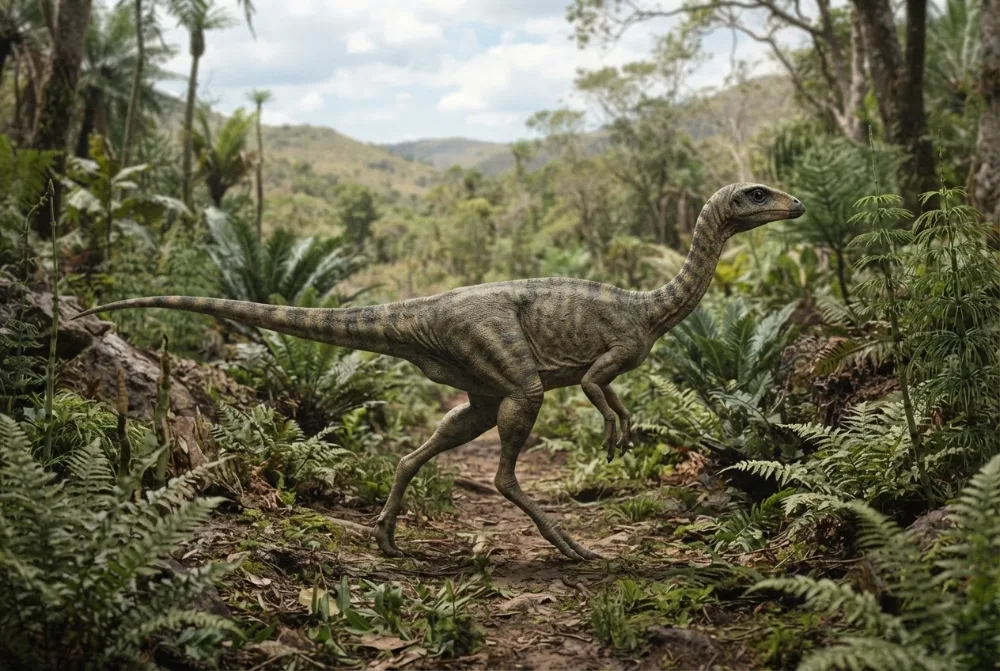
Pampadromaeus
Pampadromaeus was a small, fast runner that lived in Brazil during the Late Triassic, about 233 million years ago. It was an early relative of the huge long-necked sauropods, but it was much smaller and could run on two legs.12
E tshetse leng?
E ne e le kgolo go le kae?
E ne e le telele go le kae?
E ne e le kwa godimo go le kae?
kakanyo
 telele jaaka dikatse tsa mo gae di le 3 go tswa kwa nkong go ya kwa mogatleng🍌telele jaaka dibanana di le 8 di latelana🏃e ne e ka taboga dimetara di le 100 mo metsotswaneng e le 12 (motho yo o bonako go gaisa o tlhoka 9,6)
Pampadromaeus e ne e le kgolo go le kae fa e bapisiwa le WENA?
Ke dipalo fela mo sebatling sa gago. Ga go sepe se se bolokwang kgotsa se se romelwang gope.
E ne e le bonako go le kae?


Dintlha tse di monate
Pampadromaeus had 88 teeth in total, with 4 in each premaxilla and about 20 in each upper jaw and lower jaw.1
Its lower leg was much longer than its thighbone, which shows it was a fast runner.1
The name Pampadromaeus comes from the Quechua word for 'plain' and the Greek word for 'runner', because it lived in an open landscape and could run quickly.1
Pampadromaeus had some traits similar to theropod dinosaurs, like a gap between the premaxilla and maxilla bones, and front teeth without serrations.1
Dipotso tse di botswang thata ka ga Pampadromaeus
?How big was Pampadromaeus?
Pampadromaeus was a small dinosaur, about 1.5 metres (5 feet) long.2
?What did Pampadromaeus eat?
Its teeth were large, pointed and serrated, which suggests it ate meat or plants. Scientists are not completely sure, but it is an early relative of long-necked sauropods.1
?When did Pampadromaeus live?
It lived during the Late Triassic, about 233 million years ago, in what is now Brazil.12
?Was Pampadromaeus a dinosaur?
Yes, it was a small, bipedal dinosaur and an early relative of the long-necked sauropods.1
Ya baitseanape ba didino
- Leina la saense
- Pampadromaeus
- Leina le neilwe ke
- Cabreira et al. 20113
- Setlhopha
- Melala-meleele
- Lelapa / clade
- Saturnaliidae3
- Thulaganyo
- Sauropodomorpha3
- Bogolo jwa matlapa
- 237 go ya go 227 dimilione tsa dingwaga (Carnian)3
- Dibopego tsa matlapa
- Santa Maria3
- Dinaga
- Borasele3
- Direkoto tsa difosili
- 3 mo The Paleobiology Database3
- Go fitlhelwa
- Pampadromaeus was named in 2011 by Sergio F. Cabreira and a team of paleontologists. The skeleton was found at the Janner site in Agudo, Brazil.12
- Go sa ntse go ganetsanwa
- Scientists are not sure how Pampadromaeus is related to other early sauropodomorphs; it might belong to the family Saturnaliidae.2
Kwa dintlha di tswang teng
- Pampadromaeus (en.wikipedia.org)
- Anatomy of the dinosaur Pampadromaeus barberenai (Saurischia, Sauropodomorpha) from the Late Triassic Santa Maria Formation of southern Brazil | PLOS One (journals.plos.org)
- Pampadromaeus in The Paleobiology Database (CC BY 4.0): dingwaga, mafelo, dibopego tsa matlapa, thulaganyo.
Ntlha nngwe le nngwe mo tsebeng eno e na le nomoro e e supang motswedi wa yona. Fa re dirile phoso, maitshwarelo, re barati ba didino, ga re lokwalodikgang lwa saense. Re bolelele kwa [email protected] mme re tla e baakanya.
 Rex o tshwerwe ke tlala! Dino Wiki ke porojeke ya rre e a e diretseng morwawe yo o ratang didino, ke mahala, ga e na dipapatso e bile ga e na dilatedi. Batho ba bagolo ba ka fepa Rex senyamo go thusa gore e nne mo inthaneteng.Fepa Rex
 Brachiosaurus
 Diplodocus
 Brontosaurus
 Argentinosaurus
 Camarasaurus
 Morosaurus
 Nothosaurus
 Coelophysis
 Podokesaurus
 Simosaurus
 Eudimorphodon
 Herrerasaurus