 O dino efe? Kwisi
 Ntwa ya didino
 Peiso ya didino
 Metshamekwana ya didino
 Alebamo ya disetikara
 Manane a TOP a didino
 Ngakgamatsa!
Proa
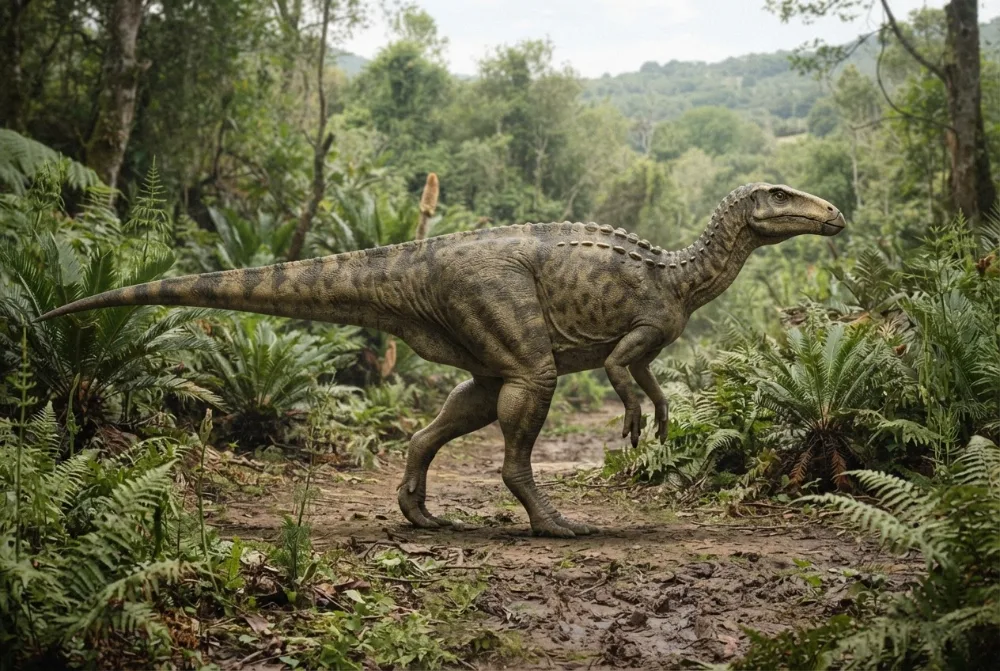
Proa was a plant-eating dinosaur that lived about 112 million years ago in what is now Spain. It had a pointed beak and walked on two legs, but could probably also drop to all fours. It was a relative of the bigger duck-billed dinosaurs.12
E tshetse leng?
E ne e le kgolo go le kae?
E ne e le telele go le kae?
E ne e le kwa godimo go le kae?
E ne e le bokete go le kae?
 telele jaaka dintšwa di le 6 go tswa kwa nkong go ya kwa mogatleng🍌telele jaaka dibanana di le 36 di latelana🍉bokete jaaka magapu a le 200🧸bokete jaaka bana ba kreše ba le 53🎒bokete jaaka bana ba sekolo ba le 31🐻❄️bokete jaaka dibere tse ditshweu di le 2🏃e ne e ka taboga dimetara di le 100 mo metsotswaneng e le 10 (motho yo o bonako go gaisa o tlhoka 9,6)
Proa e ne e le kgolo go le kae fa e bapisiwa le WENA?
Ke dipalo fela mo sebatling sa gago. Ga go sepe se se bolokwang kgotsa se se romelwang gope.
E ne e le bonako go le kae?


Dintlha tse di monate
Proa's beak bone had a pointed tip with side prongs that stuck out, which is unique among its relatives.1
It lived during the Early Cretaceous, about 112 million years ago, which was a time when many new dinosaur groups were appearing.1
Proa is known from at least three partial skeletons and several skull pieces, so scientists have a good idea of what it looked like.1
It was a basal iguanodont, meaning it was an early relative of the bigger iguanodons and duck-billed dinosaurs.3
Proa helps fill a gap in the fossil record of European iguanodonts, which was missing for millions of years.3
Ya baitseanape ba didino
- Leina la saense
- Proa
- Leina le neilwe ke
- McDonald et al. 20124
- Setlhopha
- Dija-dimela tse di nang le melomo
- Lelapa / clade
- Hadrosauriformes4
- Thulaganyo
- Ornithischia > Ornithopoda > Iguanodontia4
- Bogolo jwa matlapa
- 113 go ya go 110 dimilione tsa dingwaga (Albian)4
- Dibopego tsa matlapa
- Escucha4
- Dinaga
- Sepania4
- Direkoto tsa difosili
- 1 mo The Paleobiology Database4
- Go fitlhelwa
- Proa was named by Andrew T. McDonald and colleagues in 2012, based on fossils from coal mines near Val de Ariño in Spain.1
- Go sa ntse go ganetsanwa
- Scientists are still debating exactly where Proa sits on the dinosaur family tree, with some placing it close to Iguanodon and others with Asian relatives.1
Kwa dintlha di tswang teng
- Proa valdearinnoensis (en.wikipedia.org)
- PBDB Taxon (paleobiodb.org)
- An unusual new basal iguanodont (Dinosauria: Ornithopoda) from the Lower Cretaceous of Teruel, Spain | Zootaxa (mapress.com)
- Proa in The Paleobiology Database (CC BY 4.0): dingwaga, mafelo, dibopego tsa matlapa, thulaganyo.
Ntlha nngwe le nngwe mo tsebeng eno e na le nomoro e e supang motswedi wa yona. Fa re dirile phoso, maitshwarelo, re barati ba didino, ga re lokwalodikgang lwa saense. Re bolelele kwa [email protected] mme re tla e baakanya.
 Rex o tshwerwe ke tlala! Dino Wiki ke porojeke ya rre e a e diretseng morwawe yo o ratang didino, ke mahala, ga e na dipapatso e bile ga e na dilatedi. Batho ba bagolo ba ka fepa Rex senyamo go thusa gore e nne mo inthaneteng.Fepa Rex
 Iguanodon
 Tenontosaurus
 Thescelosaurus
 Zalmoxes
 Camptosaurus
 Rhabdodon
 Stegosaurus
 Archaeopteryx
 Giganotosaurus
 Microraptor
 Deinonychus
 Baryonyx