 O dino efe? Kwisi
 Ntwa ya didino
 Peiso ya didino
 Metshamekwana ya didino
 Alebamo ya disetikara
 Manane a TOP a didino
 Ngakgamatsa!
Sektensaurus
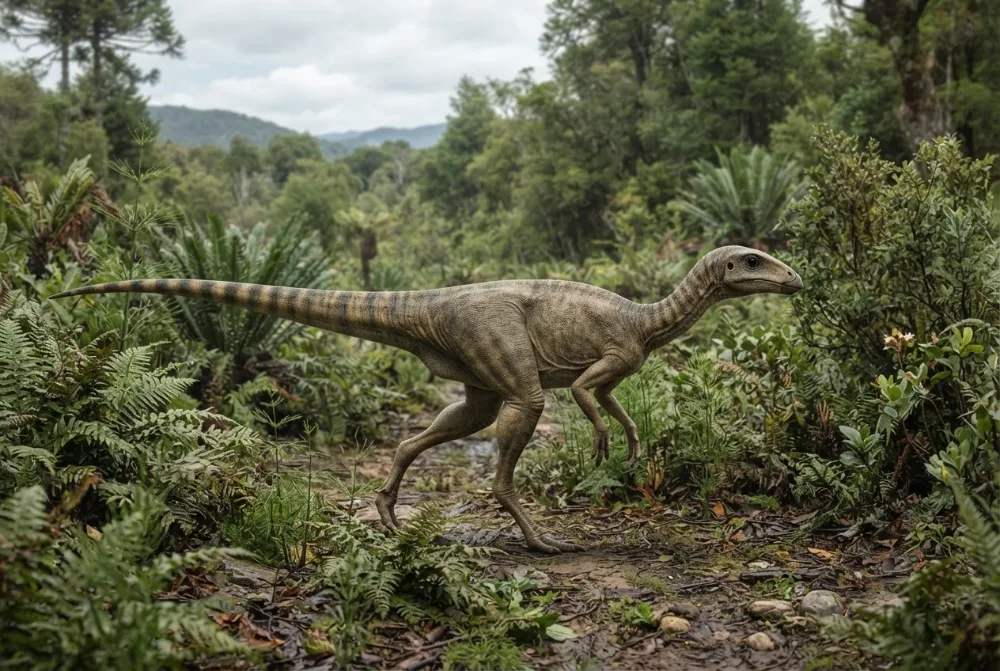
Sektensaurus was a medium-sized, plant-eating dinosaur that lived on an island in what is now Patagonia, Argentina. It walked on two legs and used its beak to munch on tough plants. It is one of the few dinosaurs known from this part of the world near the end of the Age of Dinosaurs.14
E tshetse leng?
E ne e le kgolo go le kae?
E ne e le telele go le kae?
E ne e le kwa godimo go le kae?
E ne e le bokete go le kae?
 telele jaaka dintšwa di le 5 go tswa kwa nkong go ya kwa mogatleng🍌telele jaaka dibanana di le 29 di latelana🍉bokete jaaka magapu a le 66🧸bokete jaaka bana ba kreše ba le 17🎒bokete jaaka bana ba sekolo ba le 10🏃e ne e ka taboga dimetara di le 100 mo metsotswaneng e le 8.6 (motho yo o bonako go gaisa o tlhoka 9,6)
Sektensaurus e ne e le kgolo go le kae fa e bapisiwa le WENA?
Ke dipalo fela mo sebatling sa gago. Ga go sepe se se bolokwang kgotsa se se romelwang gope.
E ne e le bonako go le kae?


Dintlha tse di monate
Sektensaurus is the first non-hadrosauroid ornithopod found in central Patagonia, meaning it was not a duck-billed dinosaur but a close relative.1
Its name comes from the Tehuelche word 'sekten' meaning 'island', because its fossils were found on an island that appears when the lake level is low.1
The fossils were discovered in 1993 by a palaeontologist named Marcello Luna, but the dinosaur wasn't named until 2019.1
Scientists think Sektensaurus lived about 68 to 66 million years ago, right before the big extinction that killed the non-bird dinosaurs.1
The skeleton was found in a small area, just 3 metres (about 10 feet) across, and all the bones belonged to one adult animal.1
Some bones that were first thought to be from the arm and leg were later re-identified, showing that scientists can change their minds about fossils.1
Dipotso tse di botswang thata ka ga Sektensaurus
Mothubi wa ditlhamane
Tlhamane: Some people think Sektensaurus was a duck-billed dinosaur like Edmontosaurus.
Boammaaruri: Sektensaurus was an ornithopod, but it was not a hadrosauroid (duck-billed). It was a more primitive type, possibly an elasmarian.1
Ya baitseanape ba didino
- Leina la saense
- Sektensaurus
- Leina le neilwe ke
- Ibiricu et al. 20194
- Setlhopha
- Dija-dimela tse di nang le melomo
- Lelapa / clade
- Elasmaria4
- Thulaganyo
- Ornithischia > Ornithopoda > Iguanodontia4
- Bogolo jwa matlapa
- 84 go ya go 66 dimilione tsa dingwaga (Campanian / Maastrichtian)4
- Dibopego tsa matlapa
- Lago Colhué Huapi4
- Dinaga
- Arejentina4
- Direkoto tsa difosili
- 2 mo The Paleobiology Database4
- Go fitlhelwa
- The first fossils were found in 1993 by Marcello Luna on an island in Lago Colhué Huapi, Argentina. More bones were collected in 2017, and the dinosaur was named Sektensaurus sanjuanboscoi in 2019 by Ibiricu and colleagues.1
- Go sa ntse go ganetsanwa
- Scientists are not sure if Sektensaurus was an elasmarian, a group of small ornithopods, because the fossils are incomplete and some bones were re-identified.1
Kwa dintlha di tswang teng
- Sektensaurus (en.wikipedia.org)
- Sektensaurus sanjuanboscoi (es.wikipedia.org)
- Sektensaurus sanjuanboscoi | Dinosaur Database by DinoAnimals.com (dinoanimals.com)
- Sektensaurus in The Paleobiology Database (CC BY 4.0): dingwaga, mafelo, dibopego tsa matlapa, thulaganyo.
Ntlha nngwe le nngwe mo tsebeng eno e na le nomoro e e supang motswedi wa yona. Fa re dirile phoso, maitshwarelo, re barati ba didino, ga re lokwalodikgang lwa saense. Re bolelele kwa [email protected] mme re tla e baakanya.
 Rex o tshwerwe ke tlala! Dino Wiki ke porojeke ya rre e a e diretseng morwawe yo o ratang didino, ke mahala, ga e na dipapatso e bile ga e na dilatedi. Batho ba bagolo ba ka fepa Rex senyamo go thusa gore e nne mo inthaneteng.Fepa Rex
 Iguanodon
 Tenontosaurus
 Thescelosaurus
 Zalmoxes
 Camptosaurus
 Rhabdodon
 Tyrannosaurus
 Triceratops
 Velociraptor
 Spinosaurus
 Ankylosaurus
 Parasaurolophus