 O dino efe? Kwisi
 Ntwa ya didino
 Peiso ya didino
 Metshamekwana ya didino
 Alebamo ya disetikara
 Manane a TOP a didino
 Ngakgamatsa!
E tshetse leng?

E ne e le bonako go le kae?


Dintlha tse di monate
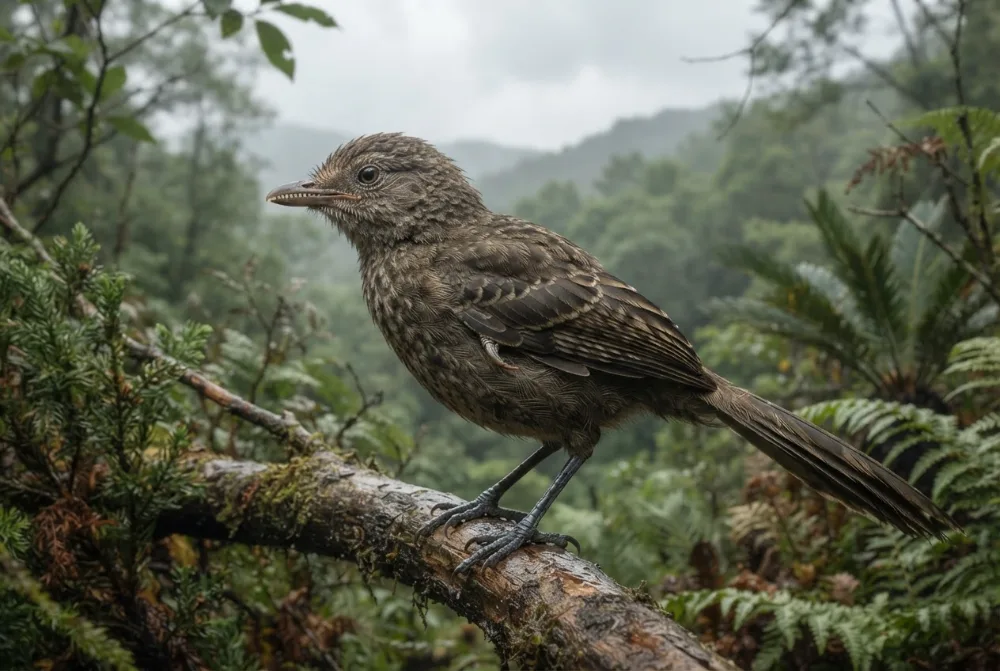
Sulcavis is the first bird ever found with decorated tooth enamel. Its teeth had grooves on the inside that made them stronger.12
It lived about 121 to 125 million years ago during the Early Cretaceous period.1
Sulcavis belonged to a group of ancient birds called enantiornitheans, which still had teeth and claws unlike modern birds.1
The fossil was found in the Yixian Formation, a famous rock layer in China that has preserved many feathered dinosaurs and early birds.1
Its name comes from Latin words meaning 'groove bird', because of the grooves on its teeth.1
Ya baitseanape ba didino
- Leina la saense
- Sulcavis
- Leina le neilwe ke
- O'Connor et al. 20133
- Setlhopha
- Dinonyane tsa ntlha
- Lelapa / clade
- Bohaiornithidae3
- Thulaganyo
- Theropoda > Avialae3
- Bogolo jwa matlapa
- 121 go ya go 113 dimilione tsa dingwaga (Aptian)3
- Dibopego tsa matlapa
- Jiufotang3
- Dinaga
- Tšhaena3
- Direkoto tsa difosili
- 1 mo The Paleobiology Database3
- Go fitlhelwa
- Sulcavis was named in 2013 by a team of scientists including Jingmai O'Connor. The fossil was found near Lamadong in Liaoning, China, and prepared by Maureen Walsh at the Natural History Museum of Los Angeles County.1
- Go sa ntse go ganetsanwa
- Scientists are not sure exactly what Sulcavis ate, but the strong grooved teeth suggest it could handle harder food than other early birds.12
Kwa dintlha di tswang teng
- Sulcavis (en.wikipedia.org)
- A new enantiornithine from the Yixian Formation with the first recognized avian enamel specialization: Journal of Vertebrate Paleontology: Vol 33, No 1 (tandfonline.com)
- Sulcavis in The Paleobiology Database (CC BY 4.0): dingwaga, mafelo, dibopego tsa matlapa, thulaganyo.
Ntlha nngwe le nngwe mo tsebeng eno e na le nomoro e e supang motswedi wa yona. Fa re dirile phoso, maitshwarelo, re barati ba didino, ga re lokwalodikgang lwa saense. Re bolelele kwa [email protected] mme re tla e baakanya.
 Rex o tshwerwe ke tlala! Dino Wiki ke porojeke ya rre e a e diretseng morwawe yo o ratang didino, ke mahala, ga e na dipapatso e bile ga e na dilatedi. Batho ba bagolo ba ka fepa Rex senyamo go thusa gore e nne mo inthaneteng.Fepa Rex
 Archaeopteryx
 Hesperornis
 Ichthyornis
 Baptornis
 Jurapteryx
 Gobipteryx
 Stegosaurus
 Iguanodon
 Giganotosaurus
 Microraptor
 Deinonychus
 Baryonyx