 O dino efe? Kwisi
 Ntwa ya didino
 Peiso ya didino
 Metshamekwana ya didino
 Alebamo ya disetikara
 Manane a TOP a didino
 Ngakgamatsa!
Trinisaura
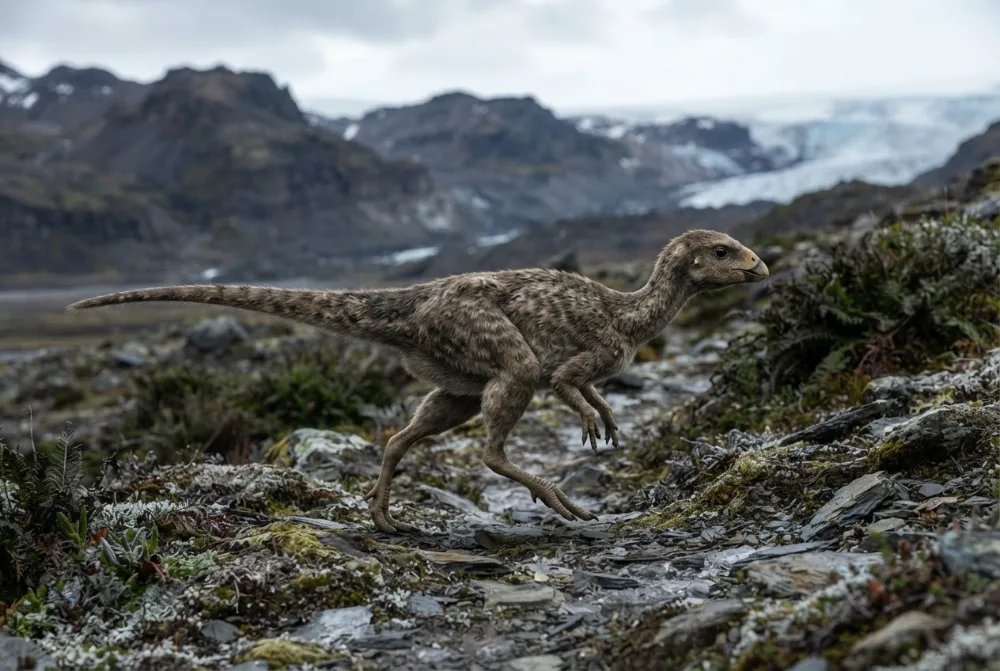
Trinisaura was a small, speedy plant-eater that lived in Antarctica about 73 million years ago. It had a long tail for balance and a little beak for nibbling plants. It was one of the few dinosaurs that lived on the frozen continent!1
E tshetse leng?
E ne e le kgolo go le kae?
E ne e le telele go le kae?
 telele jaaka dikatse tsa mo gae di le 3 go tswa kwa nkong go ya kwa mogatleng🍌telele jaaka dibanana di le 8 di latelana🏃e ne e ka taboga dimetara di le 100 mo metsotswaneng e le 8.8 (motho yo o bonako go gaisa o tlhoka 9,6)
Trinisaura e ne e le kgolo go le kae fa e bapisiwa le WENA?
Ke dipalo fela mo sebatling sa gago. Ga go sepe se se bolokwang kgotsa se se romelwang gope.
E ne e le bonako go le kae?


Dintlha tse di monate
Trinisaura is one of the few dinosaurs known from Antarctica, and it was much smaller than its relative Morrosaurus, which was about 4 metres (13 feet) long.1
The only known skeleton is from a young, not fully grown individual, so scientists think adults might have been a bit bigger.1
Its fossils were found in rocks from the Snow Hill Island Formation, which were laid down in a shallow sea environment.12
Trinisaura had a spike-like process on its shoulder blade and a strongly bowed upper arm bone, which are unique features among ornithopods.2
It was lightly built with long hindlimbs and short forelimbs, so it probably ran on two legs.1
Trinisaura belongs to a group called Elasmaria, which includes other small, agile herbivores from South America and Antarctica.1
Dipotso tse di botswang thata ka ga Trinisaura
?How big was Trinisaura?
About 1.5 metres (4.9 feet) long, which is similar in size to a small pony. That's much smaller than its relative Morrosaurus, which was around 4 metres (13 feet) long.13
?What did Trinisaura eat?
It was a herbivore, meaning it ate plants. It had a small beak for nibbling vegetation and teeth to help chew.1
?Could Trinisaura run fast?
Yes, it was very lightly built with long legs and a long tail for balance, so it was a capable runner. Scientists think it could run faster than many other plant-eating dinosaurs.1
?Where did Trinisaura live?
It lived in Antarctica, on what is now James Ross Island, about 73 million years ago. Back then Antarctica was warmer and covered in forests.1
Mothubi wa ditlhamane
Tlhamane: Some people think dinosaurs never lived in Antarctica.
Boammaaruri: Trinisaura and other dinosaurs like Antarctopelta show that dinosaurs did live in Antarctica during the Cretaceous, when the climate was warmer.1
Ya baitseanape ba didino
- Leina la saense
- Trinisaura
- Leina le neilwe ke
- Coria et al. 20134
- Setlhopha
- Dija-dimela tse di nang le melomo
- Lelapa / clade
- Elasmaria4
- Thulaganyo
- Ornithischia > Ornithopoda > Iguanodontia4
- Bogolo jwa matlapa
- 84 go ya go 72 dimilione tsa dingwaga (Campanian)4
- Dibopego tsa matlapa
- Snow Hill Island4
- Dinaga
- Antaretika4
- Direkoto tsa difosili
- 1 mo The Paleobiology Database4
- Go fitlhelwa
- The fossils were collected in 2008 by paleontologists Juan Moly and Rodolfo Coria during an Antarctic expedition. They were described and named in 2013 by Coria and colleagues.1
- Go sa ntse go ganetsanwa
- Scientists are not sure exactly how Trinisaura is related to other ornithopods. Some studies place it in Elasmaria, while others suggest it belongs to a different group called Rhabdodontoidea.1
Kwa dintlha di tswang teng
- Trinisaura (en.wikipedia.org)
- api.naturalis.fcnym.unlp.edu.ar (api.naturalis.fcnym.unlp.edu.ar)
- A new ornithopod (Dinosauria; Ornithischia) from Antarctica (ri.conicet.gov.ar)
- Trinisaura in The Paleobiology Database (CC BY 4.0): dingwaga, mafelo, dibopego tsa matlapa, thulaganyo.
Ntlha nngwe le nngwe mo tsebeng eno e na le nomoro e e supang motswedi wa yona. Fa re dirile phoso, maitshwarelo, re barati ba didino, ga re lokwalodikgang lwa saense. Re bolelele kwa [email protected] mme re tla e baakanya.
 Rex o tshwerwe ke tlala! Dino Wiki ke porojeke ya rre e a e diretseng morwawe yo o ratang didino, ke mahala, ga e na dipapatso e bile ga e na dilatedi. Batho ba bagolo ba ka fepa Rex senyamo go thusa gore e nne mo inthaneteng.Fepa Rex
 Iguanodon
 Tenontosaurus
 Thescelosaurus
 Zalmoxes
 Camptosaurus
 Rhabdodon
 Tyrannosaurus
 Triceratops
 Velociraptor
 Spinosaurus
 Ankylosaurus
 Parasaurolophus