 O dino efe? Kwisi
 Ntwa ya didino
 Peiso ya didino
 Metshamekwana ya didino
 Alebamo ya disetikara
 Manane a TOP a didino
 Ngakgamatsa!
Vescornis
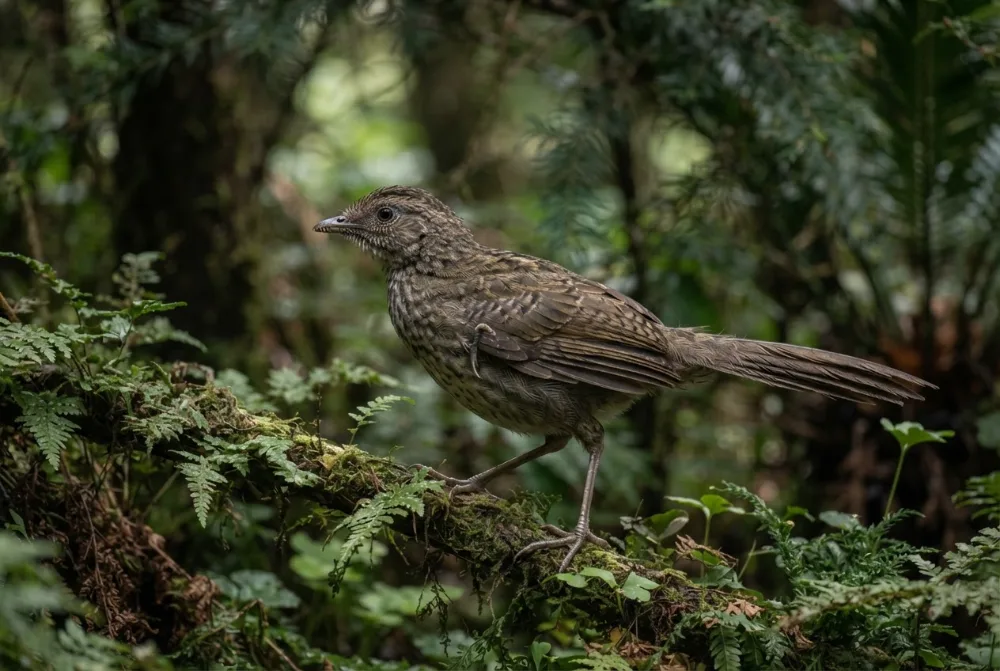
Vescornis was a tiny, feathered dinosaur that could fly. It lived during the Early Cretaceous, about 122 million years ago, in what is now China. This little bird had long foot claws and short wing fingers, which made it great at flying but not so good at climbing trees.12
E tshetse leng?
E ne e le bonako go le kae?


Dintlha tse di monate
Vescornis had very small wing claws and long, strong foot claws, which helped it fly better but made it worse at climbing than many other early birds.2
The only known fossil of Vescornis was first thought to come from the Yixian Formation, but later geologists realized it was actually from the Huajiying Formation.1
Vescornis might be the same animal as another early bird called Jibeinia, but scientists are not sure because the Jibeinia fossil got lost.1
The name 'Hebeiornis' was given to the same fossil in 1999, but that name is not used because it was not described well enough.1
Vescornis lived about 122 million years ago, during the Early Cretaceous period.1
Mothubi wa ditlhamane
Tlhamane: Some people think Vescornis was a true bird like modern birds.
Boammaaruri: Vescornis was an enantiornithine, a group of ancient birds that had teeth and claws, and it is not a direct ancestor of today's birds.1
Ya baitseanape ba didino
- Leina la saense
- Vescornis
- Leina le neilwe ke
- Zhang et al. 20044
- Setlhopha
- Dinonyane tsa ntlha
- Lelapa / clade
- Enantiornithes4
- Thulaganyo
- Theropoda > Avialae4
- Bogolo jwa matlapa
- 126 go ya go 120 dimilione tsa dingwaga (Barremian / Aptian)4
- Dibopego tsa matlapa
- Yixian4
- Dinaga
- Tšhaena4
- Direkoto tsa difosili
- 1 mo The Paleobiology Database4
- Go fitlhelwa
- The fossil was found in Hebei Province, China, and was described by Zhang and colleagues in 2004. It is stored at the Nanjing Institute of Geology and Paleontology.1
- Go sa ntse go ganetsanwa
- Scientists still debate whether Vescornis is the same species as Jibeinia, because the Jibeinia fossil is lost and the two look very similar.1
Kwa dintlha di tswang teng
- Vescornis (en.wikipedia.org)
- Description of a new enantiornithine bird from the Early Cretaceous of Hebei, northern China (cdnsciencepub.com)
- PBDB Taxon (paleobiodb.org)
- Vescornis in The Paleobiology Database (CC BY 4.0): dingwaga, mafelo, dibopego tsa matlapa, thulaganyo.
Ntlha nngwe le nngwe mo tsebeng eno e na le nomoro e e supang motswedi wa yona. Fa re dirile phoso, maitshwarelo, re barati ba didino, ga re lokwalodikgang lwa saense. Re bolelele kwa [email protected] mme re tla e baakanya.
 Rex o tshwerwe ke tlala! Dino Wiki ke porojeke ya rre e a e diretseng morwawe yo o ratang didino, ke mahala, ga e na dipapatso e bile ga e na dilatedi. Batho ba bagolo ba ka fepa Rex senyamo go thusa gore e nne mo inthaneteng.Fepa Rex
 Archaeopteryx
 Hesperornis
 Ichthyornis
 Baptornis
 Jurapteryx
 Gobipteryx
 Stegosaurus
 Iguanodon
 Giganotosaurus
 Microraptor
 Deinonychus
 Baryonyx