 Ban dino nga? Kiis
 Xeexu dino
 Rawante dino
 Fo yu ndaw yu dino
 Albomu sitikeer
 Limu TOP yu dino
 Bett ma!
Anguanax
Anguanax was a plesiosaur, a marine reptile that lived in the warm Jurassic seas. It was a powerful swimmer and a meat-eater, using its long jaws and sharp teeth to catch fish and other soft-bodied prey.1
Kañ la dundoon?
Naka la réyoon?
Naka la guddoon?
 gudd ni 4 xaj, bakkan ba geen🍌gudd ni 22 banaana yu ñu topp-toppale🏊mënoon na féey guddaayu pisin bu mag (50 m) ci 6,2 segond
Naka la Anguanax réyoon, bu ñu ko méngalee ak YAW?
Ay kalkil rekk ci sa navigatëer. Dara du ñu denc, dara du ñu yónne fenn.
Naka la gaawoon?


Xibaar yu neex
Anguanax is the first articulated skeleton of a plesiosaur ever found in Italy.1
Its name comes from the Anguana, a water spirit in Italian folklore that was part fish and part reptile.1
Anguanax lived about 160 million years ago, during the Late Jurassic period.1
The skeleton was discovered in the 1980s but was not fully studied until 2014 by scientists Andrea Cau and Federico Fanti.1
Anguanax had a large skull compared to its body, which helped scientists identify it as a pliosaurid, a type of plesiosaur.1
Its eye sockets were moderately expanded and faced sideways, suggesting it hunted in the upper layers of the ocean.1
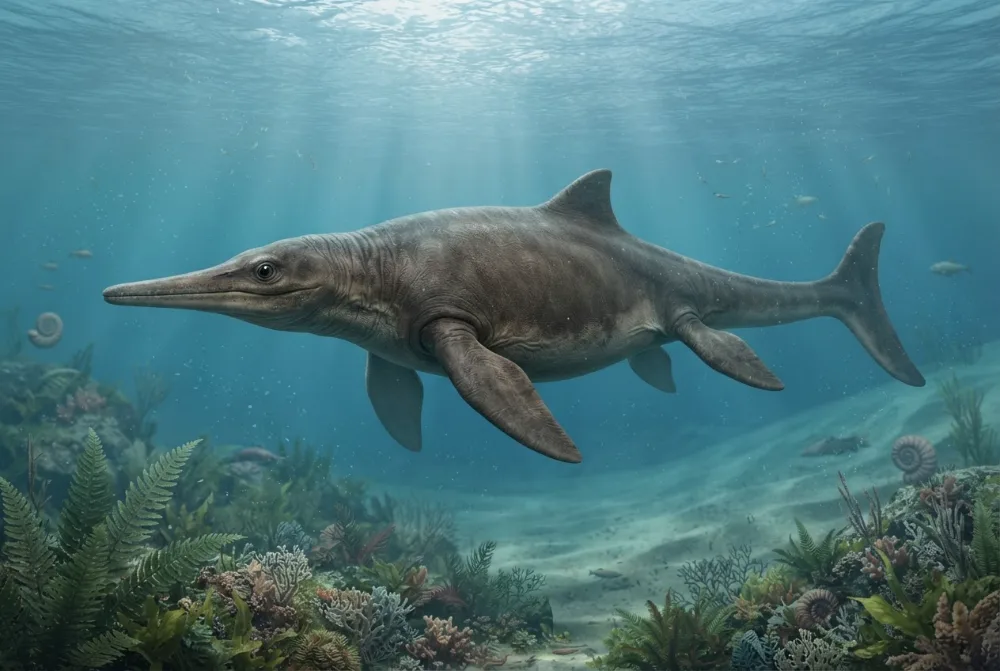
Ngir ñi xam dino lool
- Turu xam-xam
- Anguanax
- Ku ko tudde
- Cau and Fanti 20163
- Kurél
- Plesiyosoor yi
- Njaboot / klad
- Pliosauridae3
- Klasifikasiyoŋ
- Plesiosauria > Pliosauridae > Sauropterygia3
- Màggaayu doj yi
- 165 ba 159 milyoŋ at (Callovian / Oxfordian)3
- Formasiyoŋi doj
- Rosso Ammonitico Veronese3
- Réew yi
- Itali3
- Fosil yu ñu gis
- 1 ci The Paleobiology Database3
- Gisees
- The skeleton was collected in the 1980s from a quarry in northern Italy, but it was first described and named Anguanax zignoi by Andrea Cau and Federico Fanti in 2015. The species name honors Achille de Zigno, who found the first plesiosaur remains in the same area in the 1800s.1
- Ñu ngi koy werante ba tey
- Scientists are still debating exactly how Anguanax is related to other plesiosaurs, with some analyses placing it as a basal pliosaurid and others as a sister group to different lineages.2
Fa xibaar yi jóge
- Anguanax (en.wikipedia.org)
- High evolutionary rates and the origin of the Rosso Ammonitico Veronese Formation (Middle-Upper Jurassic of Italy) reptiles (cris.unibo.it)
- Anguanax in The Paleobiology Database (CC BY 4.0): at, béréb yi, formasiyoŋi doj, klasifikasiyoŋ.
Bépp xibaar ci xët wii am na lim bu wone fa mu jóge. Su nu juumee, baal nu, nun ñu bëgg dino lanu, du ab sërnaalu xam-xam. Wax nu ko ci [email protected] nu defar ko.
 Rex xiif na! Dino Wiki, mbiru ab baay la ngir doomam ju góor ju bëgg dinosoor, ci neen te amul kaamuñaate, amul tracker. Mag ñi mën nañu jox Rex tuuti ñam ngir dimbali ko mu des ci internet.Dundal Rex
 Elasmosaurus
 Pliosaurus
 Plesiosaurus
 Cimoliasaurus
 Colymbosaurus
 Trinacromerum
 Ichthyosaurus
 Khudiakovia
 Ophthalmosaurus
 Pterodactylus
 Rhamphocephalus
 Gongbusaurus