 Ban dino nga? Kiis
 Xeexu dino
 Rawante dino
 Fo yu ndaw yu dino
 Albomu sitikeer
 Limu TOP yu dino
 Bett ma!
Kañ la dundoon?

Naka la gaawoon?


Xibaar yu neex
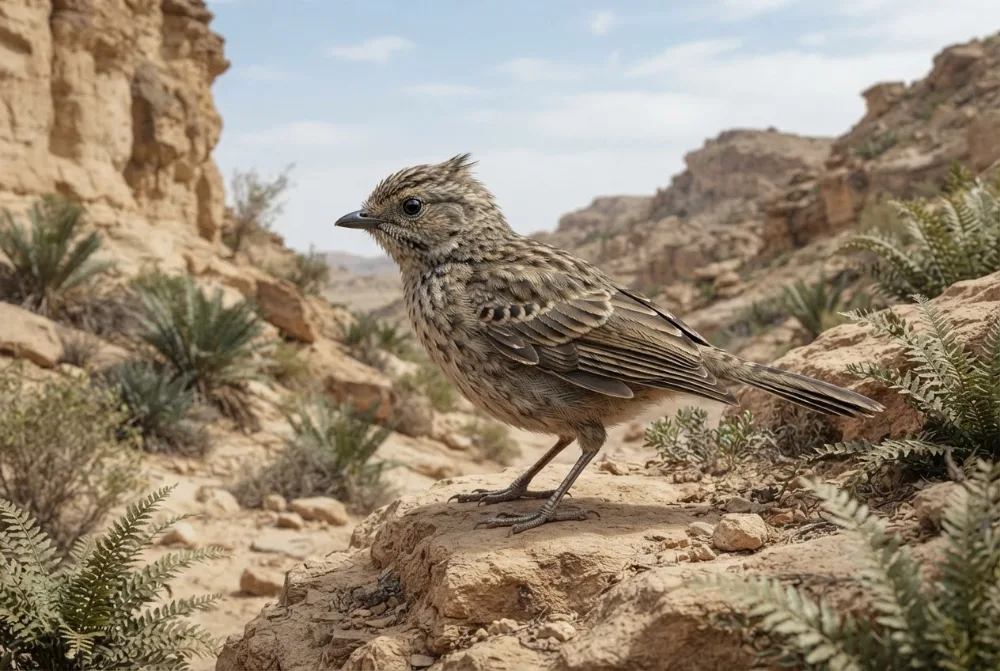
Gobipteryx had a toothless beak, which is rare for a bird from the time of dinosaurs.1
Scientists think Gobipteryx could fly right after hatching, because its wing and shoulder bones were already strong in the egg.1
Gobipteryx was about the size of a partridge, with a skull only 45 millimeters long.1
The first Gobipteryx fossils were two damaged skulls found by a Polish-Mongolian expedition in 1971.12
Gobipteryx belongs to a group of ancient birds called Enantiornithes, which all went extinct at the end of the Cretaceous.1
Its bones grew quickly, like those of modern birds, but its growth slowed down right after hatching.1
Laaj yi ñu gën a laaj ci Gobipteryx
?How big was Gobipteryx?
About the size of a partridge, with a skull only 45 millimeters long.1
?Did Gobipteryx have teeth?
No, Gobipteryx had a toothless beak, which is rare for a bird from the time of dinosaurs.1
?Could Gobipteryx fly?
Yes, scientists believe Gobipteryx could fly. Its long scapula and forelimbs were well suited for flight, and it could probably fly right after hatching.1
?When did Gobipteryx live?
Gobipteryx lived during the Late Cretaceous Period, about 75 to 71 million years ago.1
Ngir ñi xam dino lool
- Turu xam-xam
- Gobipteryx
- Ku ko tudde
- Elzanowski 19743
- Kurél
- Picc yu jëkk yi
- Njaboot / klad
- Enantiornithes3
- Klasifikasiyoŋ
- Theropoda > Avialae3
- Màggaayu doj yi
- 84 ba 66 milyoŋ at (Campanian / Maastrichtian)3
- Formasiyoŋi doj
- Baruungoyot, Djadokhta, Nemegt3
- Réew yi
- Mongoli3
- Fosil yu ñu gis
- 8 ci The Paleobiology Database3
- Gisees
- Gobipteryx was named by Andrzej Elzanowski in 1974, based on a skull found in the Gobi Desert by Dr. Teresa Maryańska during a 1971 expedition.12
- Ñu ngi koy werante ba tey
- Scientists are still debating exactly how Gobipteryx is related to other ancient birds, because its skull is unusual.1
Fa xibaar yi jóge
- Gobipteryx (en.wikipedia.org)
- PRELIMINARY NOTE ON THE PALAEOGNATHOUS BIRD FROM THE UPPER CRETACEOUS OF MONGOLIA (palaeontologia.pan.pl)
- Gobipteryx in The Paleobiology Database (CC BY 4.0): at, béréb yi, formasiyoŋi doj, klasifikasiyoŋ.
Bépp xibaar ci xët wii am na lim bu wone fa mu jóge. Su nu juumee, baal nu, nun ñu bëgg dino lanu, du ab sërnaalu xam-xam. Wax nu ko ci [email protected] nu defar ko.
 Rex xiif na! Dino Wiki, mbiru ab baay la ngir doomam ju góor ju bëgg dinosoor, ci neen te amul kaamuñaate, amul tracker. Mag ñi mën nañu jox Rex tuuti ñam ngir dimbali ko mu des ci internet.Dundal Rex
 Archaeopteryx
 Hesperornis
 Ichthyornis
 Baptornis
 Jurapteryx
 Martinavis
 Tyrannosaurus
 Triceratops
 Velociraptor
 Spinosaurus
 Ankylosaurus
 Parasaurolophus