 Ban dino nga? Kiis
 Xeexu dino
 Rawante dino
 Fo yu ndaw yu dino
 Albomu sitikeer
 Limu TOP yu dino
 Bett ma!
Kañ la dundoon?

Naka la réyoon?
Naka la guddoon?
Naka la kawewoon?
Naka la diisoon?
Naka la Martinavis réyoon, bu ñu ko méngalee ak YAW?
Ay kalkil rekk ci sa navigatëer. Dara du ñu denc, dara du ñu yónne fenn.
Naka la gaawoon?


Xibaar yu neex
Martinavis is known from only a few arm bones, mostly humeri. Scientists have named five different species based on these bones.1
The largest species, Martinavis vincei, was about 51 cm long and weighed around 1.8 kg. That is as heavy as a big chicken.1
Martinavis belonged to a group of ancient birds called enantiornithines. These birds had teeth and claws on their wings.1
Fossils of Martinavis have been found in France and Argentina. This shows that these birds lived in both Europe and South America during the Late Cretaceous.1
The type species, Martinavis cruzyensis, was named after the village of Cruzy in France where its fossil was found.1
Martinavis lived about 75 to 70 million years ago, during the Campanian and Maastrichtian stages of the Late Cretaceous.1
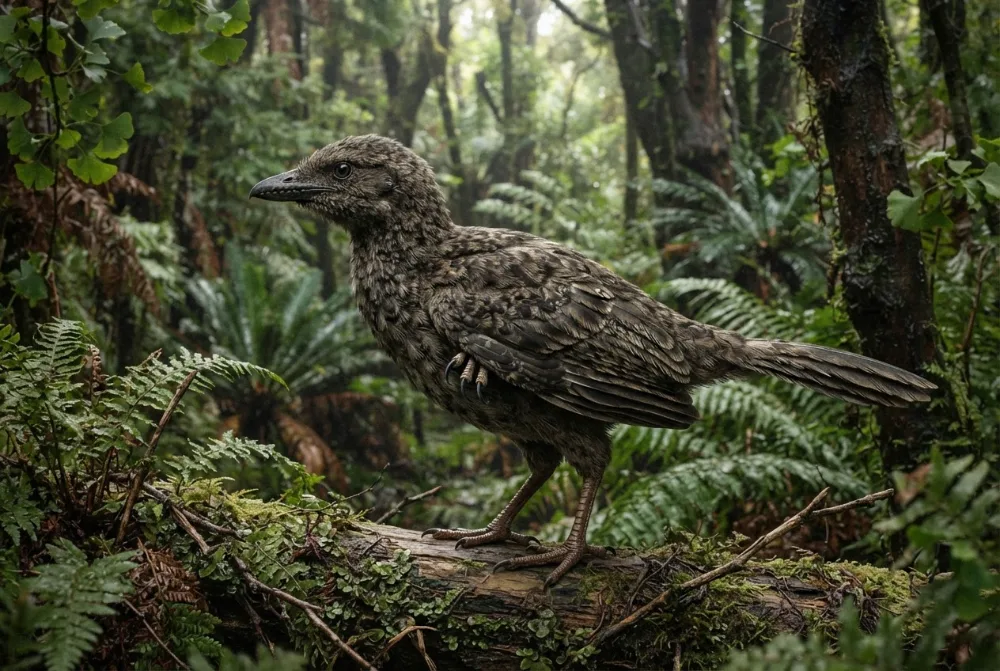
Ngir ñi xam dino lool
- Turu xam-xam
- Martinavis
- Ku ko tudde
- Walker et al. 20073
- Kurél
- Picc yu jëkk yi
- Njaboot / klad
- Euenantiornithes3
- Klasifikasiyoŋ
- Theropoda > Avialae3
- Màggaayu doj yi
- 84 ba 66 milyoŋ at (Campanian / Maastrichtian)3
- Formasiyoŋi doj
- Lecho, Grès à Reptiles3
- Réew yi
- Arsantin, Faraas3
- Fosil yu ñu gis
- 6 ci The Paleobiology Database3
- Gisees
- Martinavis was named in 2007 by Cyril A. Walker, Eric Buffetaut, and Gareth J. Dyke. The first fossils were found in France and Argentina.1
- Ñu ngi koy werante ba tey
- Scientists are not sure if some Martinavis bones actually belong to other enantiornithine birds from the same fossil sites, like Yungavolucris or Soroavisaurus.1
Fa xibaar yi jóge
- Martinavis (en.wikipedia.org)
- PBDB Taxon (paleobiodb.org)
- Martinavis in The Paleobiology Database (CC BY 4.0): at, béréb yi, formasiyoŋi doj, klasifikasiyoŋ.
Bépp xibaar ci xët wii am na lim bu wone fa mu jóge. Su nu juumee, baal nu, nun ñu bëgg dino lanu, du ab sërnaalu xam-xam. Wax nu ko ci [email protected] nu defar ko.
 Rex xiif na! Dino Wiki, mbiru ab baay la ngir doomam ju góor ju bëgg dinosoor, ci neen te amul kaamuñaate, amul tracker. Mag ñi mën nañu jox Rex tuuti ñam ngir dimbali ko mu des ci internet.Dundal Rex
 Archaeopteryx
 Hesperornis
 Ichthyornis
 Baptornis
 Jurapteryx
 Gobipteryx
 Tyrannosaurus
 Triceratops
 Velociraptor
 Spinosaurus
 Ankylosaurus
 Parasaurolophus