 Ban dino nga? Kiis
 Xeexu dino
 Rawante dino
 Fo yu ndaw yu dino
 Albomu sitikeer
 Limu TOP yu dino
 Bett ma!
Kañ la dundoon?
Naka la réyoon?
Naka la guddoon?
Naka la kawewoon?
Naka la diisoon?
Naka la Lectavis réyoon, bu ñu ko méngalee ak YAW?
Ay kalkil rekk ci sa navigatëer. Dara du ñu denc, dara du ñu yónne fenn.
Naka la gaawoon?


Xibaar yu neex
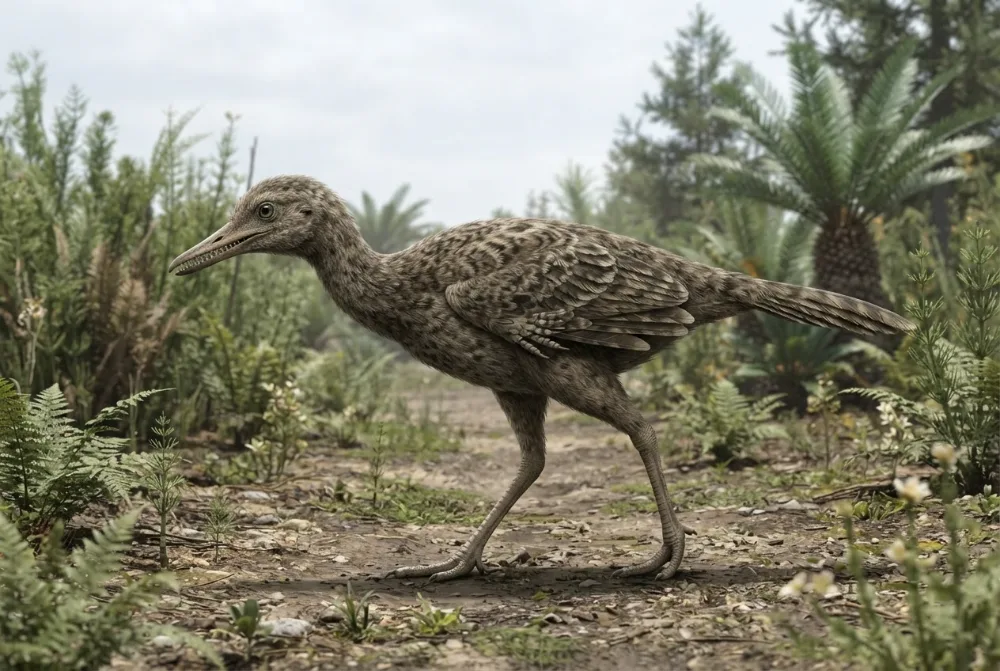
Lectavis had a special bone in its foot called a hypotarsus, which helped keep its leg bones from slipping out of place while walking.1
Its leg bones were long and slender, with a tibiotarsus (lower leg bone) about 16 centimeters (6.3 inches) long.1
Lectavis lived alongside another bird called Yungavolucris brevipedalis, but Lectavis was better at walking on land.1
Its habitat was a coastal area with lakes or small rivers and lots of plants.1
Scientists think Lectavis might have been a running bird, similar to a modern courser, and unlike any bird alive today.1
Ngir ñi xam dino lool
- Turu xam-xam
- Lectavis
- Ku ko tudde
- Chiappe 19933
- Kurél
- Picc yu jëkk yi
- Njaboot / klad
- Enantiornithes3
- Klasifikasiyoŋ
- Theropoda > Avialae3
- Màggaayu doj yi
- 72 ba 66 milyoŋ at (Maastrichtian)3
- Formasiyoŋi doj
- Lecho3
- Réew yi
- Arsantin3
- Fosil yu ñu gis
- 1 ci The Paleobiology Database3
- Gisees
- Lectavis was named by paleontologist Luis M. Chiappe in 1993. The only known fossil bones were found at Estancia El Brete in Argentina.13
- Ñu ngi koy werante ba tey
- Scientists are not sure exactly how Lectavis is related to other enantiornithine birds, like Enantiornis and Avisaurus.1
Fa xibaar yi jóge
- Lectavis (en.wikipedia.org)
- PBDB Taxon (paleobiodb.org)
- Lectavis in The Paleobiology Database (CC BY 4.0): at, béréb yi, formasiyoŋi doj, klasifikasiyoŋ.
Bépp xibaar ci xët wii am na lim bu wone fa mu jóge. Su nu juumee, baal nu, nun ñu bëgg dino lanu, du ab sërnaalu xam-xam. Wax nu ko ci [email protected] nu defar ko.
 Rex xiif na! Dino Wiki, mbiru ab baay la ngir doomam ju góor ju bëgg dinosoor, ci neen te amul kaamuñaate, amul tracker. Mag ñi mën nañu jox Rex tuuti ñam ngir dimbali ko mu des ci internet.Dundal Rex
 Archaeopteryx
 Hesperornis
 Ichthyornis
 Baptornis
 Jurapteryx
 Gobipteryx
 Tyrannosaurus
 Triceratops
 Velociraptor
 Spinosaurus
 Ankylosaurus
 Parasaurolophus