 Ban dino nga? Kiis
 Xeexu dino
 Rawante dino
 Fo yu ndaw yu dino
 Albomu sitikeer
 Limu TOP yu dino
 Bett ma!
Lingwulong
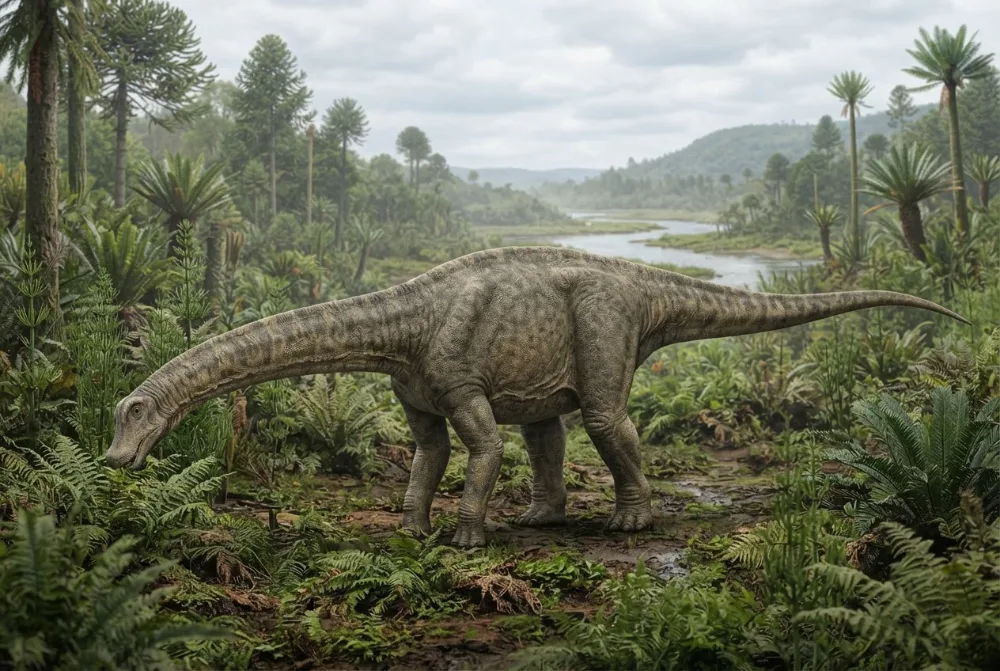
Lingwulong was a long-necked plant-eater that lived about 174 million years ago. It was one of the earliest diplodocoid sauropods ever found, and the first one discovered in East Asia. Its fossils were a big surprise to scientists!21
Kañ la dundoon?
Naka la réyoon?
Naka la guddoon?
Naka la kawewoon?
jortu
Naka la diisoon?
 gudd ni 3 oto yu ñu taxawal ci benn rëdd🍌gudd ni 78 banaana yu ñu topp-toppale
 diis ni 2 ñey🍉diis ni 2200 xaal🎒diis ni 14 klaas yu mat yu xale yu lekkool🐻❄️diis ni 24 uurs yu weex🏃mënoon na daw 100 meetar ci 24 segond (nit ki gën a gaaw dafay soxla 9,6)
Naka la Lingwulong réyoon, bu ñu ko méngalee ak YAW?
Ay kalkil rekk ci sa navigatëer. Dara du ñu denc, dara du ñu yónne fenn.
Naka la gaawoon?


Xibaar yu neex
Lingwulong is the earliest known diplodocoid sauropod, living about 174 million years ago in the Middle Jurassic.2
It is the only definite diplodocoid dinosaur ever found in East Asia, challenging the idea that this group never lived there.1
The fossils include 7 to 10 partial skeletons, from juveniles to adults, including parts of two skulls.2
Its name means 'amazing dragon from Lingwu' because finding a dicraeosaurid in China was so unexpected.1
Lingwulong belonged to Dicraeosauridae, a group of sauropods with shorter necks and spines on their vertebrae.2
Its discovery suggests that many advanced sauropod groups spread across the world while the supercontinent Pangaea was still together.2
Laaj yi ñu gën a laaj ci Lingwulong
?How big was Lingwulong?
Scientists have not given a specific length or weight for Lingwulong in the sources, so its exact size is not known. It was a diplodocoid sauropod, and many of its relatives were large, but no exact numbers are available.12
?What did Lingwulong eat?
Lingwulong was a plant-eater. As a sauropod dinosaur, it ate plants.2
Ngir ñi xam dino lool
- Turu xam-xam
- Lingwulong
- Ku ko tudde
- Xu et al. 20184
- Kurél
- Baat yu gudd
- Njaboot / klad
- Flagellicaudata4
- Klasifikasiyoŋ
- Sauropodomorpha > Sauropoda > Diplodocoidea4
- Màggaayu doj yi
- 175 ba 162 milyoŋ at (Aalenian / Callovian)4
- Réew yi
- Siin4
- Fosil yu ñu gis
- 1 ci The Paleobiology Database4
- Gisees
- Lingwulong was named in 2018 by Xu Xing and colleagues based on fossils found from 2005 onward in the Yanan Formation of China.21
- Ñu ngi koy werante ba tey
- Scientists are still debating whether the absence of neosauropods in the Late Jurassic of East Asia is due to real extinction or just poor fossil sampling.2
Fa xibaar yi jóge
- Lingwulong (en.wikipedia.org)
- A new Middle Jurassic diplodocoid suggests an earlier dispersal and diversification of sauropod dinosaurs | Nature Communications (preview-www.nature.com)
- Brontosaurus Relatives Unearthed in East Asia for the First Time - AIP.ORG (aip.org)
- Lingwulong in The Paleobiology Database (CC BY 4.0): at, béréb yi, formasiyoŋi doj, klasifikasiyoŋ.
Bépp xibaar ci xët wii am na lim bu wone fa mu jóge. Su nu juumee, baal nu, nun ñu bëgg dino lanu, du ab sërnaalu xam-xam. Wax nu ko ci [email protected] nu defar ko.
 Rex xiif na! Dino Wiki, mbiru ab baay la ngir doomam ju góor ju bëgg dinosoor, ci neen te amul kaamuñaate, amul tracker. Mag ñi mën nañu jox Rex tuuti ñam ngir dimbali ko mu des ci internet.Dundal Rex
 Brachiosaurus
 Diplodocus
 Brontosaurus
 Argentinosaurus
 Camarasaurus
 Morosaurus
 Ichthyosaurus
 Khudiakovia
 Ophthalmosaurus
 Pterodactylus
 Peloneustes
 Rhamphocephalus