 Ban dino nga? Kiis
 Xeexu dino
 Rawante dino
 Fo yu ndaw yu dino
 Albomu sitikeer
 Limu TOP yu dino
 Bett ma!
Kañ la dundoon?

Naka la réyoon?
Naka la guddoon?
Naka la kawewoon?
jortu
Naka la diisoon?
 gudd ni 3 muusu kër, bakkan ba geen🍌gudd ni 8 banaana yu ñu topp-toppale🍌diis ni 76 banaana🏃mënoon na daw 100 meetar ci 12 segond (nit ki gën a gaaw dafay soxla 9,6)
Naka la Luoyanggia réyoon, bu ñu ko méngalee ak YAW?
Ay kalkil rekk ci sa navigatëer. Dara du ñu denc, dara du ñu yónne fenn.
Naka la gaawoon?


Xibaar yu neex
Luoyanggia belonged to a group of dinosaurs called oviraptorids, which were known for their parrot-like beaks and often had feathers.1
It lived alongside giant dinosaurs like Ruyangosaurus, which was a huge sauropod that could reach over 30 meters long.1
The rocks where Luoyanggia was found were originally thought to be from the Late Cretaceous, but scientists now think they are older, from the Early Cretaceous, about 121 to 100 million years ago.13
Luoyanggia is only known from a single partial skeleton, so scientists are still learning about its full appearance and habits.1
Like other oviraptorids, Luoyanggia probably laid eggs in nests and may have sat on them to keep them warm, like birds do today.2
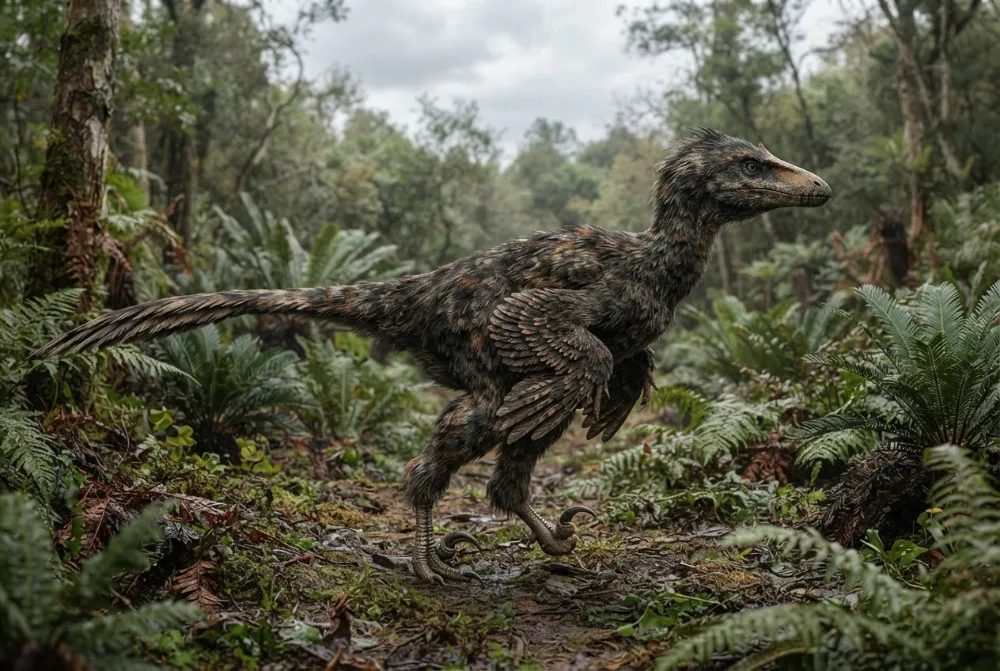
Ku tas léeb yu dul dëgg
Léeb: Some people think oviraptorids like Luoyanggia were egg thieves because of their name.
Dëgg: Oviraptor means 'egg thief,' but scientists now believe these dinosaurs were actually caring parents that protected their own eggs, not stole others'.1
Ngir ñi xam dino lool
- Turu xam-xam
- Luoyanggia
- Ku ko tudde
- Lü et al. 20093
- Kurél
- Dino yu am dun yu doy waar
- Njaboot / klad
- Oviraptoridae3
- Klasifikasiyoŋ
- Theropoda > Oviraptorosauria3
- Màggaayu doj yi
- 121 ba 100 milyoŋ at (Aptian / Albian)3
- Formasiyoŋi doj
- Haoling3
- Réew yi
- Siin3
- Fosil yu ñu gis
- 1 ci The Paleobiology Database3
- Gisees
- Luoyanggia was named in 2009 by a team of Chinese paleontologists led by Lü Junchang. The fossils were found at the Shijiagou quarry in the Ruyang Basin of Henan Province, China.13
- Ñu ngi koy werante ba tey
- Scientists are not sure exactly how big Luoyanggia was, because only a few bones have been found. Different experts give different estimates for its length and weight.1
Fa xibaar yi jóge
- Luoyanggia (en.wikipedia.org)
- Luoyanggia Lü et al. 2009 - Encyclopedia of Life (eol.org)
- Luoyanggia in The Paleobiology Database (CC BY 4.0): at, béréb yi, formasiyoŋi doj, klasifikasiyoŋ.
Bépp xibaar ci xët wii am na lim bu wone fa mu jóge. Su nu juumee, baal nu, nun ñu bëgg dino lanu, du ab sërnaalu xam-xam. Wax nu ko ci [email protected] nu defar ko.
 Rex xiif na! Dino Wiki, mbiru ab baay la ngir doomam ju góor ju bëgg dinosoor, ci neen te amul kaamuñaate, amul tracker. Mag ñi mën nañu jox Rex tuuti ñam ngir dimbali ko mu des ci internet.Dundal Rex
 Therizinosaurus
 Oviraptor
 Chirostenotes
 Citipes
 Leptorhynchos
 Avimimus
 Stegosaurus
 Iguanodon
 Archaeopteryx
 Giganotosaurus
 Microraptor
 Deinonychus