 Ban dino nga? Kiis
 Xeexu dino
 Rawante dino
 Fo yu ndaw yu dino
 Albomu sitikeer
 Limu TOP yu dino
 Bett ma!
Narindasaurus
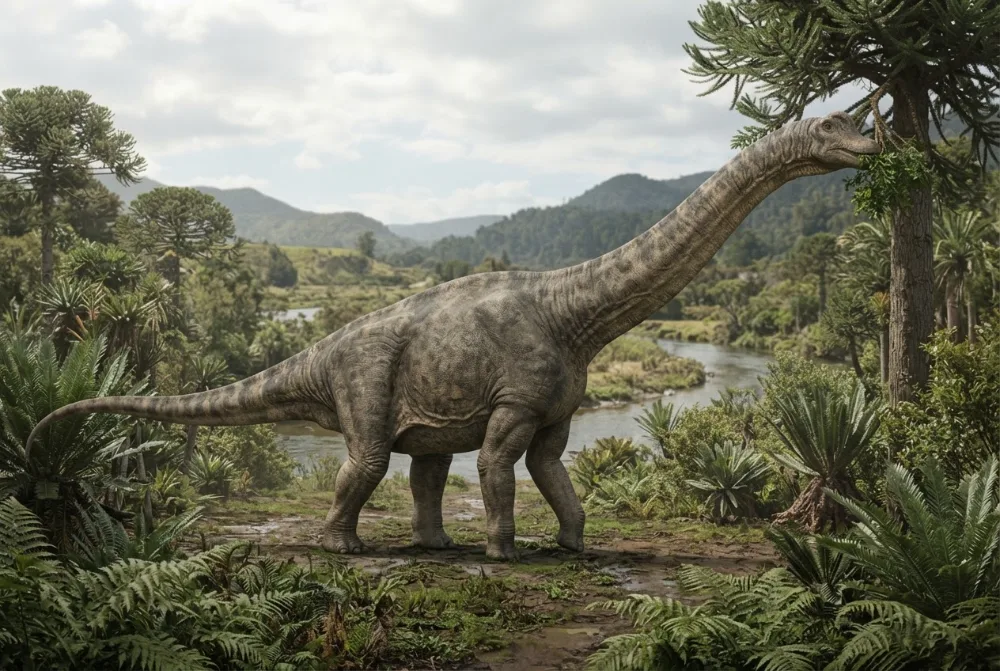
Narindasaurus was a long-necked plant-eater that lived on the island of Madagascar about 168 million years ago. It had heart-shaped teeth that helped it munch on leaves. This dinosaur is known from just one partial skeleton, but it tells us a lot about how sauropods evolved.14
Kañ la dundoon?
Naka la réyoon?
Naka la guddoon?
Naka la kawewoon?
Naka la diisoon?
 gudd ni 22 oto yu ñu taxawal ci benn rëdd🍌gudd ni 560 banaana yu ñu topp-toppale
 diis ni 1,5 ñey🍉diis ni 1600 xaal🦒kawe ni 18 njamala yu ñu teg ci kaw seen bopp🎒diis ni 10 klaas yu mat yu xale yu lekkool🐻❄️diis ni 18 uurs yu weex🏢kawe ba mën a xool ci palanteer bu nekk ci eta 34🏃mënoon na daw 100 meetar ci 22 segond (nit ki gën a gaaw dafay soxla 9,6)
Naka la Narindasaurus réyoon, bu ñu ko méngalee ak YAW?
Ay kalkil rekk ci sa navigatëer. Dara du ñu denc, dara du ñu yónne fenn.
Naka la gaawoon?


Xibaar yu neex
Narindasaurus was a turiasaur, a group of sauropods that lived mainly in Europe and Africa during the Jurassic.1
Its teeth are heart-shaped, which is a special feature of turiasaurs and helped scientists identify it.1
The only known fossil includes parts of the tail, leg bones, and a tooth, found in Madagascar between 1896 and 1905.1
Narindasaurus lived during the Bathonian stage of the Middle Jurassic, about 168 to 165 million years ago.2
Its tail bones have a unique asymmetrical pit that is not seen in other dinosaurs.1
The dinosaur was named in 2020, but the fossils were first described in 1907 as belonging to a different species.1
Laaj yi ñu gën a laaj ci Narindasaurus
?How big was Narindasaurus?
Scientists are not sure exactly how big it was, because only a partial skeleton has been found. Estimates suggest it was a medium sized sauropod, but more fossils are needed for a precise length.4
?What did Narindasaurus eat?
Narindasaurus was a plant-eater, or herbivore. Its heart-shaped teeth helped it munch on leaves.14
?When did Narindasaurus live?
Narindasaurus lived during the Middle Jurassic, about 168 to 165 million years ago.14
?Where was Narindasaurus found?
The only known fossil of Narindasaurus was found in the Isalo III Formation of Madagascar, near Narinda Bay.1
Ku tas léeb yu dul dëgg
Léeb: Narindasaurus is a type of Brachiosaurus.
Dëgg: Narindasaurus is a turiasaur, a different group of sauropods, not closely related to Brachiosaurus.1
Ngir ñi xam dino lool
- Turu xam-xam
- Narindasaurus
- Ku ko tudde
- Royo-Torres et al. 20214
- Kurél
- Baat yu gudd
- Njaboot / klad
- Turiasauria4
- Klasifikasiyoŋ
- Sauropodomorpha > Sauropoda4
- Màggaayu doj yi
- 168 ba 165 milyoŋ at (Bathonian)4
- Formasiyoŋi doj
- Isalo III4
- Réew yi
- Madagaskaar4
- Fosil yu ñu gis
- 1 ci The Paleobiology Database4
- Gisees
- The fossils were collected in Madagascar between 1896 and 1905 for the Muséum d'Histoire Naturelle in Paris. Armand Thevenin first described them in 1907, but the dinosaur was not named Narindasaurus thevenini until 2020 by Rafael Royo-Torres and colleagues.1
- Ñu ngi koy werante ba tey
- Scientists are still unsure exactly how big Narindasaurus grew, because only a partial skeleton has been found.2
Fa xibaar yi jóge
- Narindasaurus (en.wikipedia.org)
- PBDB Taxon (paleobiodb.org)
- Narindasaurus thevenini | Dinosaur Database by DinoAnimals.com (dinoanimals.com)
- Narindasaurus in The Paleobiology Database (CC BY 4.0): at, béréb yi, formasiyoŋi doj, klasifikasiyoŋ.
Bépp xibaar ci xët wii am na lim bu wone fa mu jóge. Su nu juumee, baal nu, nun ñu bëgg dino lanu, du ab sërnaalu xam-xam. Wax nu ko ci [email protected] nu defar ko.
 Rex xiif na! Dino Wiki, mbiru ab baay la ngir doomam ju góor ju bëgg dinosoor, ci neen te amul kaamuñaate, amul tracker. Mag ñi mën nañu jox Rex tuuti ñam ngir dimbali ko mu des ci internet.Dundal Rex
 Brachiosaurus
 Diplodocus
 Brontosaurus
 Argentinosaurus
 Camarasaurus
 Morosaurus
 Ichthyosaurus
 Khudiakovia
 Ophthalmosaurus
 Pterodactylus
 Peloneustes
 Rhamphocephalus