 Ban dino nga? Kiis
 Xeexu dino
 Rawante dino
 Fo yu ndaw yu dino
 Albomu sitikeer
 Limu TOP yu dino
 Bett ma!
Kañ la dundoon?

Naka la gaawoon?


Xibaar yu neex
Pasquiaornis lived about 95 to 93 million years ago, during the Late Cretaceous period.1
Two species are known: Pasquiaornis hardiei and Pasquiaornis tankei. P. tankei was about one-third larger than P. hardiei.1
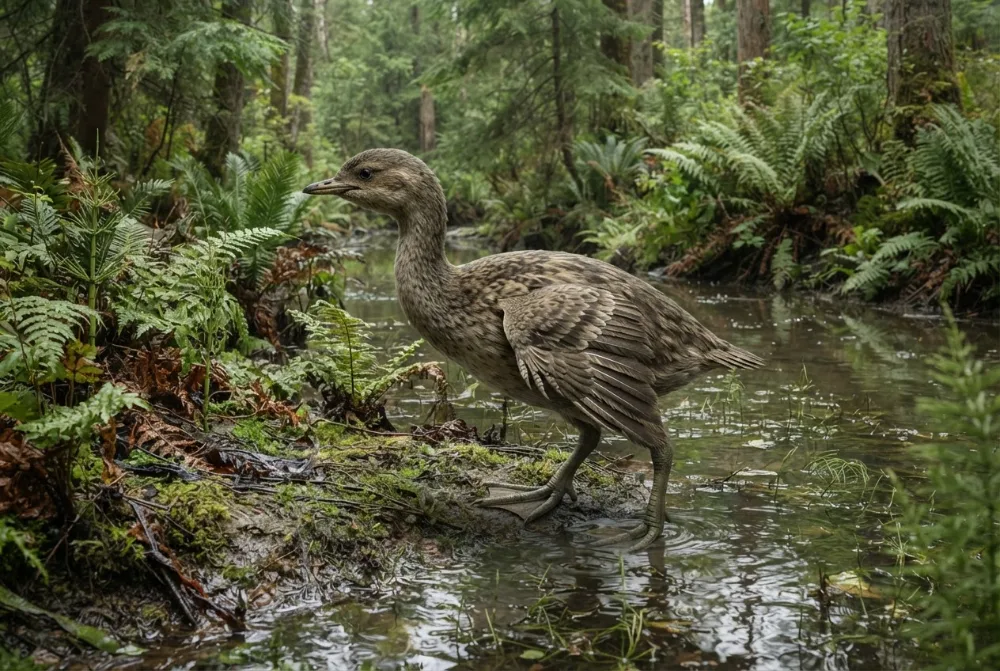
Pasquiaornis was a member of the Hesperornithes, a group of toothed, diving birds that were mostly flightless.1
Its wing bones were thickened and not well suited for flying, so scientists think it probably could not fly.1
Fossils of at least 9 individuals were found in a small area, which might mean they lived in colonies or died together in a mass event.1
The rocks where Pasquiaornis was found were once the bottom of the Western Interior Seaway, a shallow sea that split North America in two.1
Ngir ñi xam dino lool
- Turu xam-xam
- Pasquiaornis
- Ku ko tudde
- Tokaryk et al. 19972
- Kurél
- Picc yu jëkk yi
- Njaboot / klad
- Hesperornithiformes2
- Klasifikasiyoŋ
- Theropoda > Avialae2
- Màggaayu doj yi
- 100 ba 94 milyoŋ at (Cenomanian)2
- Formasiyoŋi doj
- Belle Fourche2
- Réew yi
- Kanadaa2
- Fosil yu ñu gis
- 2 ci The Paleobiology Database2
- Gisees
- Pasquiaornis was named in 1997 by Tim Tokaryk, Stephen Cumbaa and John Storer. The fossils were collected near Arborfield, Saskatchewan, mostly during 1992 to 1993 expeditions by the Royal Saskatchewan Museum and the Canadian Museum of Nature.12
- Ñu ngi koy werante ba tey
- Scientists are not sure whether Pasquiaornis could still fly, because its wing bones look like those of flying birds but are too thick for good flight.1
Fa xibaar yi jóge
- Pasquiaornis (en.wikipedia.org)
- Pasquiaornis in The Paleobiology Database (CC BY 4.0): at, béréb yi, formasiyoŋi doj, klasifikasiyoŋ.
Bépp xibaar ci xët wii am na lim bu wone fa mu jóge. Su nu juumee, baal nu, nun ñu bëgg dino lanu, du ab sërnaalu xam-xam. Wax nu ko ci [email protected] nu defar ko.
 Rex xiif na! Dino Wiki, mbiru ab baay la ngir doomam ju góor ju bëgg dinosoor, ci neen te amul kaamuñaate, amul tracker. Mag ñi mën nañu jox Rex tuuti ñam ngir dimbali ko mu des ci internet.Dundal Rex
 Archaeopteryx
 Hesperornis
 Ichthyornis
 Baptornis
 Jurapteryx
 Gobipteryx
 Tyrannosaurus
 Triceratops
 Velociraptor
 Spinosaurus
 Ankylosaurus
 Parasaurolophus