 Ban dino nga? Kiis
 Xeexu dino
 Rawante dino
 Fo yu ndaw yu dino
 Albomu sitikeer
 Limu TOP yu dino
 Bett ma!
Soroavisaurus
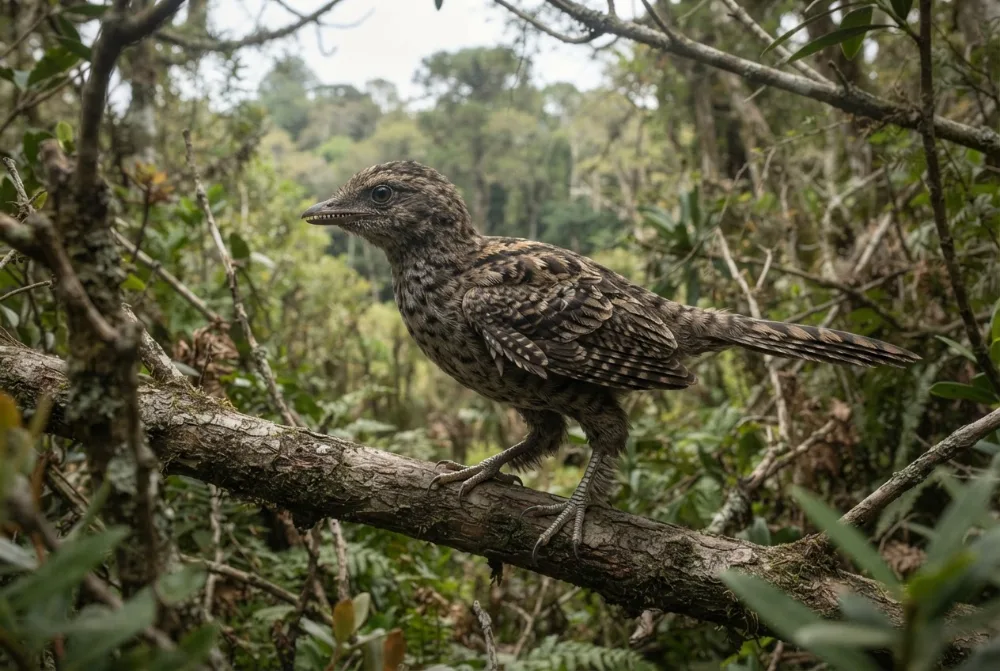
Soroavisaurus was a bird that lived about 71 to 69 million years ago in what is now Argentina. It was about as long as a ruler (40 cm) and used its sharp, curved talons to catch and carry prey, just like a hawk or eagle does today.1
Kañ la dundoon?
Naka la réyoon?
Naka la guddoon?
Naka la kawewoon?
Naka la diisoon?
 lu tollu ci diisaayu muusu kër🍌diis ni 60 banaana🧱gudd ni 12 bloku tabax ci benn rëdd🪑tuuti ba mën a dox ci suufu siis⚽mënoon na naaw ci kaw teraŋ futbal bépp ci 12 segond
Naka la Soroavisaurus réyoon, bu ñu ko méngalee ak YAW?
Ay kalkil rekk ci sa navigatëer. Dara du ñu denc, dara du ñu yónne fenn.
Naka la gaawoon?


Xibaar yu neex
Soroavisaurus is known only from leg bones, especially a fused bone called the tarsometatarsus. No wing bones have been found, so its wingspan is unknown.1
The tarsometatarsus of Soroavisaurus has a gap between two of its metatarsal bones that is not seen in any other enantiornithine bird.1
Soroavisaurus lived in a warm, humid coastal plain with tropical forests, ponds and lagoons.1
It shared its home with other enantiornithine birds like Lectavis and Yungavolucris, as well as the dinosaurs Noasaurus and Saltasaurus.1
Some scientists think Soroavisaurus might be the same animal as Enantiornis or Martinavis, which are known from wing bones found at the same site. But it is hard to be sure.1
The name Soroavisaurus means 'sister to Avisaurus' because scientists thought it was closely related to that other fossil bird.1
Ngir ñi xam dino lool
- Turu xam-xam
- Soroavisaurus
- Ku ko tudde
- Chiappe 19934
- Kurél
- Picc yu jëkk yi
- Njaboot / klad
- Avisauridae4
- Klasifikasiyoŋ
- Theropoda > Avialae4
- Màggaayu doj yi
- 72 ba 66 milyoŋ at (Maastrichtian)4
- Formasiyoŋi doj
- Lecho4
- Réew yi
- Arsantin4
- Fosil yu ñu gis
- 1 ci The Paleobiology Database4
- Gisees
- Soroavisaurus was named in 1993 by Argentine paleontologist Luis M. Chiappe. He studied leg bones collected from El Brete, Argentina, and named three new bird species, including Soroavisaurus australis.1
- Ñu ngi koy werante ba tey
- Scientists are not sure whether Soroavisaurus is really a separate species or if it is the same animal as Enantiornis or Martinavis, which are known only from wing bones from the same place.1
Fa xibaar yi jóge
- Soroavisaurus (en.wikipedia.org)
- PBDB Taxon (paleobiodb.org)
- Soroavisaurus (kiwix.lc.theinterface.network)
- Soroavisaurus in The Paleobiology Database (CC BY 4.0): at, béréb yi, formasiyoŋi doj, klasifikasiyoŋ.
Bépp xibaar ci xët wii am na lim bu wone fa mu jóge. Su nu juumee, baal nu, nun ñu bëgg dino lanu, du ab sërnaalu xam-xam. Wax nu ko ci [email protected] nu defar ko.
 Rex xiif na! Dino Wiki, mbiru ab baay la ngir doomam ju góor ju bëgg dinosoor, ci neen te amul kaamuñaate, amul tracker. Mag ñi mën nañu jox Rex tuuti ñam ngir dimbali ko mu des ci internet.Dundal Rex
 Archaeopteryx
 Hesperornis
 Ichthyornis
 Baptornis
 Jurapteryx
 Gobipteryx
 Tyrannosaurus
 Triceratops
 Velociraptor
 Spinosaurus
 Ankylosaurus
 Parasaurolophus