 Ban dino nga? Kiis
 Xeexu dino
 Rawante dino
 Fo yu ndaw yu dino
 Albomu sitikeer
 Limu TOP yu dino
 Bett ma!
Kañ la dundoon?

Naka la réyoon?
Naka la guddoon?
Naka la kawewoon?
 gudd ni 6 xaj, bakkan ba geen🍌gudd ni 31 banaana yu ñu topp-toppale🏃mënoon na daw 100 meetar ci 17 segond (nit ki gën a gaaw dafay soxla 9,6)
Naka la Tiantaisaurus réyoon, bu ñu ko méngalee ak YAW?
Ay kalkil rekk ci sa navigatëer. Dara du ñu denc, dara du ñu yónne fenn.
Naka la gaawoon?


Xibaar yu neex
Tiantaisaurus lived about 106 to 100 million years ago, during the Early Cretaceous period.4
Its fossils include twelve neck bones, nine back bones, and twenty-eight tail bones, plus parts of its hips and legs.2
The air pockets in its vertebrae are called pneumaticity. They made its skeleton similar to modern bird skeletons.1
This dinosaur belongs to a group called therizinosaurs. These weird dinosaurs started out as meat-eaters but later became plant-eaters.1
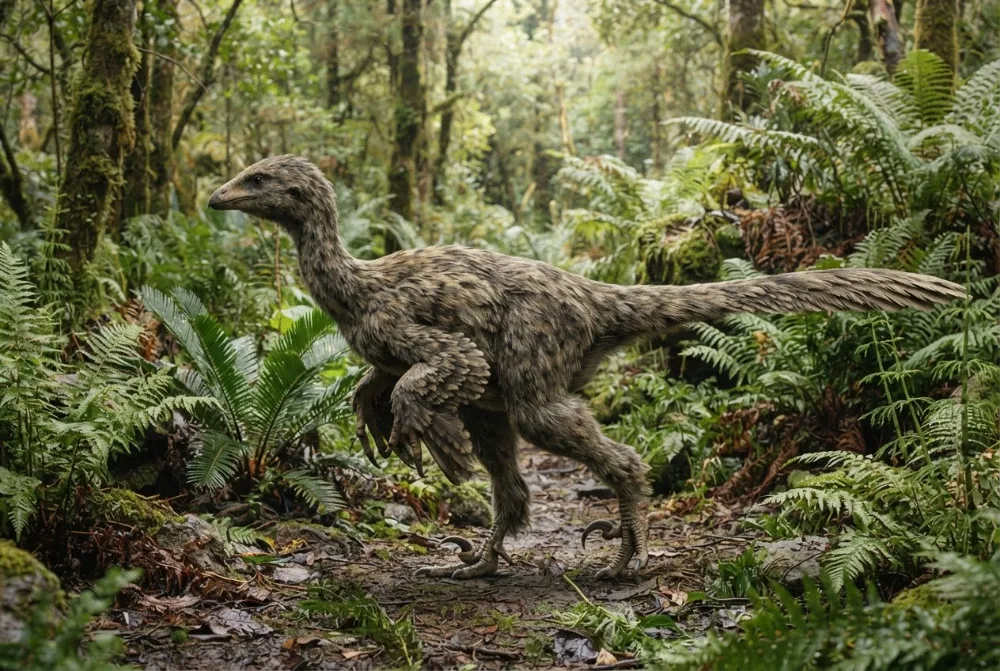
Laaj yi ñu gën a laaj ci Tiantaisaurus
?How big was Tiantaisaurus?
It was a medium sized dinosaur, but its exact size is not known from the fossils found. Scientists estimate an adult length of about 2 to 3 metres, as the fossils are too incomplete for a precise measurement.4
?What did Tiantaisaurus eat?
It was a plant-eater. Its group, the therizinosaurs, started out as meat-eaters but later evolved to eat plants.1
?Did Tiantaisaurus have feathers?
Yes, it was a feathered theropod. Many therizinosaurs are known to have had feathers, and Tiantaisaurus belonged to that group.4
?When did Tiantaisaurus live?
It lived about 106 to 100 million years ago, during the Early Cretaceous period.4
?Where was Tiantaisaurus found?
Its fossils were found in 2005 in Tiantai, Zhejiang Province, China.1
?Is Tiantaisaurus a dinosaur?
Yes, it is a dinosaur. It belongs to the theropod group called Therizinosauridae.4
?Why did Tiantaisaurus have air pockets in its bones?
The air pockets, called pneumaticity, made its heavy body lighter and helped it move around, similar to modern bird skeletons.1
?Could Tiantaisaurus run fast?
Nobody knows for sure, but the air pockets in its vertebrae helped make it less bulky and more flexible, which might have helped it move.1
Ngir ñi xam dino lool
- Turu xam-xam
- Tiantaisaurus
- Ku ko tudde
- Qian et al. 20124
- Kurél
- Dino yu am dun yu doy waar
- Njaboot / klad
- Therizinosauridae4
- Klasifikasiyoŋ
- Theropoda > Therizinosauria4
- Màggaayu doj yi
- 106 ba 100 milyoŋ at (Albian)4
- Formasiyoŋi doj
- Laijia4
- Réew yi
- Siin4
- Fosil yu ñu gis
- 1 ci The Paleobiology Database4
- Gisees
- Tiantaisaurus was discovered in 2005 in Tiantai, Zhejiang, China. It was named by Qian and colleagues in 2012.42
- Ñu ngi koy werante ba tey
- Scientists debate whether Tiantaisaurus ate only plants or also some meat, because its therizinosaur relatives changed from meat-eaters to plant-eaters.1
Fa xibaar yi jóge
- 欢迎访问《地质学刊》编辑部网站! (journalofgeology1977.com)
- Therizinosauroidea (theropoddatabase.com)
- Re: Tiantai(o)saurus Dong et al. 2007, missed Chinese therizinosaur? (reptilis.net)
- Tiantaisaurus in The Paleobiology Database (CC BY 4.0): at, béréb yi, formasiyoŋi doj, klasifikasiyoŋ.
Bépp xibaar ci xët wii am na lim bu wone fa mu jóge. Su nu juumee, baal nu, nun ñu bëgg dino lanu, du ab sërnaalu xam-xam. Wax nu ko ci [email protected] nu defar ko.
 Rex xiif na! Dino Wiki, mbiru ab baay la ngir doomam ju góor ju bëgg dinosoor, ci neen te amul kaamuñaate, amul tracker. Mag ñi mën nañu jox Rex tuuti ñam ngir dimbali ko mu des ci internet.Dundal Rex
 Therizinosaurus
 Oviraptor
 Chirostenotes
 Citipes
 Leptorhynchos
 Avimimus
 Stegosaurus
 Iguanodon
 Archaeopteryx
 Giganotosaurus
 Microraptor
 Deinonychus