 Uyiyiphi idayinaso? Ikwizi
 Idabi leedayinaso
 Ugqatso lweedayinaso
 Imidlalo emincinci yeedayinaso
 I-albhamu yezitikha
 Iilisti ze-TOP zeedayinaso
 Ndothuse!
Aetodactylus
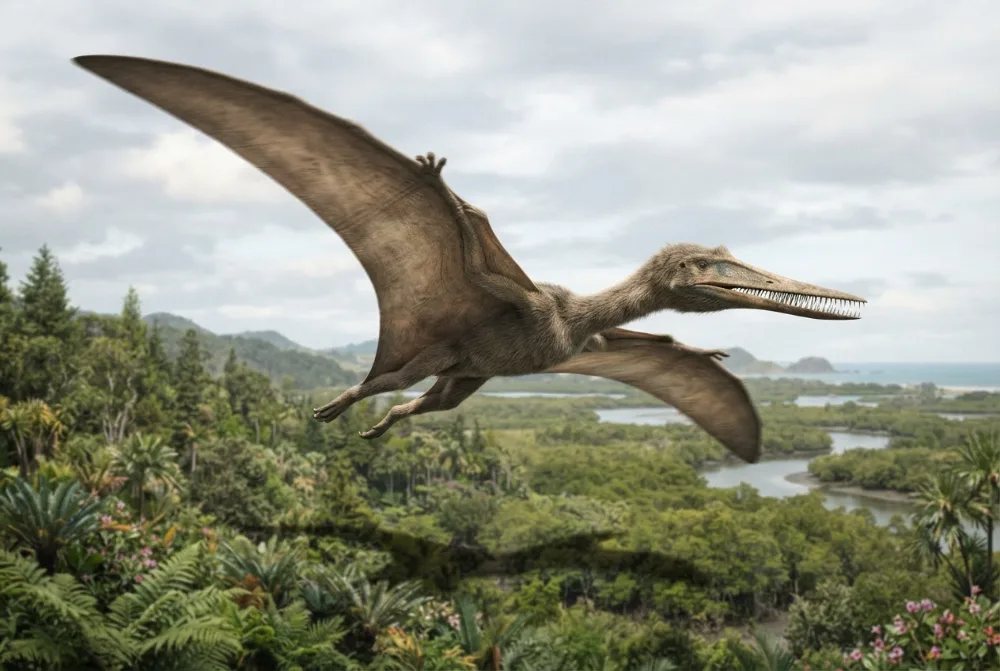
Aetodactylus was a flying reptile that lived near the sea about 97 million years ago. It had a long, slender jaw with many pointed teeth, perfect for catching fish. This pterosaur was one of the last of its kind before they disappeared.13
Yaphila nini?
Yayinkulu kangakanani?
Amaphiko ayo ayebanzi kangakanani?
 amaphiko abanzi njengeebhayisikile ezingama-1.5 zilandelelana⚽ibinokubhabha inqumle ibala lebhola ekhatywayo lonke ngemizuzwana engama-6.8
Aetodactylus wayemkhulu kangakanani xa ethelekiswa NAWE?
Yimathematika nje kwibhrawuza yakho. Akukho nto igcinwayo okanye ithunyelwe naphi na.
Yayikhawuleza kangakanani?


Iinyani ezimnandi
Aetodactylus is known from only a single lower jaw, which is 38.4 centimeters (15.1 inches) long.1
The jaw has 27 pairs of tooth sockets, but only two teeth were preserved when it was found.1
Its teeth were pointed, curved slightly backward, and flattened from side to side, like little daggers.1
Unlike some other pterosaurs, Aetodactylus did not have a bony crest on its lower jaw.1
The tip of its jaw was slightly wider than the rest, and the first pair of teeth pointed forward.1
Aetodactylus lived during the Middle Cenomanian age, about 97 million years ago, in what is now Texas.13
Scientists think Aetodactylus was closely related to Cimoliopterus and belongs to a group called Targaryendraconia.1
Eyona mibuzo ibuzwa kakhulu: Aetodactylus
?Was Aetodactylus a dinosaur?
No, Aetodactylus was a pterosaur, a flying reptile, not a dinosaur. It belonged to a group of flying reptiles often called pterodactyls.2
Kwiingcali zeedayinaso
- Igama lenzululwazi
- Aetodactylus
- Inikwe igama ngu:
- Myers 20103
- Iqela
- Izirhubuluzi ezibhabhayo
- Usapho / iclade
- Ornithocheiridae3
- Ukuhlelwa
- Pterosauria > Pterodactyloidea3
- Ubudala bamatye
- 100 ukuya ku-94 izigidi zeminyaka (Cenomanian)3
- Izakhiwo zamatye
- Tarrant3
- Amazwe
- iUSA3
- Iirekhodi zeefosili
- 1 kwi-Paleobiology Database3
- Ukufunyanwa
- The only known fossil of Aetodactylus was found in 2006 by Lance Hall near a construction site at Joe Pool Lake in Mansfield, Texas. It was named by Timothy S. Myers in 2010, and the species name halli honors the discoverer.13
- Kusaxoxwa ngayo
- Scientists are not sure exactly how big Aetodactylus was, because only its lower jaw has been found.1
Apho iinyani zivela khona
- Aetodactylus (en.wikipedia.org)
- Rare 95-million-year-old flying reptile Aetodactylus halli is new pterosaur genus, species | EurekAlert! (eurekalert.org)
- Aetodactylus in The Paleobiology Database (CC BY 4.0): ubudala, iindawo, izakhiwo zamatye, ukuhlelwa.
Yonke inyani ekweli phepha inenombolo ebonisa umthombo wayo. Ukuba siphosisile, uxolo, sithanda iidayinaso, asiyojenali yenzululwazi. Sixelele apha: [email protected], siya kuyilungisa.
 URex ulambile! I-Dino Wiki yiprojekthi katata ukwenzela unyana wakhe othanda iidayinaso, isimahla, ayinazintengiso, ayinazilandeli. Abantu abadala banokuphakela uRex isidlwana ukuze incede ihlale kwi-intanethi.Phakela uRex
 Pteranodon
 Quetzalcoatlus
 Dorygnathus
 Rhamphorhynchus
 Anhanguera
 Pterodactylus
 Tyrannosaurus
 Triceratops
 Velociraptor
 Spinosaurus
 Ankylosaurus
 Parasaurolophus