 Uyiyiphi idayinaso? Ikwizi
 Idabi leedayinaso
 Ugqatso lweedayinaso
 Imidlalo emincinci yeedayinaso
 I-albhamu yezitikha
 Iilisti ze-TOP zeedayinaso
 Ndothuse!
Yaphila nini?

Yayinkulu kangakanani?
Yayinde kangakanani?
Yayiphakame kangakanani?
uqikelelo
Yayinzima kangakanani?
 inde njengeekati zasekhaya ezingama-4, impumlo ukuya emsileni🍌inde njengeebhanana ezingama-11 zilandelelana🍉inzima njengamavatala angama-6🏃ibinokubaleka iimitha ezili-100 ngemizuzwana engama-9 (oyena mntu ukhawulezayo udinga i-9,6)
Aristosuchus wayemkhulu kangakanani xa ethelekiswa NAWE?
Yimathematika nje kwibhrawuza yakho. Akukho nto igcinwayo okanye ithunyelwe naphi na.
Yayikhawuleza kangakanani?


Iinyani ezimnandi
Aristosuchus was first thought to be a crocodile, but scientists later realized it was a dinosaur.1
The only known fossil of Aristosuchus is a set of bones from the hips and tail, found by a reverend named William D. Fox.1
Its name means 'best crocodile' in Greek, even though it was not a crocodile at all.1
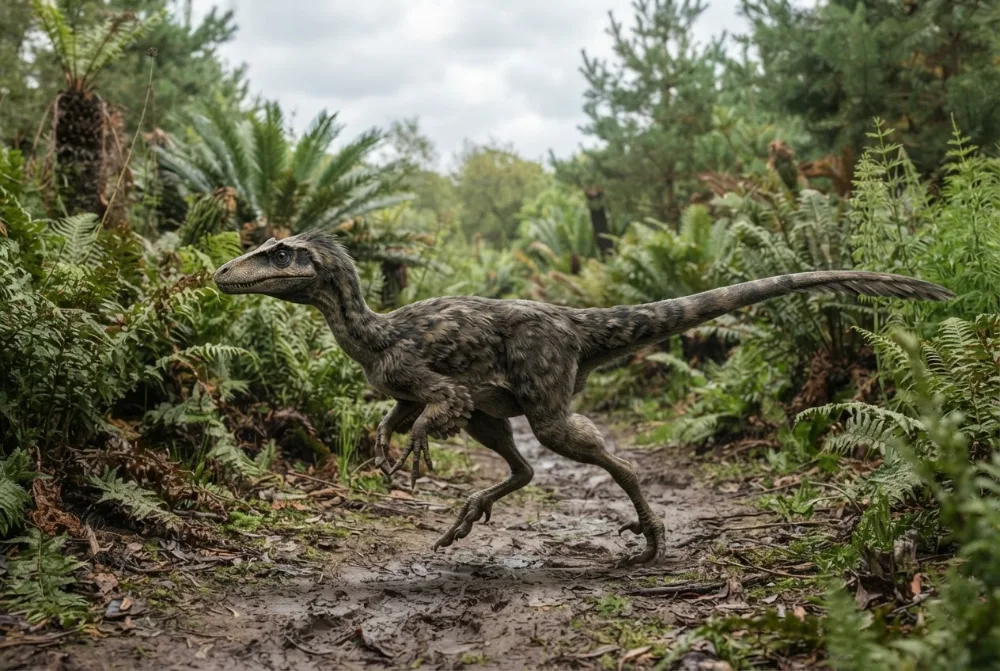
Aristosuchus was about the size of a large dog, around 2 metres (6.6 feet) long.1
It lived on the Isle of Wight, which at the time was a warm, swampy place full of dinosaurs.1
Scientists are not sure exactly how much Aristosuchus weighed; estimates range from 7 to 30 kilograms (15 to 66 pounds).1
Eyona mibuzo ibuzwa kakhulu: Aristosuchus
?How big was Aristosuchus?
About 2 metres (6.6 feet) long. Its weight is uncertain: estimates range from 7 to 30 kilograms (15 to 66 pounds).1
?What did Aristosuchus eat?
It was a meat-eater (carnivore) that hunted small animals in its environment.13
?Why is it called Aristosuchus?
Its name means 'best crocodile' in Greek, because scientists first thought it was a crocodile. Later they learned it was a dinosaur.1
?Where did Aristosuchus live?
It lived on the Isle of Wight in England, which was a warm, swampy floodplain with rivers and lakes during the Early Cretaceous.1
Inyaniso ngeentsomi
Intsomi: Aristosuchus was a crocodile.
Inyaniso: Aristosuchus was actually a small theropod dinosaur, not a crocodile. Early scientists mistook it for a crocodile because of its name and some bone features.1
Kwiingcali zeedayinaso
- Igama lenzululwazi
- Aristosuchus
- Inikwe igama ngu:
- Seeley 18874
- Iqela
- Iidayinaso ezitya inyama
- Usapho / iclade
- Compsognathidae4
- Ukuhlelwa
- Theropoda > Compsognathidae4
- Ubudala bamatye
- 126 ukuya ku-120 izigidi zeminyaka (Barremian / Aptian)4
- Amazwe
- iUnited Kingdom4
- Iirekhodi zeefosili
- 1 kwi-Paleobiology Database4
- Ukufunyanwa
- The fossils were discovered by Reverend William D. Fox on the Isle of Wight, England. Richard Owen first named them Poekilopleuron pusillus in 1876, but Harry Govier Seeley gave them the new name Aristosuchus in 1887.1
- Kusaxoxwa ngayo
- Scientists still debate whether Aristosuchus is really a distinct species or if its fossils belong to another dinosaur.2
Apho iinyani zivela khona
- Aristosuchus (en.wikipedia.org)
- The historical taxonomy of the Lower Cretaceous theropods (Dinosauria) Calamospondylus and Aristosuchus from the Isle of Wight (darrennaish.wordpress.com)
- Aristosuchus, an Isle of Wight tyrannosauroid? - DinoWight (dinowight.org.uk)
- Aristosuchus in The Paleobiology Database (CC BY 4.0): ubudala, iindawo, izakhiwo zamatye, ukuhlelwa.
Yonke inyani ekweli phepha inenombolo ebonisa umthombo wayo. Ukuba siphosisile, uxolo, sithanda iidayinaso, asiyojenali yenzululwazi. Sixelele apha: [email protected], siya kuyilungisa.
 URex ulambile! I-Dino Wiki yiprojekthi katata ukwenzela unyana wakhe othanda iidayinaso, isimahla, ayinazintengiso, ayinazilandeli. Abantu abadala banokuphakela uRex isidlwana ukuze incede ihlale kwi-intanethi.Phakela uRex
 Allosaurus
 Carnotaurus
 Dilophosaurus
 Giganotosaurus
 Compsognathus
 Paronychodon
 Stegosaurus
 Iguanodon
 Archaeopteryx
 Microraptor
 Deinonychus
 Baryonyx