 Uyiyiphi idayinaso? Ikwizi
 Idabi leedayinaso
 Ugqatso lweedayinaso
 Imidlalo emincinci yeedayinaso
 I-albhamu yezitikha
 Iilisti ze-TOP zeedayinaso
 Ndothuse!
Yaphila nini?

Yayinkulu kangakanani?
Yayinde kangakanani?
Yayiphakame kangakanani?
uqikelelo
Yayinzima kangakanani?

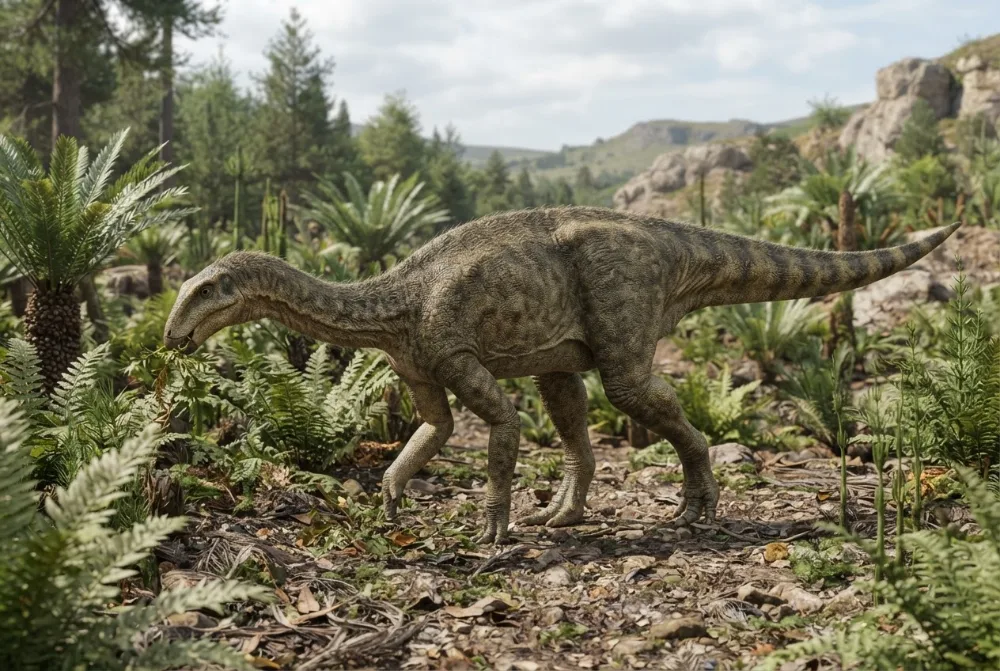
 inde njengeekati zasekhaya ezingama-4, impumlo ukuya emsileni🍌inde njengeebhanana ezingama-11 zilandelelana🍉inzima njengamavatala angama-50🧸inzima njengabantwana basenkulisa abangama-13🎒inzima njengabantwana besikolo abangama-8🏃ibinokubaleka iimitha ezili-100 ngemizuzwana engama-9.5 (oyena mntu ukhawulezayo udinga i-9,6)
Asylosaurus wayemkhulu kangakanani xa ethelekiswa NAWE?
Yimathematika nje kwibhrawuza yakho. Akukho nto igcinwayo okanye ithunyelwe naphi na.
Yayikhawuleza kangakanani?


Iinyani ezimnandi
The bones of Asylosaurus were discovered in 1834, but they were not recognized as a new dinosaur until 2007.1
Its bones were saved from destruction during World War II because they had been taken to Yale University in the USA.1
Asylosaurus had a different upper arm bone (humerus) compared to its relatives Thecodontosaurus and Pantydraco.1
Its hand had a reduced number of finger bones, with a formula of 2 to 3-4 to 2-?1.2
The name Asylosaurus means 'unharmed lizard', because its fossils escaped the bombing of Bristol in 1940.1
Eyona mibuzo ibuzwa kakhulu: Asylosaurus
?How big was Asylosaurus?
About 2 metres long and weighed roughly 250 kilograms.1
?What did Asylosaurus eat?
It was a plant-eater, but it may have also eaten some insects or small animals, since scientists are not sure if it was purely herbivorous or omnivorous.1
?Why is it called Asylosaurus?
The name means 'unharmed lizard' because its fossils were saved from a World War II bombing that destroyed the original Thecodontosaurus bones.1
?When did Asylosaurus live?
It lived during the Late Triassic period, about 200 million years ago.1
Inyaniso ngeentsomi
Intsomi: Some people think Asylosaurus is the same as Thecodontosaurus.
Inyaniso: It was first thought to be Thecodontosaurus, but scientists now see it as its own genus because of differences in the upper arm bone.1
Kwiingcali zeedayinaso
- Igama lenzululwazi
- Asylosaurus
- Inikwe igama ngu:
- Galton 20073
- Iqela
- Iintamo-nde
- Usapho / iclade
- Sauropodomorpha3
- Ukuhlelwa
- Sauropodomorpha3
- Ubudala bamatye
- 206 ukuya ku-201 izigidi zeminyaka (Rhaetian)3
- Izakhiwo zamatye
- Magnesian Conglomerate3
- Amazwe
- iUnited Kingdom3
- Iirekhodi zeefosili
- 1 kwi-Paleobiology Database3
- Ukufunyanwa
- The bones were found in 1834 by quarrymen in Bristol, England. They were described in 1836 as Thecodontosaurus, but Peter Galton named them Asylosaurus in 2007.1
- Kusaxoxwa ngayo
- Scientists are not sure if some other bones from the same site belong to Asylosaurus or to another dinosaur.2
Apho iinyani zivela khona
- Asylosaurus (en.wikipedia.org)
- VOL. 26, N° 2, 2007 (dinochecker.com)
- Asylosaurus in The Paleobiology Database (CC BY 4.0): ubudala, iindawo, izakhiwo zamatye, ukuhlelwa.
Yonke inyani ekweli phepha inenombolo ebonisa umthombo wayo. Ukuba siphosisile, uxolo, sithanda iidayinaso, asiyojenali yenzululwazi. Sixelele apha: [email protected], siya kuyilungisa.
 URex ulambile! I-Dino Wiki yiprojekthi katata ukwenzela unyana wakhe othanda iidayinaso, isimahla, ayinazintengiso, ayinazilandeli. Abantu abadala banokuphakela uRex isidlwana ukuze incede ihlale kwi-intanethi.Phakela uRex
 Brachiosaurus
 Diplodocus
 Brontosaurus
 Argentinosaurus
 Camarasaurus
 Morosaurus
 Nothosaurus
 Coelophysis
 Podokesaurus
 Simosaurus
 Eudimorphodon
 Herrerasaurus