 Uyiyiphi idayinaso? Ikwizi
 Idabi leedayinaso
 Ugqatso lweedayinaso
 Imidlalo emincinci yeedayinaso
 I-albhamu yezitikha
 Iilisti ze-TOP zeedayinaso
 Ndothuse!
Camarasaurus
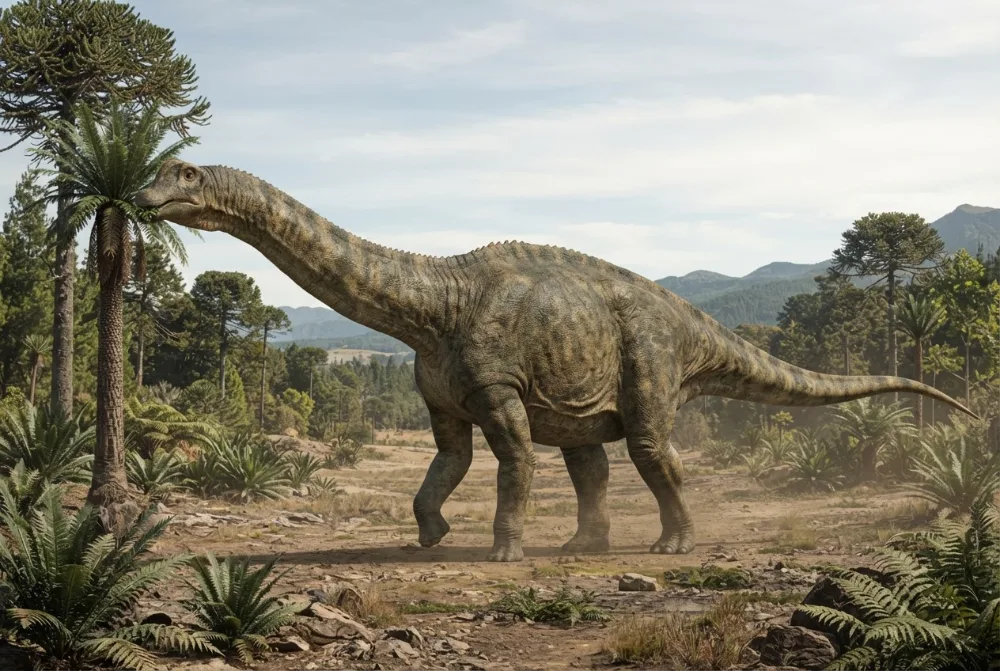
Camarasaurus was a giant, long-necked plant-eater that lived in North America during the Late Jurassic. It had a bulky body, a wide ribcage, and a surprisingly large skull for a sauropod. More than 530 fossils have been found, making it the most common dinosaur in the Morrison Formation.1
Yaphila nini?
Yayinkulu kangakanani?
Yayinde kangakanani?
Yayiphakame kangakanani?
Yayinzima kangakanani?

 inde njengeemoto ezingama-5 zipakwe zilandelelana🍌inde njengeebhanana ezingama-130 zilandelelana🍉inzima njengamavatala angama-10000🎒inzima njengamagumbi okufundela apheleleyo abantwana angama-62🐻❄️inzima njengeebhere ezimhlophe ezingama-110🏢iphakame ngokwaneleyo ukuba ilunguze efestileni yomgangatho 2🏃ibinokubaleka iimitha ezili-100 ngemizuzwana engama-36 (oyena mntu ukhawulezayo udinga i-9,6)
Camarasaurus wayemkhulu kangakanani xa ethelekiswa NAWE?
Yimathematika nje kwibhrawuza yakho. Akukho nto igcinwayo okanye ithunyelwe naphi na.
Yayikhawuleza kangakanani?


Iinyani ezimnandi
Camarasaurus means 'chambered lizard' because its backbone had hollow chambers, which helped lighten its skeleton.1
It had a relatively short neck and tail compared to other sauropods, and its front legs were longer than its back legs, making its shoulders higher than its hips.1
More than 530 specimens have been found, including several nearly complete skeletons, so scientists know a lot about this dinosaur.1
Camarasaurus lived alongside other famous dinosaurs like Diplodocus, Stegosaurus, and Allosaurus in the Morrison Formation.1
Its teeth had microscopic pits and scratches that show adults ate tough, coarse plants, while juveniles ate softer food.1
A nearly complete skeleton of a young Camarasaurus (CM 11338) was found with its neck curved upward, but that pose may have happened after death, not when it was alive.1
Inyaniso ngeentsomi
Intsomi: Camarasaurus could hold its neck straight up like a giraffe.
Inyaniso: Scientists think its neck was held more horizontally or with a slight downward slope, not vertical like a swan.1
Kwiingcali zeedayinaso
- Igama lenzululwazi
- Camarasaurus
- Inikwe igama ngu:
- Cope 18772
- Iqela
- Iintamo-nde
- Usapho / iclade
- Camarasauridae2
- Ukuhlelwa
- Sauropodomorpha > Sauropoda > Macronaria2
- Ubudala bamatye
- 162 ukuya ku-143 izigidi zeminyaka (Oxfordian / Tithonian)2
- Izakhiwo zamatye
- Morrison, Kadzi, Süntel2
- Amazwe
- iUSA, iZimbabwe, iJamani2
- Iirekhodi zeefosili
- 138 kwi-Paleobiology Database2
- Ikwaziwa ngokuba
- Cathetosaurus, Caulodon, Uintasaurus (amagama amadala ngoku abalwa njengesilwanyana esinye)2
- Ukufunyanwa
- Camarasaurus was named in 1877 by Edward Drinker Cope, based on fossils from Garden Park, Colorado. Soon after, his rival Othniel Charles Marsh named similar fossils Morosaurus, but those are now considered the same genus.1
- Kusaxoxwa ngayo
- Scientists still debate exactly how Camarasaurus held its neck and whether it could rear up on its hind legs to reach high plants.1
Apho iinyani zivela khona
- Camarasaurus (en.wikipedia.org)
- Camarasaurus in The Paleobiology Database (CC BY 4.0): ubudala, iindawo, izakhiwo zamatye, ukuhlelwa.
Yonke inyani ekweli phepha inenombolo ebonisa umthombo wayo. Ukuba siphosisile, uxolo, sithanda iidayinaso, asiyojenali yenzululwazi. Sixelele apha: [email protected], siya kuyilungisa.
 URex ulambile! I-Dino Wiki yiprojekthi katata ukwenzela unyana wakhe othanda iidayinaso, isimahla, ayinazintengiso, ayinazilandeli. Abantu abadala banokuphakela uRex isidlwana ukuze incede ihlale kwi-intanethi.Phakela uRex
 Brachiosaurus
 Diplodocus
 Brontosaurus
 Argentinosaurus
 Morosaurus
 Massospondylus
 Allosaurus
 Compsognathus
 Camptosaurus
 Nanosaurus
 Rhamphorhynchus
 Ceratosaurus