 Uyiyiphi idayinaso? Ikwizi
 Idabi leedayinaso
 Ugqatso lweedayinaso
 Imidlalo emincinci yeedayinaso
 I-albhamu yezitikha
 Iilisti ze-TOP zeedayinaso
 Ndothuse!
Yaphila nini?

Yayinkulu kangakanani?
Yayinzima kangakanani?
Avisaurus wayemkhulu kangakanani xa ethelekiswa NAWE?
Yimathematika nje kwibhrawuza yakho. Akukho nto igcinwayo okanye ithunyelwe naphi na.
Yayikhawuleza kangakanani?


Iinyani ezimnandi
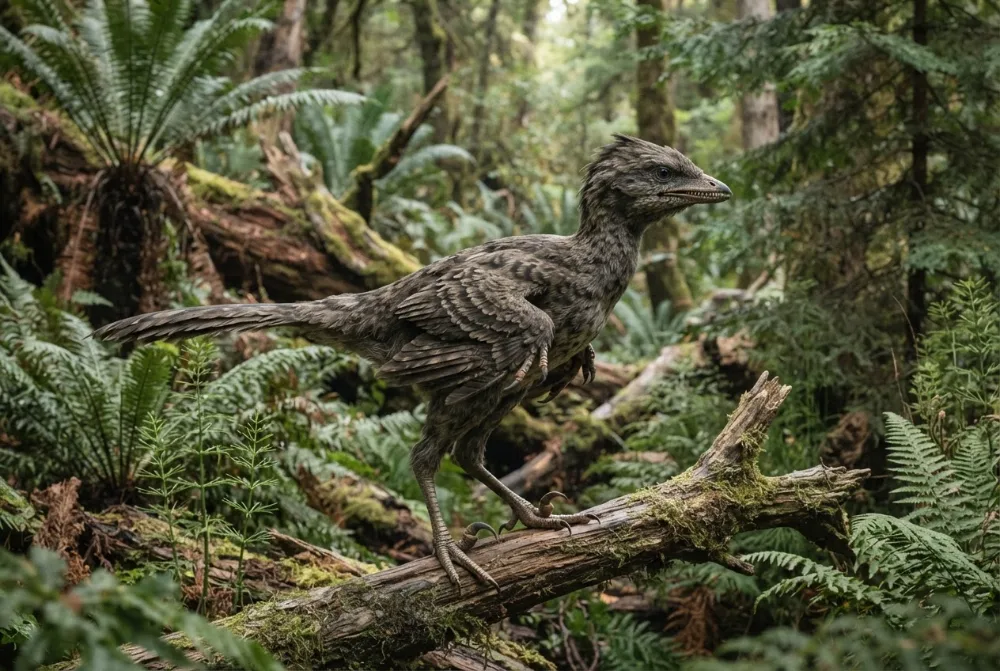
Avisaurus lived about 68 to 66 million years ago, right before the dinosaurs went extinct.1
It was one of the largest enantiornithine birds, weighing up to 1.7 kilograms (3.7 pounds).1
The first fossil of Avisaurus was a single foot bone called a tarsometatarsus, found in Montana in 1975.1
Scientists first thought Avisaurus was a non-avian dinosaur, but later realized it was an ancient bird.1
Avisaurus had curved claws on its feet, similar to those of raptor dinosaurs, which helped it catch prey.1
It lived in swamps and river basins along the western shore of a huge sea that split North America.1
Eyona mibuzo ibuzwa kakhulu: Avisaurus
?Was Avisaurus a dinosaur?
Yes, Avisaurus was a dinosaur. All birds are members of the dinosaur group, and Avisaurus was an enantiornithine bird.1
?How big was Avisaurus?
Avisaurus was a large enantiornithine bird. Avisaurus darwini weighed up to 1.2 kilograms (2.6 pounds), and Avisaurus archibaldi weighed up to 1.7 kilograms (3.7 pounds).1
?What did Avisaurus eat?
Avisaurus was a predator that likely ate other vertebrates. Its curved claws and foot bones suggest it could catch and carry prey, similar to modern hawks and owls.12
?When did Avisaurus live?
Avisaurus lived about 68 to 66 million years ago, during the Late Cretaceous period. It was one of the last enantiornithine birds before the non avian dinosaurs went extinct.1
?Where was Avisaurus found?
Avisaurus fossils have been found in the Hell Creek Formation of Montana, USA. The first fossil was a single foot bone collected in 1975 in Garfield County.1
Inyaniso ngeentsomi
Intsomi: Avisaurus was a dinosaur.
Inyaniso: Avisaurus was actually an ancient bird, part of a group called enantiornithines. It was a bird-like dinosaur, but not a non-avian dinosaur.1
Kwiingcali zeedayinaso
- Igama lenzululwazi
- Avisaurus
- Inikwe igama ngu:
- Brett-Surman and Paul 19854
- Iqela
- Iintaka zokuqala
- Usapho / iclade
- Avisauridae4
- Ukuhlelwa
- Theropoda > Avialae4
- Ubudala bamatye
- 72 ukuya ku-66 izigidi zeminyaka (Maastrichtian)4
- Izakhiwo zamatye
- Hell Creek4
- Amazwe
- iUSA4
- Iirekhodi zeefosili
- 2 kwi-Paleobiology Database4
- Ukufunyanwa
- Avisaurus was named in 1985 by paleontologists Brett-Surman and Paul. The first fossil, a foot bone, was found in 1975 by J. David Archibald in the Hell Creek Formation of Montana.14
- Kusaxoxwa ngayo
- Scientists are not sure exactly how Avisaurus used its claws, whether for hunting or climbing.1
Apho iinyani zivela khona
- Avisaurus (en.wikipedia.org)
- Predatory birds from the same fossil formation as SUE the T. rex - Field Museum (fieldmuseum.org)
- New enantiornithine diversity in the Hell Creek Formation and the functional morphology of the avisaurid tarsometatarsus (pmc.ncbi.nlm.nih.gov)
- Avisaurus in The Paleobiology Database (CC BY 4.0): ubudala, iindawo, izakhiwo zamatye, ukuhlelwa.
Yonke inyani ekweli phepha inenombolo ebonisa umthombo wayo. Ukuba siphosisile, uxolo, sithanda iidayinaso, asiyojenali yenzululwazi. Sixelele apha: [email protected], siya kuyilungisa.
 URex ulambile! I-Dino Wiki yiprojekthi katata ukwenzela unyana wakhe othanda iidayinaso, isimahla, ayinazintengiso, ayinazilandeli. Abantu abadala banokuphakela uRex isidlwana ukuze incede ihlale kwi-intanethi.Phakela uRex
 Archaeopteryx
 Hesperornis
 Ichthyornis
 Baptornis
 Jurapteryx
 Gobipteryx
 Tyrannosaurus
 Triceratops
 Velociraptor
 Spinosaurus
 Ankylosaurus
 Parasaurolophus