 Uyiyiphi idayinaso? Ikwizi
 Idabi leedayinaso
 Ugqatso lweedayinaso
 Imidlalo emincinci yeedayinaso
 I-albhamu yezitikha
 Iilisti ze-TOP zeedayinaso
 Ndothuse!
Barbaridactylus
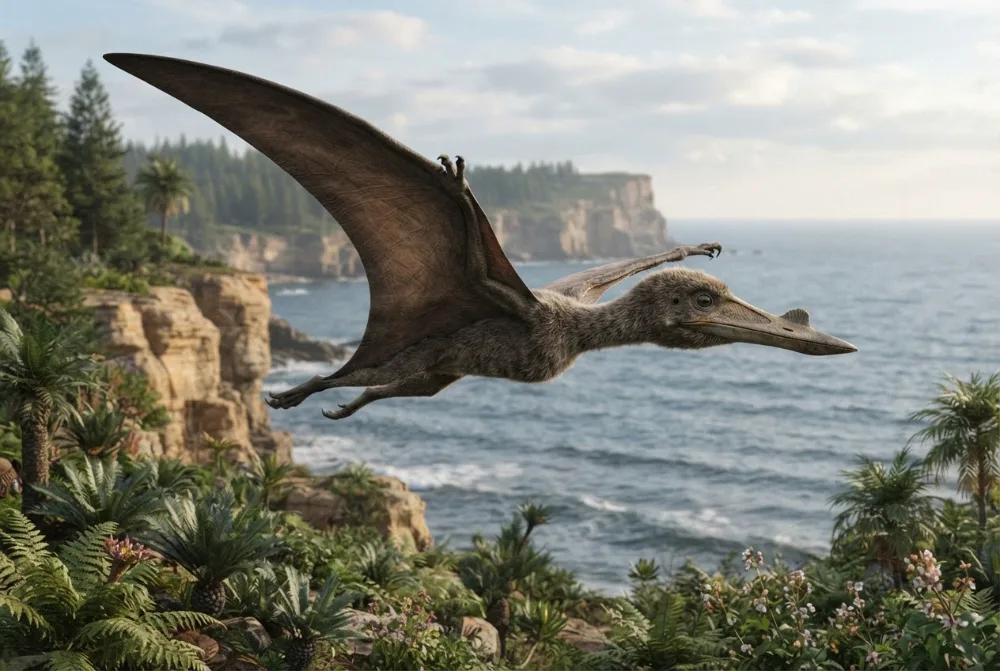
Barbaridactylus was a flying reptile that soared over the seas of North Africa near the end of the Age of Dinosaurs. It had long, narrow wings and a wingspan as wide as a small car. It likely snatched fish from the ocean with its upward-curving beak.14
Yaphila nini?
Yayinkulu kangakanani?
Amaphiko ayo ayebanzi kangakanani?
Yayinzima kangakanani?
 amaphiko abanzi njengeebhayisikile ezingama-2 zilandelelana
 malunga nobunzima bekati yasekhaya🍌inzima njengeebhanana ezingama-33⚽ibinokubhabha inqumle ibala lebhola ekhatywayo lonke ngemizuzwana engama-6
Barbaridactylus wayemkhulu kangakanani xa ethelekiswa NAWE?
Yimathematika nje kwibhrawuza yakho. Akukho nto igcinwayo okanye ithunyelwe naphi na.
Yayikhawuleza kangakanani?


Iinyani ezimnandi
Barbaridactylus was one of the largest nyctosaurids, with a wingspan of about 4 metres (13 feet).1
Its name comes from the Barbary Coast of North Africa and the Greek word for finger.1
All known fossils of Barbaridactylus were found in a three-year dig that uncovered about 200 pterosaur specimens.1
The type specimen includes a right femur, left radius, ulna, humerus, and scapulocoracoid, plus part of the lower jaw.1
Its scapulocoracoid is fused, meaning the animal was probably an adult when it died.1
Barbaridactylus lived about 66 million years ago, just 1 million years before the extinction that ended the Age of Dinosaurs.1
Eyona mibuzo ibuzwa kakhulu: Barbaridactylus
?Was Barbaridactylus a dinosaur?
No, Barbaridactylus was a pterosaur, a flying reptile that lived during the time of dinosaurs, but it was not a dinosaur.12
?How big was Barbaridactylus?
Barbaridactylus had a wingspan of about 4 metres (13 feet) and weighed around 4 kilograms (8.8 pounds). That is about as wide as a small boat.1
?What did Barbaridactylus eat?
It likely ate fish and squid. Barbaridactylus was an aerial fisher that snatched prey from the ocean surface or dove into the water.3
?When did Barbaridactylus live?
Barbaridactylus lived about 66 million years ago, during the very end of the Late Cretaceous period. That is just 1 million years before the big extinction that wiped out the non-bird dinosaurs.1
?Where was Barbaridactylus found?
Its fossils were discovered in the Ouled Abdoun Basin in Morocco, North Africa. The area was a warm, shallow sea at the time.12
?Why does Barbaridactylus have that name?
Its name means 'Barbary Coast finger,' after the Barbary Coast of North Africa where it was found, and the Greek word for finger. The species name grandis means 'great' in Latin.1
Kwiingcali zeedayinaso
- Igama lenzululwazi
- Barbaridactylus
- Inikwe igama ngu:
- Longrich et al. 20184
- Iqela
- Izirhubuluzi ezibhabhayo
- Usapho / iclade
- Nyctosauridae4
- Ukuhlelwa
- Pterosauria > Pterodactyloidea4
- Ubudala bamatye
- 72 ukuya ku-66 izigidi zeminyaka (Maastrichtian)4
- Izakhiwo zamatye
- Couche III4
- Amazwe
- iMorocco4
- Iirekhodi zeefosili
- 1 kwi-Paleobiology Database4
- Ukufunyanwa
- Barbaridactylus was named in 2018 by paleontologists Nicholas R. Longrich, David M. Martill, and Brian Andres. The fossils came from phosphates in the Ouled Abdoun Basin of Morocco.1
- Kusaxoxwa ngayo
- Scientists are not sure whether Barbaridactylus should be placed in its own genus or considered a species of Nyctosaurus. Some studies suggest it might be Nyctosaurus grandis.1
Apho iinyani zivela khona
- Barbaridactylus (en.wikipedia.org)
- Barbaridactylus Facts for Kids (kids.kiddle.co)
- Barbaridactylus — Pteros (pteros.com)
- Barbaridactylus in The Paleobiology Database (CC BY 4.0): ubudala, iindawo, izakhiwo zamatye, ukuhlelwa.
Yonke inyani ekweli phepha inenombolo ebonisa umthombo wayo. Ukuba siphosisile, uxolo, sithanda iidayinaso, asiyojenali yenzululwazi. Sixelele apha: [email protected], siya kuyilungisa.
 URex ulambile! I-Dino Wiki yiprojekthi katata ukwenzela unyana wakhe othanda iidayinaso, isimahla, ayinazintengiso, ayinazilandeli. Abantu abadala banokuphakela uRex isidlwana ukuze incede ihlale kwi-intanethi.Phakela uRex
 Pteranodon
 Quetzalcoatlus
 Dorygnathus
 Rhamphorhynchus
 Anhanguera
 Pterodactylus
 Tyrannosaurus
 Triceratops
 Velociraptor
 Spinosaurus
 Ankylosaurus
 Parasaurolophus