 Uyiyiphi idayinaso? Ikwizi
 Idabi leedayinaso
 Ugqatso lweedayinaso
 Imidlalo emincinci yeedayinaso
 I-albhamu yezitikha
 Iilisti ze-TOP zeedayinaso
 Ndothuse!
Yaphila nini?

Yayinkulu kangakanani?
Yayinde kangakanani?
Yayiphakame kangakanani?
uqikelelo
 inde njengeekati zasekhaya ezingama-4, impumlo ukuya emsileni🍌inde njengeebhanana ezingama-12 zilandelelana🏊ibinokuqubha ubude bechibi elikhulu lokuqubha (50 m) ngemizuzwana engama-7.8
Canadaga wayemkhulu kangakanani xa ethelekiswa NAWE?
Yimathematika nje kwibhrawuza yakho. Akukho nto igcinwayo okanye ithunyelwe naphi na.
Yayikhawuleza kangakanani?


Iinyani ezimnandi
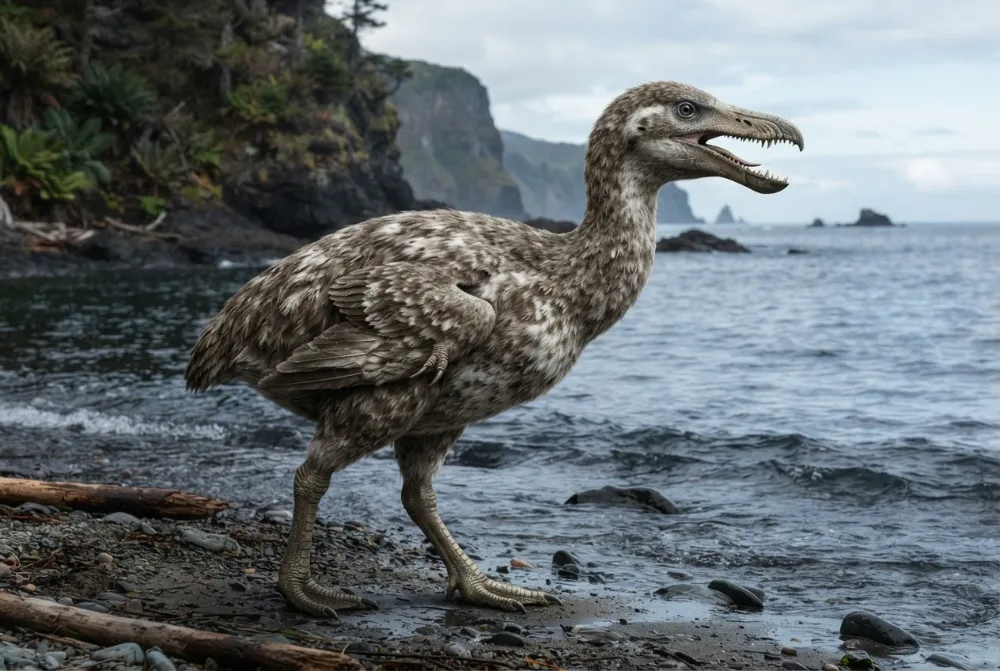
Canadaga is one of the largest known members of its group, reaching about 2.2 metres (7.2 feet) long.1
It lived in the Arctic, which is unusual because most of its relatives lived in warmer waters.1
Canadaga was one of the last of its kind, living about 67 million years ago, just before the dinosaurs went extinct.1
Its fossils were found in rocks from the Kanguk Formation, which is from the Late Cretaceous period.1
Scientists found only a few bones: three neck vertebrae, one tail vertebra, and two thigh bones.1
Canadaga could not fly, but it was a great swimmer, using its legs to push through the water.1
Eyona mibuzo ibuzwa kakhulu: Canadaga
?Was Canadaga a dinosaur?
Yes, Canadaga was a dinosaur. Like all birds, it belongs to the group of dinosaurs called theropods.1
?How big was Canadaga?
Canadaga was about 2.2 metres (7.2 feet) long, making it one of the largest known members of its group.1
?Could Canadaga fly?
No, Canadaga could not fly. It was a flightless bird that used its strong legs to dive and swim in the sea.1
Inyaniso ngeentsomi
Intsomi: Some people think Canadaga was a dinosaur.
Inyaniso: Canadaga was a bird, not a dinosaur, even though it lived during the age of dinosaurs.1
Kwiingcali zeedayinaso
- Igama lenzululwazi
- Canadaga
- Inikwe igama ngu:
- Hou 19993
- Iqela
- Iintaka zokuqala
- Usapho / iclade
- Hesperornithidae3
- Ukuhlelwa
- Theropoda > Avialae3
- Ubudala bamatye
- 84 ukuya ku-66 izigidi zeminyaka (Campanian / Maastrichtian)3
- Izakhiwo zamatye
- Kanguk3
- Amazwe
- iKhanada3
- Iirekhodi zeefosili
- 2 kwi-Paleobiology Database3
- Ukufunyanwa
- The fossils were collected from Bylot Island, Canada, and were studied by Chinese scientist Hou Lian-Hai, who named the species Canadaga arctica in 1999.12
- Kusaxoxwa ngayo
- Scientists are still debating why Canadaga and other large hesperornithids went extinct, with some thinking their large size and special features played a role.2
Apho iinyani zivela khona
- Canadaga (en.wikipedia.org)
- NEW HESPERORMTHID (AVES) FROM THE CANADIAN ARCTIC (vertpala.ac.cn)
- Canadaga in The Paleobiology Database (CC BY 4.0): ubudala, iindawo, izakhiwo zamatye, ukuhlelwa.
Yonke inyani ekweli phepha inenombolo ebonisa umthombo wayo. Ukuba siphosisile, uxolo, sithanda iidayinaso, asiyojenali yenzululwazi. Sixelele apha: [email protected], siya kuyilungisa.
 URex ulambile! I-Dino Wiki yiprojekthi katata ukwenzela unyana wakhe othanda iidayinaso, isimahla, ayinazintengiso, ayinazilandeli. Abantu abadala banokuphakela uRex isidlwana ukuze incede ihlale kwi-intanethi.Phakela uRex
 Archaeopteryx
 Hesperornis
 Ichthyornis
 Baptornis
 Jurapteryx
 Gobipteryx
 Tyrannosaurus
 Triceratops
 Velociraptor
 Spinosaurus
 Ankylosaurus
 Parasaurolophus