 Uyiyiphi idayinaso? Ikwizi
 Idabi leedayinaso
 Ugqatso lweedayinaso
 Imidlalo emincinci yeedayinaso
 I-albhamu yezitikha
 Iilisti ze-TOP zeedayinaso
 Ndothuse!
Cariocecus
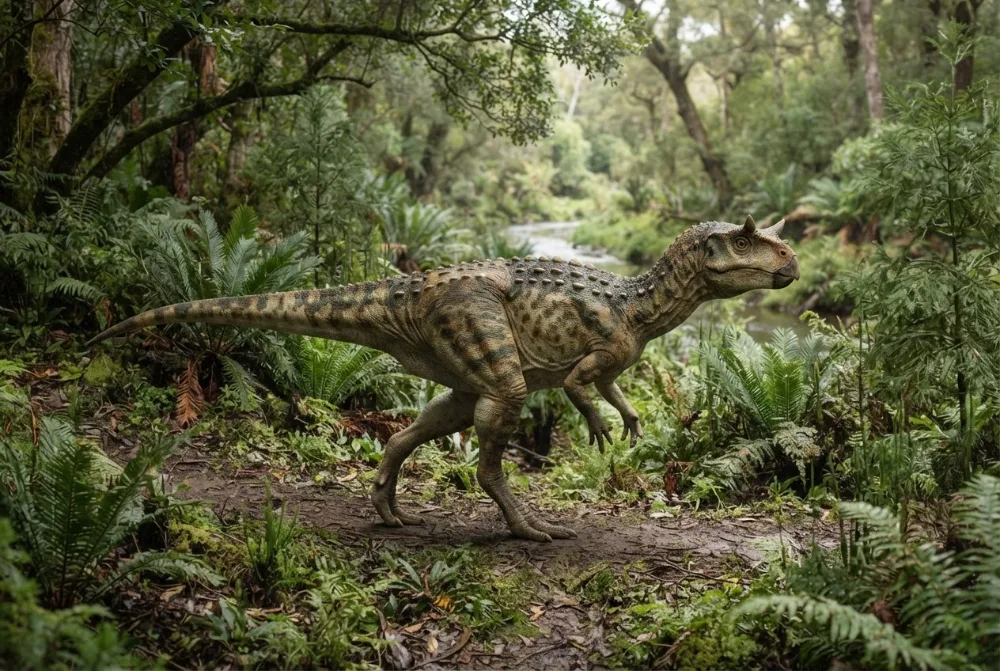
Cariocecus was a medium-sized plant-eating dinosaur that lived in what is now Portugal. It had a bony brow over its eye that made it look like an eagle, and its upper jaw bones were fused together to help it chew tough plants.1
Yaphila nini?
Yayinkulu kangakanani?
Yayinde kangakanani?
Yayiphakame kangakanani?
uqikelelo
Yayinzima kangakanani?
 inde njengezinja ezingama-7, impumlo ukuya emsileni🍌inde njengeebhanana ezingama-39 zilandelelana🍉inzima njengamavatala angama-120🧸inzima njengabantwana basenkulisa abangama-32🎒inzima njengabantwana besikolo abangama-19🏃ibinokubaleka iimitha ezili-100 ngemizuzwana engama-9.7 (oyena mntu ukhawulezayo udinga i-9,6)
Cariocecus wayemkhulu kangakanani xa ethelekiswa NAWE?
Yimathematika nje kwibhrawuza yakho. Akukho nto igcinwayo okanye ithunyelwe naphi na.
Yayikhawuleza kangakanani?


Iinyani ezimnandi
Cariocecus is the first iguanodontian skull ever found in Portugal.1
The skull of Cariocecus was about 45 centimetres (18 inches) long, and the animal was not fully grown when it died.2
Its maxilla and jugal bones were completely fused together, which is unique among all ornithopods.1
Cariocecus had a large bony brow over its eye that may have protected it from sun glare and injury.1
Scientists used micro-CT scanning to study the inside of the skull, including the brain and inner ear.2
Cariocecus lived alongside the spinosaurid Iberospinus and other dinosaurs in a shallow coastal environment.1
The fossil was discovered in 2016 by Pedro Marrecas and was named in 2025.1
Kwiingcali zeedayinaso
- Igama lenzululwazi
- Cariocecus
- Inikwe igama ngu:
- Bertozzo et al. 20254
- Iqela
- Izitya-zityalo ezinemilomo
- Usapho / iclade
- Hadrosauroidea4
- Ukuhlelwa
- Ornithischia > Ornithopoda > Iguanodontia4
- Ubudala bamatye
- 126 ukuya ku-121 izigidi zeminyaka (Barremian)4
- Izakhiwo zamatye
- Papo Seco4
- Amazwe
- iPortugal4
- Iirekhodi zeefosili
- 1 kwi-Paleobiology Database4
- Ukufunyanwa
- The only known skull was found in 2016 by Pedro Marrecas in a limestone outcrop in Portugal. It was named Cariocecus bocagei in 2025 by Filippo Bertozzo and colleagues.1
- Kusaxoxwa ngayo
- Scientists are not sure exactly how large Cariocecus grew, because the only known fossil is from a young individual.1
Apho iinyani zivela khona
- Cariocecus bocagei (en.wikipedia.org)
- Cariocecus bocagei, a new basal hadrosauroid from the Lower Cretaceous of Portugal: Journal of Systematic Palaeontology: Vol 23, No 1 (tandfonline.com)
- Cariocecus bocagei | Dinosaur Database by DinoAnimals.com (dinoanimals.com)
- Cariocecus in The Paleobiology Database (CC BY 4.0): ubudala, iindawo, izakhiwo zamatye, ukuhlelwa.
Yonke inyani ekweli phepha inenombolo ebonisa umthombo wayo. Ukuba siphosisile, uxolo, sithanda iidayinaso, asiyojenali yenzululwazi. Sixelele apha: [email protected], siya kuyilungisa.
 URex ulambile! I-Dino Wiki yiprojekthi katata ukwenzela unyana wakhe othanda iidayinaso, isimahla, ayinazintengiso, ayinazilandeli. Abantu abadala banokuphakela uRex isidlwana ukuze incede ihlale kwi-intanethi.Phakela uRex
 Iguanodon
 Tenontosaurus
 Thescelosaurus
 Zalmoxes
 Camptosaurus
 Rhabdodon
 Stegosaurus
 Archaeopteryx
 Giganotosaurus
 Microraptor
 Deinonychus
 Baryonyx