 Uyiyiphi idayinaso? Ikwizi
 Idabi leedayinaso
 Ugqatso lweedayinaso
 Imidlalo emincinci yeedayinaso
 I-albhamu yezitikha
 Iilisti ze-TOP zeedayinaso
 Ndothuse!
Dimorphodon
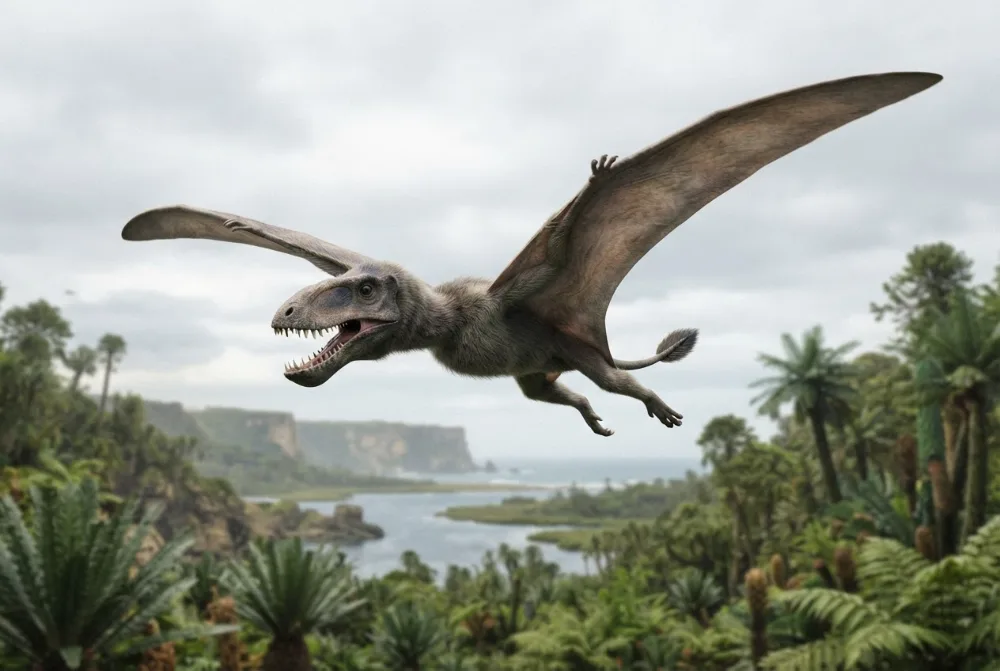
Dimorphodon was a flying reptile that lived during the Early Jurassic, about 201 to 191 million years ago. It had two different kinds of teeth in its jaws, which is rare for reptiles. It probably hunted small animals and insects.1
Yaphila nini?
Yayinkulu kangakanani?
Yayinde kangakanani?
 inde njengeekati zasekhaya ezingama-2, impumlo ukuya emsileni🍌inde njengeebhanana ezingama-6 zilandelelana⚽ibinokubhabha inqumle ibala lebhola ekhatywayo lonke ngemizuzwana engama-8.4
Dimorphodon wayemkhulu kangakanani xa ethelekiswa NAWE?
Yimathematika nje kwibhrawuza yakho. Akukho nto igcinwayo okanye ithunyelwe naphi na.
Yayikhawuleza kangakanani?


Iinyani ezimnandi
Dimorphodon was named by famous paleontologist Richard Owen in 1859.1
The first fossils of Dimorphodon were found by fossil collector Mary Anning in Lyme Regis, England, in 1828.1
Dimorphodon had a large, light skull with big openings and large eyes.3
Its wings were made of skin stretched from an extra-long fourth finger to its hip or hind legs.3
Dimorphodon was not a strong flier; it probably made short, frantic flights like modern chickens or woodpeckers.1
On the ground, Dimorphodon likely walked on two legs and folded its wings like birds and bats do.3
A second species, Dimorphodon weintraubi, was named in 1998 from fossils found in Mexico.1
Eyona mibuzo ibuzwa kakhulu: Dimorphodon
?How big was Dimorphodon?
About 1 metre long, with a wingspan of about 1.45 metres.1
?What did Dimorphodon eat?
It probably hunted small vertebrates and also ate insects. Some scientists think it was an insectivore, but recent studies suggest it was a vertebrate predator.1
?Could Dimorphodon fly well?
No, it was not a strong flier. It likely made short, frantic flights like modern chickens or woodpeckers, and could not fly for long distances.1
?When did Dimorphodon live?
It lived during the Early Jurassic Period, about 201 to 191 million years ago.1
?Where was Dimorphodon found?
The first fossils were found in Lyme Regis, England, by Mary Anning in 1828. A second species was later found in Mexico.1
?Why is it called Dimorphodon?
Its name means 'two-form tooth' because it had two different types of teeth in its jaws: long fangs at the front and smaller pointed teeth behind.1
?Is Dimorphodon a dinosaur?
No, it is a pterosaur, a flying reptile that is not a dinosaur.1
?How did Dimorphodon walk on the ground?
It likely walked on all fours, using its wings as front limbs, rather than walking on two legs.1
Inyaniso ngeentsomi
Intsomi: Dimorphodon was a seabird-like glider that soared over the ocean.
Inyaniso: Recent studies show it had short, robust wings and was a poor glider, relying on short, flapping flights.1
Kwiingcali zeedayinaso
- Igama lenzululwazi
- Dimorphodon
- Inikwe igama ngu:
- Owen 18594
- Iqela
- Izirhubuluzi ezibhabhayo
- Usapho / iclade
- Dimorphodontidae4
- Ukuhlelwa
- Pterosauria4
- Ubudala bamatye
- 201 ukuya ku-184 izigidi zeminyaka (Hettangian / Pliensbachian)4
- Izakhiwo zamatye
- Blue Lias, La Boca4
- Amazwe
- iUnited Kingdom, iMexico4
- Iirekhodi zeefosili
- 3 kwi-Paleobiology Database4
- Ukufunyanwa
- The first fossils were found by Mary Anning in 1828 in England. Richard Owen named the genus Dimorphodon in 1859 after studying skulls that showed two types of teeth.1
- Kusaxoxwa ngayo
- Scientists still debate whether Dimorphodon mainly ate insects or small vertebrates, though recent studies lean toward a vertebrate diet.1
Apho iinyani zivela khona
- Dimorphodon (en.wikipedia.org)
- PBDB Taxon (paleobiodb.org)
- Dimorphodon | Pterosaur, Jurassic, Flying Reptile (britannica.com)
- Dimorphodon in The Paleobiology Database (CC BY 4.0): ubudala, iindawo, izakhiwo zamatye, ukuhlelwa.
Yonke inyani ekweli phepha inenombolo ebonisa umthombo wayo. Ukuba siphosisile, uxolo, sithanda iidayinaso, asiyojenali yenzululwazi. Sixelele apha: [email protected], siya kuyilungisa.
 URex ulambile! I-Dino Wiki yiprojekthi katata ukwenzela unyana wakhe othanda iidayinaso, isimahla, ayinazintengiso, ayinazilandeli. Abantu abadala banokuphakela uRex isidlwana ukuze incede ihlale kwi-intanethi.Phakela uRex
 Pteranodon
 Quetzalcoatlus
 Dorygnathus
 Rhamphorhynchus
 Anhanguera
 Pterodactylus
 Dilophosaurus
 Stenopterygius
 Lufengosaurus
 Scutellosaurus
 Yunnanosaurus
 Sinosaurus