 Uyiyiphi idayinaso? Ikwizi
 Idabi leedayinaso
 Ugqatso lweedayinaso
 Imidlalo emincinci yeedayinaso
 I-albhamu yezitikha
 Iilisti ze-TOP zeedayinaso
 Ndothuse!
Ekrixinatosaurus
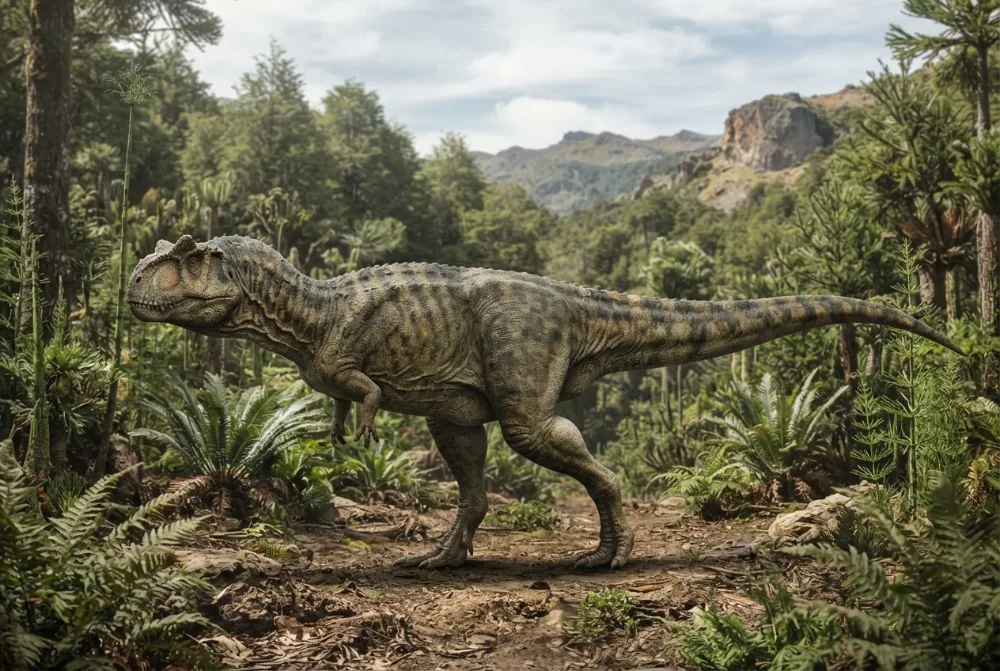
Ekrixinatosaurus was a big, meat-eating dinosaur with a boxy head and strong legs. It lived in what is now Argentina during the Early Cretaceous period. Its fossils were found when workers were building a gas pipeline and used dynamite, which is how it got its name!1
Yaphila nini?
Yayinkulu kangakanani?
Yayinde kangakanani?
Yayiphakame kangakanani?
uqikelelo
Yayinzima kangakanani?
 inde njengezinja ezingama-8, impumlo ukuya emsileni🍌inde njengeebhanana ezingama-44 zilandelelana🍉inzima njengamavatala angama-160🧸inzima njengabantwana basenkulisa abangama-42🎒inzima njengabantwana besikolo abangama-25🏃ibinokubaleka iimitha ezili-100 ngemizuzwana engama-9.5 (oyena mntu ukhawulezayo udinga i-9,6)
Ekrixinatosaurus wayemkhulu kangakanani xa ethelekiswa NAWE?
Yimathematika nje kwibhrawuza yakho. Akukho nto igcinwayo okanye ithunyelwe naphi na.
Yayikhawuleza kangakanani?


Iinyani ezimnandi
Ekrixinatosaurus was an abelisaurid, a family of theropod dinosaurs with short, deep skulls and tiny arms. Its skull was about 83 centimetres long.1
The only known skeleton of Ekrixinatosaurus was found scattered over an area of 15 square metres. It included parts of the skull, backbone, hips, legs and feet.1
Ekrixinatosaurus lived alongside the giant meat-eater Giganotosaurus and the long-necked sauropods Andesaurus and Limaysaurus. Scientists think they may have competed for food.1
The bones of Ekrixinatosaurus were discovered because of a gas pipeline project. Workers used dynamite to blast through the rock, which is why the dinosaur was named 'explosion-born reptile'.1
Ekrixinatosaurus had a boxy skull with a bump above its eye and a jaw that curved upward. Its face bones were covered in small holes and spikes, which may have supported a tough, wrinkly skin.1
Some scientists once thought Ekrixinatosaurus was the largest abelisaurid, bigger than Carnotaurus. But later studies showed that Carnotaurus was actually larger, just with a smaller head.1
Eyona mibuzo ibuzwa kakhulu: Ekrixinatosaurus
?How big was Ekrixinatosaurus?
It was about 6.5 to 8 metres long (21 to 26 feet) and weighed around 800 kilograms (1,800 pounds). Some scientists once thought it was bigger, but later studies showed it was smaller than Carnotaurus.1
?What did Ekrixinatosaurus eat?
It was a meat-eater that probably hunted smaller dinosaurs and animals. It lived alongside giant plant-eaters like Andesaurus and may have competed with the huge predator Giganotosaurus for food.1
?When did Ekrixinatosaurus live?
It lived during the Early Cretaceous period, about 111 to 106 million years ago.1
?Where was Ekrixinatosaurus found?
Its fossils were found in Argentina, in a place called the Candeleros Formation. Workers building a gas pipeline blasted the rock with dynamite, which is how the dinosaur got its name 'explosion-born reptile'.1
?Was Ekrixinatosaurus bigger than Carnotaurus?
No, Carnotaurus was actually larger. Some scientists once thought Ekrixinatosaurus was bigger because of its large skull, but comparing the leg bones shows Carnotaurus was the bigger dinosaur.1
?Did Ekrixinatosaurus have feathers?
The sources do not say whether it had feathers. Its face bones had small holes and spikes that may have supported tough, wrinkly skin, but no information about feathers is given.1
Kwiingcali zeedayinaso
- Igama lenzululwazi
- Ekrixinatosaurus
- Inikwe igama ngu:
- Calvo et al. 20042
- Iqela
- Iidayinaso ezitya inyama
- Usapho / iclade
- Abelisauridae2
- Ukuhlelwa
- Theropoda > Ceratosauria > Abelisauridae2
- Ubudala bamatye
- 113 ukuya ku-110 izigidi zeminyaka (Albian)2
- Izakhiwo zamatye
- Candeleros2
- Amazwe
- i-Argentina2
- Iirekhodi zeefosili
- 1 kwi-Paleobiology Database2
- Ukufunyanwa
- Ekrixinatosaurus was named in 2004 by paleontologists Jorge Calvo, David Rubilar-Rogers and Karen Moreno. The fossils were found in the Candeleros Formation of Argentina during construction of a gas pipeline.12
- Kusaxoxwa ngayo
- Scientists are not sure exactly how big Ekrixinatosaurus was. Some think it was 6.5 to 8 metres long, while others estimate it could have been 10 to 11 metres based on its skull size.1
Apho iinyani zivela khona
- Ekrixinatosaurus (en.wikipedia.org)
- Ekrixinatosaurus in The Paleobiology Database (CC BY 4.0): ubudala, iindawo, izakhiwo zamatye, ukuhlelwa.
Yonke inyani ekweli phepha inenombolo ebonisa umthombo wayo. Ukuba siphosisile, uxolo, sithanda iidayinaso, asiyojenali yenzululwazi. Sixelele apha: [email protected], siya kuyilungisa.
 URex ulambile! I-Dino Wiki yiprojekthi katata ukwenzela unyana wakhe othanda iidayinaso, isimahla, ayinazintengiso, ayinazilandeli. Abantu abadala banokuphakela uRex isidlwana ukuze incede ihlale kwi-intanethi.Phakela uRex
 Allosaurus
 Carnotaurus
 Dilophosaurus
 Giganotosaurus
 Compsognathus
 Paronychodon
 Stegosaurus
 Iguanodon
 Archaeopteryx
 Microraptor
 Deinonychus
 Baryonyx