 Uyiyiphi idayinaso? Ikwizi
 Idabi leedayinaso
 Ugqatso lweedayinaso
 Imidlalo emincinci yeedayinaso
 I-albhamu yezitikha
 Iilisti ze-TOP zeedayinaso
 Ndothuse!
Gurilynia
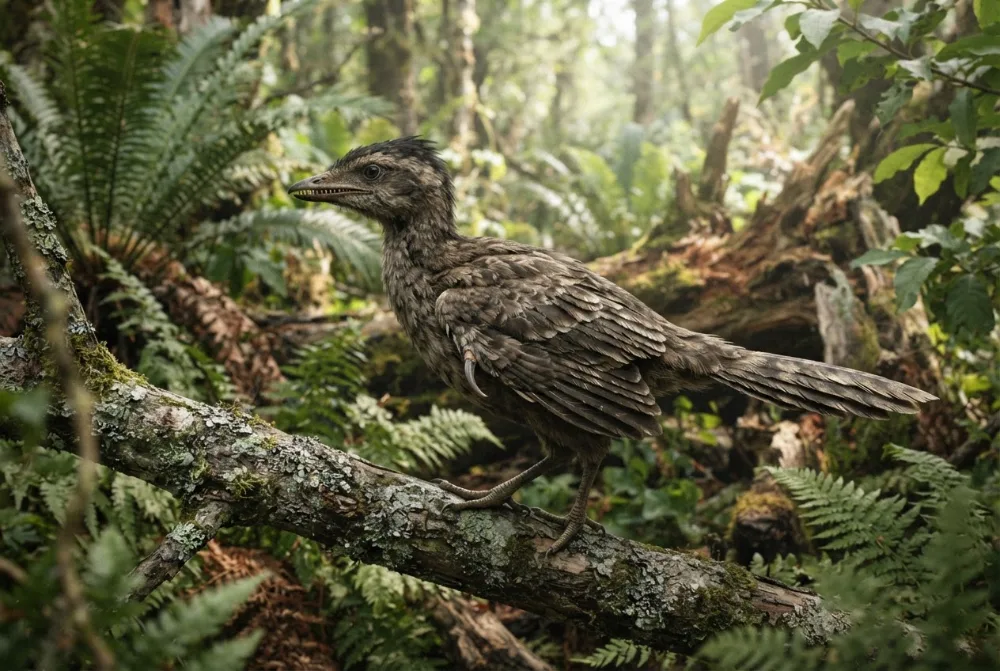
Gurilynia was a big, ancient bird that lived in Mongolia near the end of the Age of Dinosaurs. It was one of the largest birds of its time, about the size of a modern chicken but much heavier. It flew over dry plains and hunted for food.1
Yaphila nini?
Yayinkulu kangakanani?
Yayinde kangakanani?
Yayiphakame kangakanani?
Yayinzima kangakanani?
 malunga nobunzima bekati yasekhaya🍌inzima njengeebhanana ezingama-18🧱inde njengezitena zokudlala ezingama-17 zilandelelana🪑incinci ngokwaneleyo ukuba ihambe phantsi kwesitulo⚽ibinokubhabha inqumle ibala lebhola ekhatywayo lonke ngemizuzwana engama-11
Gurilynia wayemkhulu kangakanani xa ethelekiswa NAWE?
Yimathematika nje kwibhrawuza yakho. Akukho nto igcinwayo okanye ithunyelwe naphi na.
Yayikhawuleza kangakanani?


Iinyani ezimnandi
Gurilynia is known from only three partial bones: the top end of a right upper arm bone, the bottom end of a left upper arm bone, and the shoulder end of a left coracoid.1
It was the largest bird ever found from the Cretaceous period in Mongolia, weighing about 2.1 kilograms (4.6 pounds).1
The head of its upper arm bone was about 29 millimeters (1.1 inches) wide, much bigger than that of Pengornis, the largest Early Cretaceous enantiornithine.1
Gurilynia belonged to a group of ancient birds called enantiornithines, which had teeth and claws on their wings.1
It lived between 70 and 66 million years ago, right before the mass extinction that wiped out the non-avian dinosaurs.1
The fossils were found in the Nemegt Formation, which was a wet floodplain with rivers and forests during the Late Cretaceous.1
Kwiingcali zeedayinaso
- Igama lenzululwazi
- Gurilynia
- Inikwe igama ngu:
- Kurochkin 19993
- Iqela
- Iintaka zokuqala
- Usapho / iclade
- Enantiornithidae3
- Ukuhlelwa
- Theropoda > Avialae3
- Ubudala bamatye
- 72 ukuya ku-66 izigidi zeminyaka (Maastrichtian)3
- Izakhiwo zamatye
- Nemegt3
- Amazwe
- iMongolia3
- Iirekhodi zeefosili
- 1 kwi-Paleobiology Database3
- Ukufunyanwa
- Gurilynia was named by Russian paleontologist Evgeny Kurochkin in 1999, based on fossils collected from the Gurilyn Tsav locality in Mongolia. The species name nessovi honors a colleague.12
- Kusaxoxwa ngayo
- Scientists are not sure exactly how big Gurilynia was because only a few bone fragments have been found. The size estimates might change if more complete fossils are discovered.1
Apho iinyani zivela khona
- Gurilynia (en.wikipedia.org)
- PBDB Taxon (paleobiodb.org)
- Gurilynia in The Paleobiology Database (CC BY 4.0): ubudala, iindawo, izakhiwo zamatye, ukuhlelwa.
Yonke inyani ekweli phepha inenombolo ebonisa umthombo wayo. Ukuba siphosisile, uxolo, sithanda iidayinaso, asiyojenali yenzululwazi. Sixelele apha: [email protected], siya kuyilungisa.
 URex ulambile! I-Dino Wiki yiprojekthi katata ukwenzela unyana wakhe othanda iidayinaso, isimahla, ayinazintengiso, ayinazilandeli. Abantu abadala banokuphakela uRex isidlwana ukuze incede ihlale kwi-intanethi.Phakela uRex
 Archaeopteryx
 Hesperornis
 Ichthyornis
 Baptornis
 Jurapteryx
 Gobipteryx
 Tyrannosaurus
 Triceratops
 Velociraptor
 Spinosaurus
 Ankylosaurus
 Parasaurolophus