 Uyiyiphi idayinaso? Ikwizi
 Idabi leedayinaso
 Ugqatso lweedayinaso
 Imidlalo emincinci yeedayinaso
 I-albhamu yezitikha
 Iilisti ze-TOP zeedayinaso
 Ndothuse!
Ibirania
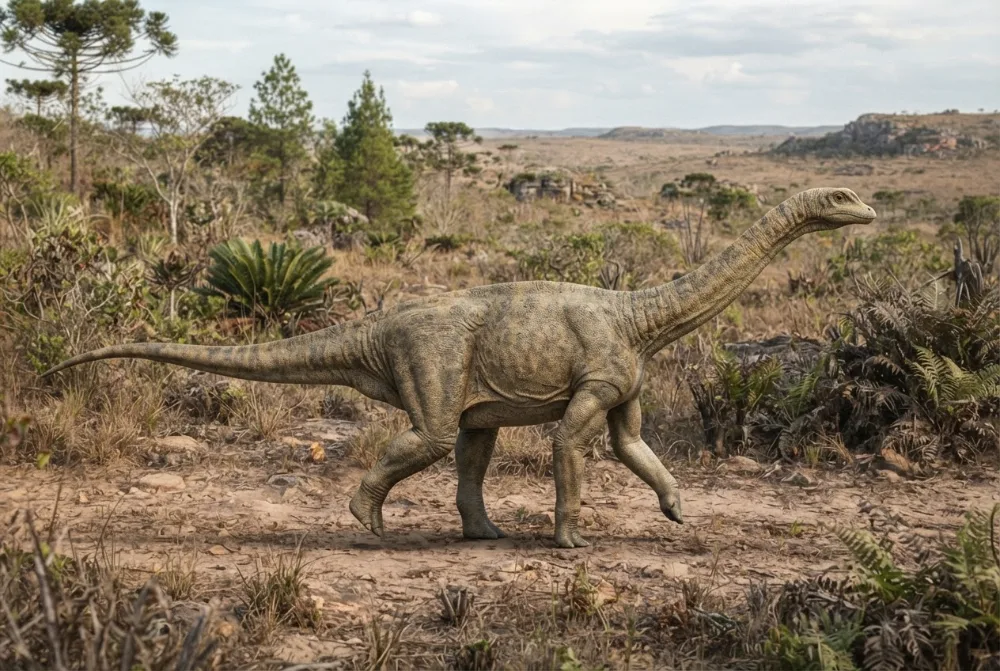
Ibirania was a tiny sauropod, one of the smallest long-necked dinosaurs ever found. It lived in a dry, inland part of Brazil about 80 million years ago. Despite its small size, it had air-filled bones just like its giant relatives.12
Yaphila nini?
Yayinkulu kangakanani?
Yayinde kangakanani?
Yayiphakame kangakanani?
uqikelelo
 inde njengezinja ezingama-6, impumlo ukuya emsileni🍌inde njengeebhanana ezingama-32 zilandelelana🏃ibinokubaleka iimitha ezili-100 ngemizuzwana engama-11 (oyena mntu ukhawulezayo udinga i-9,6)
Ibirania wayemkhulu kangakanani xa ethelekiswa NAWE?
Yimathematika nje kwibhrawuza yakho. Akukho nto igcinwayo okanye ithunyelwe naphi na.
Yayikhawuleza kangakanani?


Iinyani ezimnandi
Its bones were extremely hollow and filled with air sacs, like a bird's, which helped make it lighter.1
Scientists found fossilised parasites inside the bone canals of one Ibirania leg bone, the first time such parasites have been seen in a dinosaur.1
One Ibirania specimen had a bone infection called acute osteomyelitis, which scientists studied using CT scans and thin slices of the bone.1
Ibirania lived in a dry, inland environment, and its small size may have been an adaptation to scarce resources, not island life like other dwarf sauropods.1
Eyona mibuzo ibuzwa kakhulu: Ibirania
?How big was Ibirania?
About 5.7 metres (18.7 feet) long, making it one of the smallest sauropods ever found.12
?What did Ibirania eat?
It was a plant-eater. Its name means 'tree wanderer,' which hints that it browsed on trees and shrubs.1
?Did Ibirania have feathers?
No, it did not. Ibirania was a sauropod, and sauropods had scaly skin, not feathers.1
?Why was Ibirania so small?
Scientists think its small size was an adaptation to living in a dry, inland environment with scarce resources, not because it lived on an island.1
Kwiingcali zeedayinaso
- Igama lenzululwazi
- Ibirania
- Inikwe igama ngu:
- Navarro et al. 20224
- Iqela
- Iintamo-nde
- Usapho / iclade
- Saltasauridae4
- Ukuhlelwa
- Sauropodomorpha > Sauropoda > Titanosauria > Macronaria4
- Ubudala bamatye
- 86 ukuya ku-72 izigidi zeminyaka (Santonian / Campanian)4
- Izakhiwo zamatye
- São José do Rio Preto4
- Amazwe
- iBrazil4
- Iirekhodi zeefosili
- 3 kwi-Paleobiology Database4
- Ukufunyanwa
- Ibirania was named in 2022 by Navarro and colleagues based on fossils found on a farm in Ibirá, São Paulo, Brazil. The name means 'little tree wanderer' after the town and its small size.12
- Kusaxoxwa ngayo
- Scientists are still studying the tiny parasites found in Ibirania's bones to figure out exactly what they were.1
Apho iinyani zivela khona
- Ibirania (en.wikipedia.org)
- A NEW NANOID TITANOSAUR (DINOSAURIA: SAUROPODA) FROM THE UPPER CRETACEOUS OF BRAZIL | Ameghiniana (web.archive.org)
- PBDB Taxon (paleobiodb.org)
- Ibirania in The Paleobiology Database (CC BY 4.0): ubudala, iindawo, izakhiwo zamatye, ukuhlelwa.
Yonke inyani ekweli phepha inenombolo ebonisa umthombo wayo. Ukuba siphosisile, uxolo, sithanda iidayinaso, asiyojenali yenzululwazi. Sixelele apha: [email protected], siya kuyilungisa.
 URex ulambile! I-Dino Wiki yiprojekthi katata ukwenzela unyana wakhe othanda iidayinaso, isimahla, ayinazintengiso, ayinazilandeli. Abantu abadala banokuphakela uRex isidlwana ukuze incede ihlale kwi-intanethi.Phakela uRex
 Brachiosaurus
 Diplodocus
 Brontosaurus
 Argentinosaurus
 Camarasaurus
 Morosaurus
 Tyrannosaurus
 Triceratops
 Velociraptor
 Spinosaurus
 Ankylosaurus
 Parasaurolophus