 Uyiyiphi idayinaso? Ikwizi
 Idabi leedayinaso
 Ugqatso lweedayinaso
 Imidlalo emincinci yeedayinaso
 I-albhamu yezitikha
 Iilisti ze-TOP zeedayinaso
 Ndothuse!
Igai
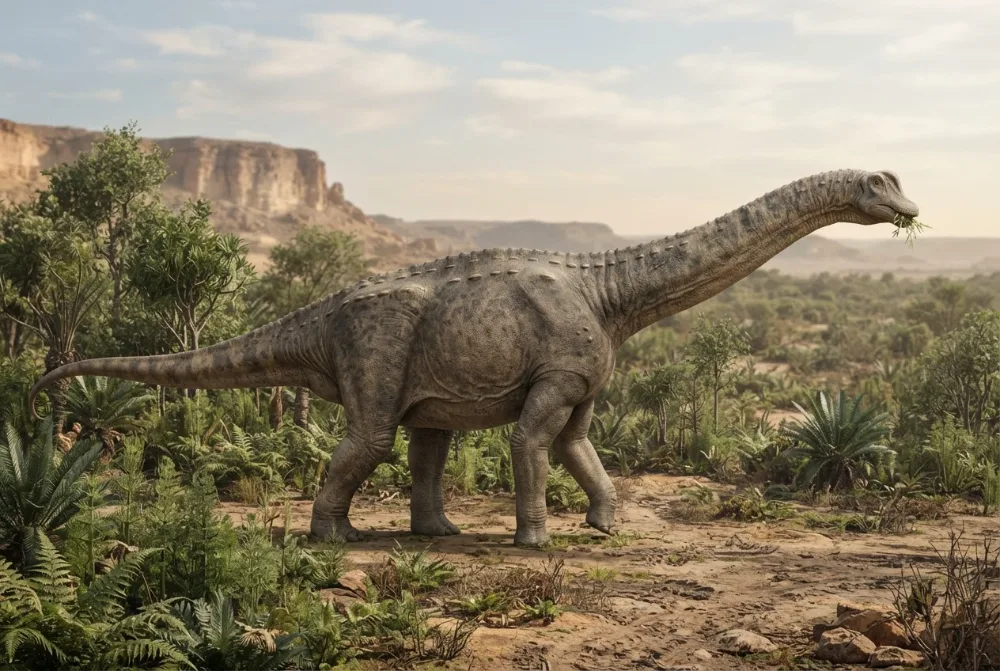
Igai was a giant, long-necked plant-eater that stomped through what is now Egypt about 74 million years ago. It was a titanosaur, a group of sauropods known for their huge bodies and small heads. Even though it was big, it was actually one of the smaller titanosaurs!12
Yaphila nini?
Yayinkulu kangakanani?
Yayinde kangakanani?
Yayiphakame kangakanani?
uqikelelo
 inde njengeemoto ezingama-3 zipakwe zilandelelana🍌inde njengeebhanana ezingama-83 zilandelelana🏃ibinokubaleka iimitha ezili-100 ngemizuzwana engama-22 (oyena mntu ukhawulezayo udinga i-9,6)
Igai wayemkhulu kangakanani xa ethelekiswa NAWE?
Yimathematika nje kwibhrawuza yakho. Akukho nto igcinwayo okanye ithunyelwe naphi na.
Yayikhawuleza kangakanani?


Iinyani ezimnandi
Igai had air sacs inside its backbone bones, making them light and spongy, which helped it grow so large.2
Its fifth metacarpal (a bone in the hand) had two unique bumps on the inner side that no other titanosaur has.2
Igai was more slender than many other titanosaurs, with leg bones that were relatively thin and graceful.2
The first and second metatarsals (foot bones) had deep grooves on their upper surfaces, a feature not seen in other titanosaurs.2
Igai lived about 74 million years ago, during the Campanian stage of the Late Cretaceous.2
Igai was probably bigger than its close relative Mansourasaurus, which was about 8 to 10 metres long.2
Eyona mibuzo ibuzwa kakhulu: Igai
Inyaniso ngeentsomi
Intsomi: Igai was a giant, slow-moving beast like other sauropods.
Inyaniso: Igai was actually relatively small and slender for a titanosaur, and its limb bones suggest it was quite agile for its size.2
Kwiingcali zeedayinaso
- Igama lenzululwazi
- Igai
- Inikwe igama ngu:
- Gorscak et al. 20234
- Iqela
- Iintamo-nde
- Usapho / iclade
- Saltasauridae4
- Ukuhlelwa
- Sauropodomorpha > Sauropoda > Titanosauria > Macronaria4
- Ubudala bamatye
- 84 ukuya ku-72 izigidi zeminyaka (Campanian)4
- Izakhiwo zamatye
- Quseir4
- Amazwe
- iYiputa4
- Iirekhodi zeefosili
- 1 kwi-Paleobiology Database4
- Ukufunyanwa
- Fossils of Igai were first found in 1977 by German scientists in the Kharga Oasis, Egypt. It was named and described in 2023 by Gorscak and colleagues.23
- Kusaxoxwa ngayo
- Scientists are still debating whether Igai was fully grown when it died, because some bones suggest it might not have been completely mature.1
Apho iinyani zivela khona
- tandfonline.com (tandfonline.com)
- Igai (en.wikipedia.org)
- PBDB Taxon (paleobiodb.org)
- Igai in The Paleobiology Database (CC BY 4.0): ubudala, iindawo, izakhiwo zamatye, ukuhlelwa.
Yonke inyani ekweli phepha inenombolo ebonisa umthombo wayo. Ukuba siphosisile, uxolo, sithanda iidayinaso, asiyojenali yenzululwazi. Sixelele apha: [email protected], siya kuyilungisa.
 URex ulambile! I-Dino Wiki yiprojekthi katata ukwenzela unyana wakhe othanda iidayinaso, isimahla, ayinazintengiso, ayinazilandeli. Abantu abadala banokuphakela uRex isidlwana ukuze incede ihlale kwi-intanethi.Phakela uRex
 Brachiosaurus
 Diplodocus
 Brontosaurus
 Argentinosaurus
 Camarasaurus
 Morosaurus
 Tyrannosaurus
 Triceratops
 Velociraptor
 Spinosaurus
 Ankylosaurus
 Parasaurolophus