 Uyiyiphi idayinaso? Ikwizi
 Idabi leedayinaso
 Ugqatso lweedayinaso
 Imidlalo emincinci yeedayinaso
 I-albhamu yezitikha
 Iilisti ze-TOP zeedayinaso
 Ndothuse!
Yaphila nini?

Yayinkulu kangakanani?
Yayinde kangakanani?
Yayinzima kangakanani?
 inde njengeekati zasekhaya ezingama-3, impumlo ukuya emsileni🍌inde njengeebhanana ezingama-8 zilandelelana🍉inzima njengamavatala angama-4🏃ibinokubaleka iimitha ezili-100 ngemizuzwana engama-10 (oyena mntu ukhawulezayo udinga i-9,6)
Ignavusaurus wayemkhulu kangakanani xa ethelekiswa NAWE?
Yimathematika nje kwibhrawuza yakho. Akukho nto igcinwayo okanye ithunyelwe naphi na.
Yayikhawuleza kangakanani?


Iinyani ezimnandi
The name Ignavusaurus comes from the Latin word for 'coward' because it was found at a place called Ha Ralekoala, which means 'the place of the father of the coward'.1
The only known fossil of Ignavusaurus is a nearly complete skeleton of a baby that was less than one year old when it died.1
Its skull was broken into more than 120 pieces, but scientists were able to put it back together.1
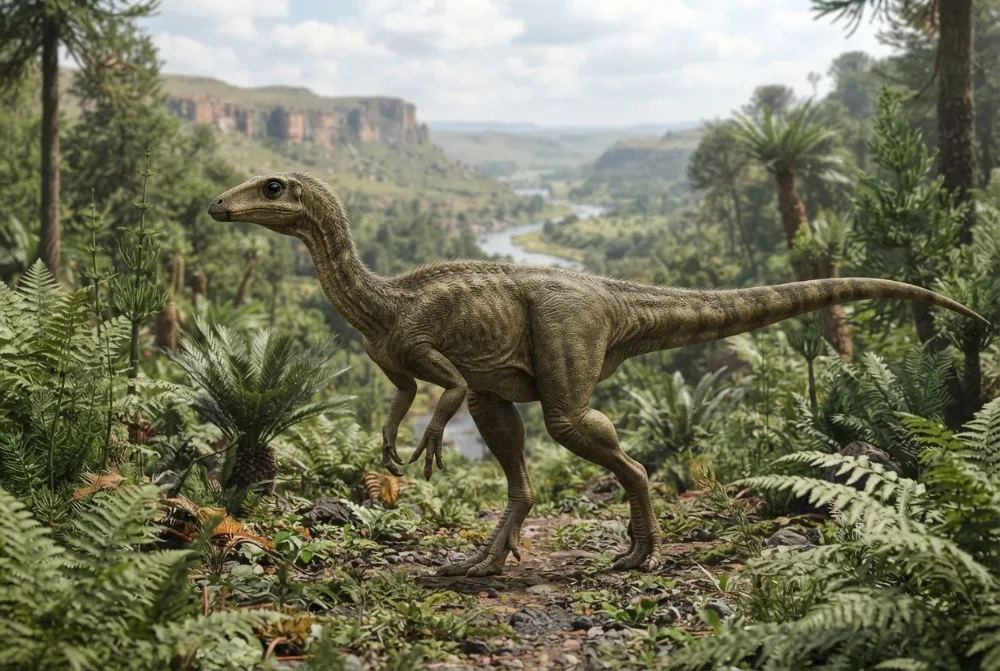
Ignavusaurus had a long, slender neck and a long tail, just like its relatives Massospondylus and Melanorosaurus.1
Some scientists think Ignavusaurus might actually be a baby Massospondylus, because the two look very similar.1
Eyona mibuzo ibuzwa kakhulu: Ignavusaurus
?How big was Ignavusaurus?
About 1.5 metres (4.9 ft) long and weighed about 22.5 kilograms (50 lb). That is roughly the size of a large dog.1
?What did Ignavusaurus eat?
It was a plant-eater, or herbivore. It had a long neck to reach leaves and other plants.1
?Is Ignavusaurus a dinosaur?
Yes, it is a dinosaur. It was a basal sauropodomorph, a type of long-necked, plant-eating dinosaur.1
?Could Ignavusaurus be a baby Massospondylus?
Some scientists think so. They say the only known fossil looks very similar to a young Massospondylus, so Ignavusaurus might be the same dinosaur.1
Kwiingcali zeedayinaso
- Igama lenzululwazi
- Ignavusaurus
- Inikwe igama ngu:
- Knoll 20102
- Iqela
- Iintamo-nde
- Usapho / iclade
- Massospondylidae2
- Ukuhlelwa
- Sauropodomorpha2
- Ubudala bamatye
- 201 ukuya ku-193 izigidi zeminyaka (Hettangian / Sinemurian)2
- Izakhiwo zamatye
- Elliot2
- Amazwe
- iLesotho2
- Iirekhodi zeefosili
- 2 kwi-Paleobiology Database2
- Ukufunyanwa
- The fossils were found in Lesotho and described in 2010 by Spanish paleontologist F. Knoll. The skeleton was brought to the National Museum of Natural History in Paris for study.1
- Kusaxoxwa ngayo
- Scientists are not sure if Ignavusaurus is a separate species or just a young Massospondylus.1
Apho iinyani zivela khona
- Ignavusaurus (en.wikipedia.org)
- Ignavusaurus in The Paleobiology Database (CC BY 4.0): ubudala, iindawo, izakhiwo zamatye, ukuhlelwa.
Yonke inyani ekweli phepha inenombolo ebonisa umthombo wayo. Ukuba siphosisile, uxolo, sithanda iidayinaso, asiyojenali yenzululwazi. Sixelele apha: [email protected], siya kuyilungisa.
 URex ulambile! I-Dino Wiki yiprojekthi katata ukwenzela unyana wakhe othanda iidayinaso, isimahla, ayinazintengiso, ayinazilandeli. Abantu abadala banokuphakela uRex isidlwana ukuze incede ihlale kwi-intanethi.Phakela uRex
 Brachiosaurus
 Diplodocus
 Brontosaurus
 Argentinosaurus
 Camarasaurus
 Morosaurus
 Dilophosaurus
 Stenopterygius
 Dorygnathus
 Scutellosaurus
 Sinosaurus
 Temnodontosaurus