 Uyiyiphi idayinaso? Ikwizi
 Idabi leedayinaso
 Ugqatso lweedayinaso
 Imidlalo emincinci yeedayinaso
 I-albhamu yezitikha
 Iilisti ze-TOP zeedayinaso
 Ndothuse!
Incisivosaurus
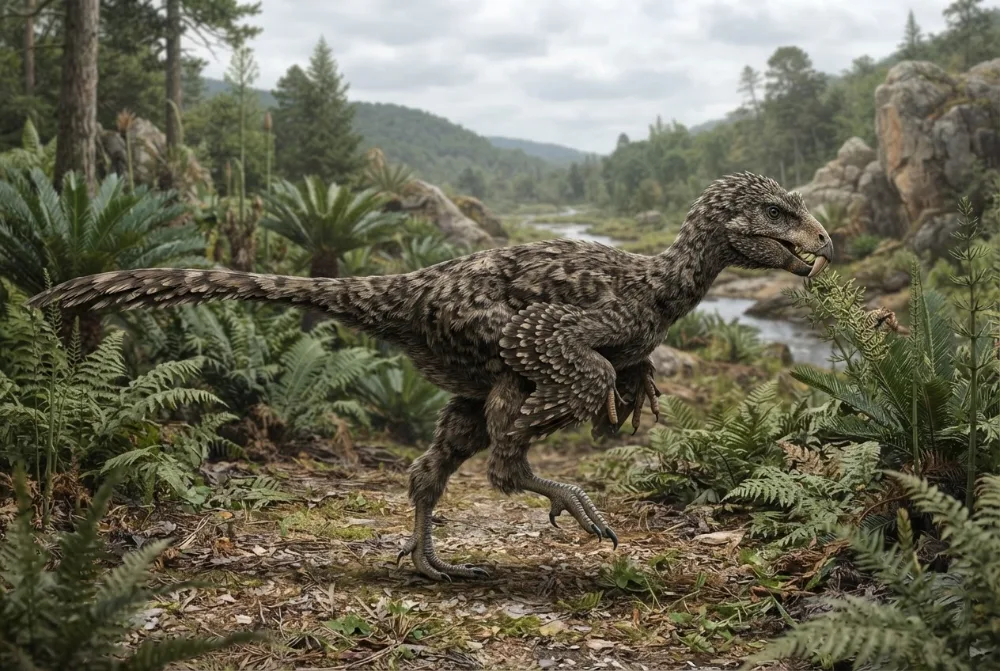
Incisivosaurus was a small, feathered dinosaur with a pair of big front teeth that looked like a rodent's incisors. It used these teeth to gnaw on plants, making it one of the first meat-eating dinosaurs known to eat mostly plants.12
Yaphila nini?
Yayinkulu kangakanani?
Yayinde kangakanani?
Yayiphakame kangakanani?
uqikelelo
 inde njengeekati zasekhaya ezingama-3, impumlo ukuya emsileni🍌inde njengeebhanana ezingama-8 zilandelelana🏃ibinokubaleka iimitha ezili-100 ngemizuzwana engama-9.5 (oyena mntu ukhawulezayo udinga i-9,6)
Incisivosaurus wayemkhulu kangakanani xa ethelekiswa NAWE?
Yimathematika nje kwibhrawuza yakho. Akukho nto igcinwayo okanye ithunyelwe naphi na.
Yayikhawuleza kangakanani?


Iinyani ezimnandi
Incisivosaurus had a pair of very large, chisel-like front teeth that stuck out forward, just like a beaver or rabbit. No other meat-eating dinosaur had teeth like that.12
Its cheek teeth were small and shaped like lance heads, with big wear facets from chewing plants. This shows Incisivosaurus chewed its food, unlike many other dinosaurs.12
Incisivosaurus lived about 128 million years ago, making it the oldest known oviraptorosaur dinosaur. It was a basal member of this group.12
Its skull was low and had teeth, unlike later oviraptorosaurs which had short, toothless beaks. This helps scientists understand how oviraptorosaurs evolved.12
The name Incisivosaurus means 'incisor lizard' because of its rodent-like front teeth. The species name gauthieri honors paleontologist Jacques Gauthier.12
Incisivosaurus is known from a nearly complete skull and a neck vertebra. Its body size is estimated from the skull, which is about 10 cm long.2
It was a feathered dinosaur, like other oviraptorosaurs, and probably walked on two legs. It was a small dinosaur, about the size of a turkey.4
Eyona mibuzo ibuzwa kakhulu: Incisivosaurus
?What did Incisivosaurus eat?
It ate plants. Its rodent-like front teeth and worn cheek teeth show it was adapted for herbivory.31
?Did Incisivosaurus have feathers?
Yes, it had feathers. Two juvenile specimens show long vaned feathers on the hands and tail, and downy feathers on the body.3
Kwiingcali zeedayinaso
- Igama lenzululwazi
- Incisivosaurus
- Inikwe igama ngu:
- Xu et al. 20024
- Iqela
- Iidayinaso ezingaqhelekanga ezineentsiba
- Usapho / iclade
- Oviraptorosauria4
- Ukuhlelwa
- Theropoda > Oviraptorosauria4
- Ubudala bamatye
- 126 ukuya ku-100 izigidi zeminyaka (Barremian / Albian)4
- Izakhiwo zamatye
- Fuxin, Yixian, Shahai4
- Amazwe
- iTshayina4
- Iirekhodi zeefosili
- 4 kwi-Paleobiology Database4
- Ukufunyanwa
- Incisivosaurus was named in 2002 by Xing Xu and colleagues from a skull and neck vertebra found in Liaoning, China. The fossils came from the Yixian Formation, which is about 128 million years old.12
- Kusaxoxwa ngayo
- Scientists are not sure if Incisivosaurus had feathers all over its body or just on some parts, because only the skull and a neck bone have been found.4
Apho iinyani zivela khona
- An unusual oviraptorosaurian dinosaur from China | Nature (nature.com)
- An unusual oviraptorosaurian dinosaur from China (ivpp.cas.cn)
- Incisivosaurus (en.wikipedia.org)
- Incisivosaurus in The Paleobiology Database (CC BY 4.0): ubudala, iindawo, izakhiwo zamatye, ukuhlelwa.
Yonke inyani ekweli phepha inenombolo ebonisa umthombo wayo. Ukuba siphosisile, uxolo, sithanda iidayinaso, asiyojenali yenzululwazi. Sixelele apha: [email protected], siya kuyilungisa.
 URex ulambile! I-Dino Wiki yiprojekthi katata ukwenzela unyana wakhe othanda iidayinaso, isimahla, ayinazintengiso, ayinazilandeli. Abantu abadala banokuphakela uRex isidlwana ukuze incede ihlale kwi-intanethi.Phakela uRex
Ezinye ezivela kwiqela elinye: Iidayinaso ezingaqhelekanga ezineentsiba
 TherizinosaurusIidayinaso ezingaqhelekanga ezineentsiba
 OviraptorIidayinaso ezingaqhelekanga ezineentsiba
 ChirostenotesIidayinaso ezingaqhelekanga ezineentsiba
 CitipesIidayinaso ezingaqhelekanga ezineentsiba
 LeptorhynchosIidayinaso ezingaqhelekanga ezineentsiba
 AvimimusIidayinaso ezingaqhelekanga ezineentsiba
 Stegosaurus
 Iguanodon
 Archaeopteryx
 Giganotosaurus
 Microraptor
 Deinonychus