 Uyiyiphi idayinaso? Ikwizi
 Idabi leedayinaso
 Ugqatso lweedayinaso
 Imidlalo emincinci yeedayinaso
 I-albhamu yezitikha
 Iilisti ze-TOP zeedayinaso
 Ndothuse!
Iyuku
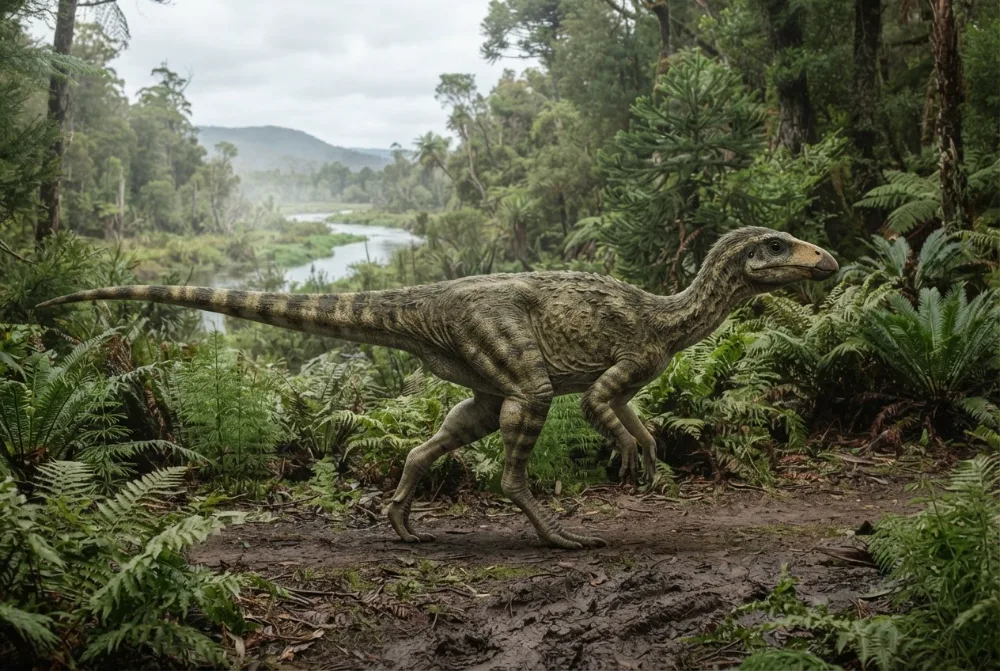
Iyuku was a small, plant-eating dinosaur that lived in what is now South Africa. What makes it really special is that almost all the fossils found are from babies and very young dinosaurs! Scientists think a whole group of Iyuku hatchlings died together during a dry season.21
Yaphila nini?
Yayikhawuleza kangakanani?


Iinyani ezimnandi
All the juvenile Iyuku bones were found in a single, small bonebed, suggesting a group of hatchlings died together.21
The name Iyuku comes from the Xhosa language and means 'hatchling', because almost all the fossils are from very young animals.1
Iyuku lived during the Early Cretaceous period, about 137 to 132 million years ago.4
The bonebed where Iyuku was found also contained rare theropod teeth, crocodile teeth, turtle shell fragments, and fish bones.1
Eyona mibuzo ibuzwa kakhulu: Iyuku
?How big was Iyuku?
Iyuku was a small dinosaur. A subadult's shin bone was about 35 to 42 centimetres long, so the whole animal was probably the size of a large dog.3
?What did Iyuku eat?
Iyuku was a plant-eating dinosaur. It ate plants like ferns and leaves.3
?Why is Iyuku called a hatchling?
Its name comes from the Xhosa word for 'hatchling' because almost all the fossils found are from babies and very young dinosaurs.3
?When did Iyuku live?
Iyuku lived during the Early Cretaceous period, about 137 to 132 million years ago.3
Kwiingcali zeedayinaso
- Igama lenzululwazi
- Iyuku
- Inikwe igama ngu:
- Forster et al. 20224
- Iqela
- Izitya-zityalo ezinemilomo
- Usapho / iclade
- Euiguanodontia4
- Ukuhlelwa
- Ornithischia > Ornithopoda > Iguanodontia4
- Ubudala bamatye
- 137 ukuya ku-133 izigidi zeminyaka (Valanginian)4
- Izakhiwo zamatye
- Kirkwood4
- Amazwe
- uMzantsi Afrika4
- Iirekhodi zeefosili
- 1 kwi-Paleobiology Database4
- Ukufunyanwa
- Iyuku was named in 2022 by Catherine Forster and her team based on fossils collected from 1995 to 1999 in the Kirkwood Formation, South Africa. The species name honors Dr. Michael Raath for his work on southern African fossils.1
- Kusaxoxwa ngayo
- Scientists are not sure exactly how big Iyuku grew, because almost all the fossils are from babies and juveniles, not adults.1
Apho iinyani zivela khona
- Iyuku raathi , a new iguanodontian dinosaur from the Early Cretaceous Kirkwood Formation, South Africa (anatomypubs.onlinelibrary.wiley.com)
- Iyuku raathi, a new iguanodontian dinosaur from the Early Cretaceous Kirkwood Formation, South Africa (pubmed.ncbi.nlm.nih.gov)
- Iyuku (en.wikipedia.org)
- Iyuku in The Paleobiology Database (CC BY 4.0): ubudala, iindawo, izakhiwo zamatye, ukuhlelwa.
Yonke inyani ekweli phepha inenombolo ebonisa umthombo wayo. Ukuba siphosisile, uxolo, sithanda iidayinaso, asiyojenali yenzululwazi. Sixelele apha: [email protected], siya kuyilungisa.
 URex ulambile! I-Dino Wiki yiprojekthi katata ukwenzela unyana wakhe othanda iidayinaso, isimahla, ayinazintengiso, ayinazilandeli. Abantu abadala banokuphakela uRex isidlwana ukuze incede ihlale kwi-intanethi.Phakela uRex
 Iguanodon
 Tenontosaurus
 Thescelosaurus
 Zalmoxes
 Camptosaurus
 Rhabdodon
 Stegosaurus
 Archaeopteryx
 Giganotosaurus
 Microraptor
 Deinonychus
 Baryonyx