 Uyiyiphi idayinaso? Ikwizi
 Idabi leedayinaso
 Ugqatso lweedayinaso
 Imidlalo emincinci yeedayinaso
 I-albhamu yezitikha
 Iilisti ze-TOP zeedayinaso
 Ndothuse!
Yaphila nini?

Yayinkulu kangakanani?
Amaphiko ayo ayebanzi kangakanani?
Yayinzima kangakanani?
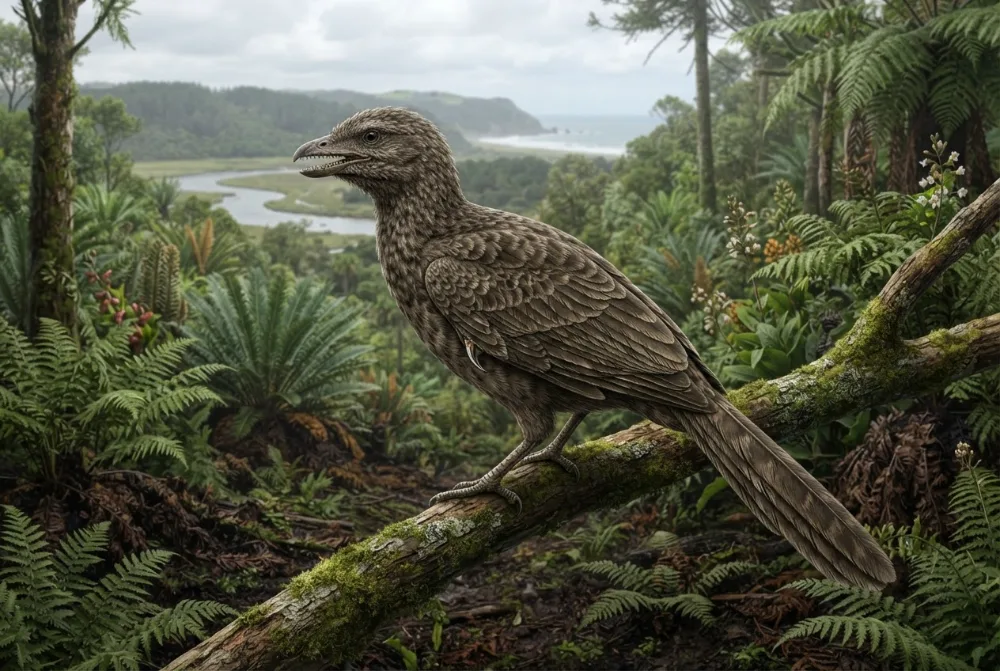
 inde njengeekati zasekhaya ezingama-3, impumlo ukuya emsileni🪶ilula kunekati yasekhaya🍌inzima njengeebhanana ezingama-13⚽ibinokubhabha inqumle ibala lebhola ekhatywayo lonke ngemizuzwana engama-9
Janavis wayemkhulu kangakanani xa ethelekiswa NAWE?
Yimathematika nje kwibhrawuza yakho. Akukho nto igcinwayo okanye ithunyelwe naphi na.
Yayikhawuleza kangakanani?


Iinyani ezimnandi
Janavis lived about 66.8 million years ago, just 800,000 years before the asteroid that killed the dinosaurs.1
Its wing bones were hollow and filled with air, like modern birds, making it lighter for flying.1
The fossil was found in a Belgian quarry in 2000 by an amateur fossil hunter named Rudi Dortangs.1
Janavis had a skull that could move its upper jaw up and down, a feature of modern birds called neognathous palate.1
Scientists first thought a piece of its skull was a wing bone, until a CT scan in 2021 showed the truth.1
Janavis was bigger than its relative Ichthyornis, with a wingspan of about 1.5 metres (5 feet).1
Eyona mibuzo ibuzwa kakhulu: Janavis
?How big was Janavis?
Janavis was a relatively large bird, with an estimated wingspan of about 1.5 metres (5 feet) and a weight of around 1.5 kilograms (3.3 pounds).12
?Did Janavis have teeth?
Yes, Janavis had teeth. It was one of the last toothed birds to ever live.12
?When did Janavis live?
Janavis lived about 66.8 million years ago, right at the end of the Cretaceous period, just 800,000 years before the asteroid impact.1
?Could Janavis fly?
Yes, Janavis could fly. Its wing bones were hollow and filled with air, like modern birds, making it lighter for flying.1
Inyaniso ngeentsomi
Intsomi: All ancient birds had rigid skulls like dinosaurs.
Inyaniso: Janavis had a flexible skull like modern chickens and ducks, showing that movable skulls evolved early.1
Kwiingcali zeedayinaso
- Igama lenzululwazi
- Janavis
- Inikwe igama ngu:
- Benito et al. 20223
- Iqela
- Iintaka zokuqala
- Usapho / iclade
- Ichthyornithes3
- Ukuhlelwa
- Theropoda > Avialae3
- Ubudala bamatye
- 72 ukuya ku-66 izigidi zeminyaka (Maastrichtian)3
- Izakhiwo zamatye
- Maastricht3
- Amazwe
- iBhelgiyam3
- Iirekhodi zeefosili
- 1 kwi-Paleobiology Database3
- Ukufunyanwa
- The fossil was collected in 2000 by amateur palaeontologist Rudi Dortangs in Belgium. It was first reported in 2002, and in 2022 scientists named it Janavis finalidens after CT scans revealed its true identity.1
- Kusaxoxwa ngayo
- Scientists debate whether Janavis could fly as well as modern birds, because its wing bones were very air-filled but its shoulder blade lacked a normal hook.1
Apho iinyani zivela khona
- Janavis (en.wikipedia.org)
- Bird beak evolved before dinosaur extinction | University of Cambridge (cam.ac.uk)
- Janavis in The Paleobiology Database (CC BY 4.0): ubudala, iindawo, izakhiwo zamatye, ukuhlelwa.
Yonke inyani ekweli phepha inenombolo ebonisa umthombo wayo. Ukuba siphosisile, uxolo, sithanda iidayinaso, asiyojenali yenzululwazi. Sixelele apha: [email protected], siya kuyilungisa.
 URex ulambile! I-Dino Wiki yiprojekthi katata ukwenzela unyana wakhe othanda iidayinaso, isimahla, ayinazintengiso, ayinazilandeli. Abantu abadala banokuphakela uRex isidlwana ukuze incede ihlale kwi-intanethi.Phakela uRex
 Archaeopteryx
 Hesperornis
 Ichthyornis
 Baptornis
 Jurapteryx
 Gobipteryx
 Tyrannosaurus
 Triceratops
 Velociraptor
 Spinosaurus
 Ankylosaurus
 Parasaurolophus