 Uyiyiphi idayinaso? Ikwizi
 Idabi leedayinaso
 Ugqatso lweedayinaso
 Imidlalo emincinci yeedayinaso
 I-albhamu yezitikha
 Iilisti ze-TOP zeedayinaso
 Ndothuse!
Yaphila nini?

Yayinkulu kangakanani?
Yayinde kangakanani?
Yayiphakame kangakanani?
Yayinzima kangakanani?
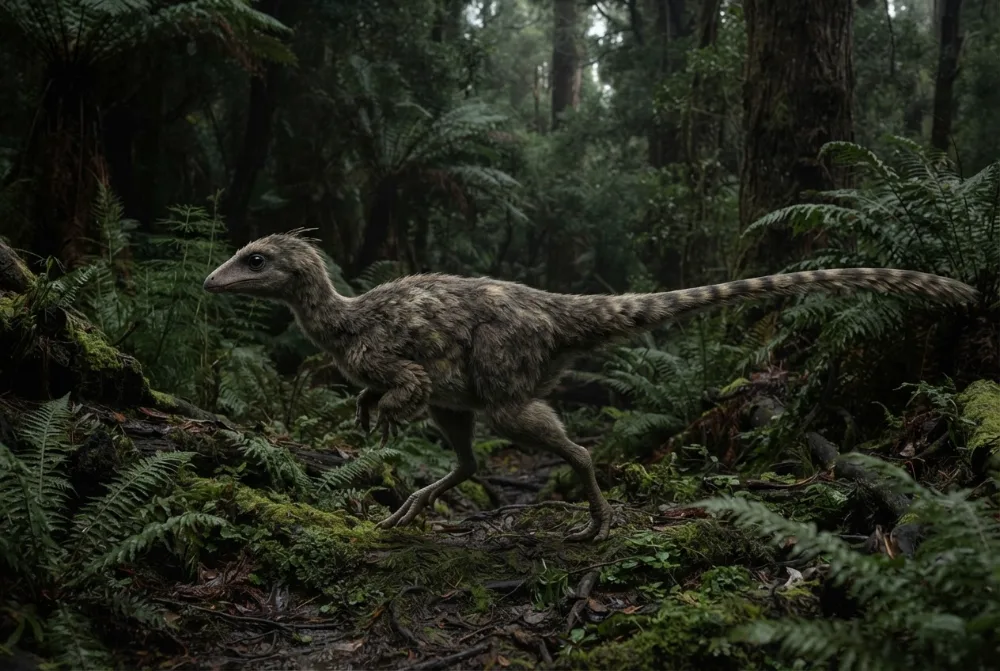
 inde njengeekati zasekhaya ezingama-4, impumlo ukuya emsileni🍌inde njengeebhanana ezingama-10 zilandelelanamalunga nobunzima bekati yasekhaya🍌inzima njengeebhanana ezingama-33🪑incinci ngokwaneleyo ukuba ihambe phantsi kwesitulo🏃ibinokubaleka iimitha ezili-100 ngemizuzwana engama-14 (oyena mntu ukhawulezayo udinga i-9,6)
Leaellynasaura wayemkhulu kangakanani xa ethelekiswa NAWE?
Yimathematika nje kwibhrawuza yakho. Akukho nto igcinwayo okanye ithunyelwe naphi na.
Yayikhawuleza kangakanani?


Iinyani ezimnandi
Leaellynasaura lived inside the Antarctic Circle during the Early Cretaceous, about 118 to 110 million years ago, when the climate was warmer than today.1
Its tail was extremely long, about three times the length of the rest of its body, and had more tail bones than most other plant-eating dinosaurs.1
It had enlarged eye sockets and large optic lobes in its brain, which helped it see in the dim light of polar winters.21
Bone growth lines show that Leaellynasaura grew continuously all year, meaning it did not hibernate or slow down much during the cold, dark winter.2
It may have lived in small herds or flocks, and dinosaur burrows found in Victoria suggest some small ornithopods might have sheltered underground in the coldest months.2
Its teeth had five ridges on each side, fewer than other small Victorian ornithopods like Qantassaurus and Atlascopcosaurus, which had at least eight.2
Eyona mibuzo ibuzwa kakhulu: Leaellynasaura
?How big was Leaellynasaura?
About 1.8 metres (6 feet) long including its tail, but some estimates based on a juvenile specimen suggest about 1 metre (3.3 feet).12
?What did Leaellynasaura eat?
It was a plant-eater that ate low-growing plants like horsetails, cycads, and ferns.12
?Did Leaellynasaura have feathers?
Scientists think it might have had hair-like filaments on its skin, but no feathers have been found yet.4
?Where was Leaellynasaura found?
It was discovered in Dinosaur Cove, Victoria, Australia, in rocks that were once inside the Antarctic Circle.12
?How fast could Leaellynasaura run?
Nobody knows for sure, but as a small, lightweight dinosaur it was probably quick and agile.1
Kwiingcali zeedayinaso
- Igama lenzululwazi
- Leaellynasaura
- Inikwe igama ngu:
- Rich and Vickers-Rich 19895
- Iqela
- Izitya-zityalo ezinemilomo
- Usapho / iclade
- Elasmaria5
- Ukuhlelwa
- Ornithischia > Ornithopoda > Iguanodontia5
- Ubudala bamatye
- 113 ukuya ku-110 izigidi zeminyaka (Albian)5
- Izakhiwo zamatye
- Eumeralla5
- Amazwe
- i-Ostreliya5
- Iirekhodi zeefosili
- 4 kwi-Paleobiology Database5
- Ukufunyanwa
- Leaellynasaura was discovered in Dinosaur Cove, Australia, and named in 1989 by Tom Rich and Patricia Vickers-Rich. They named it after their daughter Leaellyn.15
- Kusaxoxwa ngayo
- Scientists are not sure which fossils belong to Leaellynasaura, because most were found scattered, and some long-tailed skeletons may belong to a different dinosaur.1
Apho iinyani zivela khona
- Leaellynasaura (en.wikipedia.org)
- Dinosaurs - Leaellynasaura amicagraphica - The Australian Museum (australian.museum)
- LEAELLYNASAURA - DinoChecker dinosaur archive (dinochecker.com)
- Leaellynasaura | Western Australian Museum (museum.wa.gov.au)
- Leaellynasaura in The Paleobiology Database (CC BY 4.0): ubudala, iindawo, izakhiwo zamatye, ukuhlelwa.
Yonke inyani ekweli phepha inenombolo ebonisa umthombo wayo. Ukuba siphosisile, uxolo, sithanda iidayinaso, asiyojenali yenzululwazi. Sixelele apha: [email protected], siya kuyilungisa.
 URex ulambile! I-Dino Wiki yiprojekthi katata ukwenzela unyana wakhe othanda iidayinaso, isimahla, ayinazintengiso, ayinazilandeli. Abantu abadala banokuphakela uRex isidlwana ukuze incede ihlale kwi-intanethi.Phakela uRex
 Iguanodon
 Tenontosaurus
 Thescelosaurus
 Zalmoxes
 Camptosaurus
 Rhabdodon
 Stegosaurus
 Archaeopteryx
 Giganotosaurus
 Microraptor
 Deinonychus
 Baryonyx